
- India
- Jan 13
ISRO’s PSLV-C62 mission fails
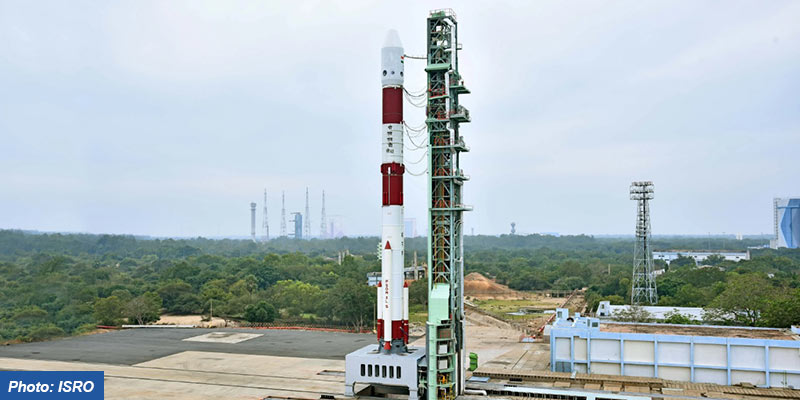
• ISRO’s PSLV-C62 rocket carrying 16 satellites failed to place them in the intended orbit after encountering an anomaly in the critical third stage of the launch on January 12.
• The mission was to deploy a primary Earth Observation satellite and multiple co-passenger satellites into a 512 km Sun-Synchronous Orbit, after a flight journey of about 17 minutes.
• The automatic launch sequence commenced following approval from the mission director.
• ISRO scientists provided real-time updates as the vehicle ascended. The initial phases of the flight proceeded according to plan.
• The PSLV is a four-stage vehicle with two solid stages and two liquid stages.
• The performance of the vehicle up to the end of the third stage was expected.
• Close to the end of the third stage, the scientists saw more disturbance in the vehicle, and subsequently, there was a deviation observed in the flight path.
• Disturbances in the rocket and later deviation from the flight path were observed when strap-on motors were providing thrust during the flight’s third stage to propel the vehicle to the intended altitude.
• A detailed analysis has been initiated to identify the cause.
• This was the second consecutive PSLV mission failure during the third stage.
• A similar, previous attempt in May 2025 (PSLV-C61-EOS-09) also did not succeed due to a “motor pressure issue”, and there was a fall in the chamber pressure of the motor case.
• Among the satellites lost were DRDO’s Anvesha, a strategic super-eye to unmask military camouflage from nearly 500 km, AayulSAT, India’s first in-orbit fuelling satellite, and CGUSAT, a small, student-developed Low Earth Orbit (LEO) satellite designed primarily for emergency communication and disaster management.
• The Earth Observation satellite was built jointly by Thailand and the UK.
• The PSLV-C62 also carried KID, or Kestrel Initial Technology Demonstrator from a Spanish startup that was a small-scale prototype of a re-entry vehicle.
• PSLV is the workhorse launch vehicle of ISRO that has completed 63 flights, including notable missions like Chandrayaan-1, Mars Orbiter Mission, Aditya-L1, and Astrosat Mission.
• In 2017, PSLV set a world record by launching 104 satellites in a single mission.