
- India
- Jan 21
- Sreesha V.M
Govt declares areas around Kumbhalgarh Wildlife Sanctuary as eco-sensitive zone
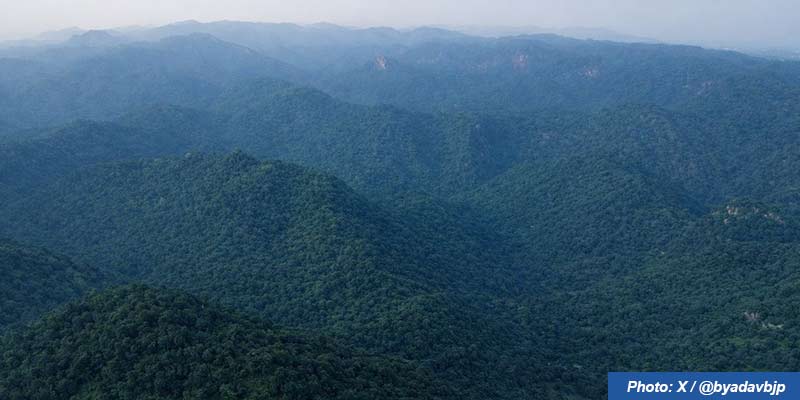
• Union Environment Minister Bhupender Yadav said the biodiversity-rich area ranging from zero to one kilometre around the Kumbhalgarh Wildlife Sanctuary located in the Aravalli mountain range has been declared an Eco-Sensitive Zone (ESZ).
• A notification in this regard has already been issued.
• The declaration of ESZ will not just help the rich biodiversity thrive but also help indigenous communities in the area live freely with eco-friendly and community-focused initiatives such as organic farming, agroforestry.
• The indigenous communities will also be imparted skill development for a sustainable future.
Khumbhalgarh Wildlife Sanctuary
• Khumbhalgarh Wildlife Sanctuary is situated in Rajsamand district of Rajasthan.
• This sanctuary encircles the Kumbhalgarh Fort, a UNESCO World Heritage Site.
• It also covers four hill and mountain ranges of the Aravallis — Kumbhalgarh Range, Sadri Range, Desuri Range and the Bokhada Range.
• The sanctuary, rich in flora and fauna, hosts the leopard, striped hyena, jungle cat, Indian pangolin, blue bull and chinkara.
• It is also home to bird species such as painted francolin.
• Kumbhalgarh Wildlife Sanctuary makes an ecotone between hilly forests of Aravallis and Thar Desert situated in the west.
• Kumbhalgarh hills act like a barrier, checking eastward extension of desert.
• The eastern part is mostly ranges having an altitude of more than 3,500 feet above sea level.
• The western part of the sanctuary is adjoined to the Marwar plains.
• The sanctuary offers diverse topography, adding more to its significance, it also forms a dividing line between the two major watersheds of the country.
• In its eastern part is found the source of river Banas, which falls into the Bay of Bengal.
• The rainwater on the western slope flows in the form of the small rivers like Sukdi, Mithdi, Sumer and Kot, all these forming the tributaries of river Luni which ultimately merges into the Arabian Sea.
(The author is a trainer for Civil Services aspirants.)