
- India
- Jan 24
- Sreesha V.M
India observes National Girl Child Day on Jan 24
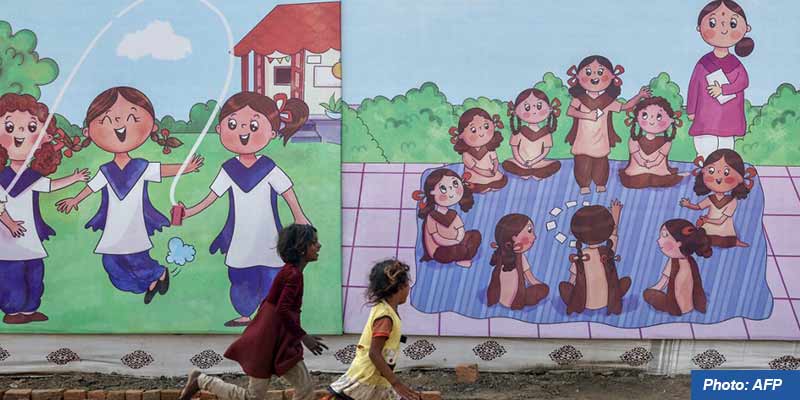
• National Girl Child Day is celebrated annually in India on January 24.
• It is dedicated to highlighting the rights, education, health, nutrition, and overall welfare of girls.
• Initiated in 2008 by the Ministry of Women and Child Development (MWCD), the day serves as a platform to raise awareness about gender discrimination, promote equal opportunities, and foster an environment where girls can thrive as empowered citizens.
• It provides an opportunity to address persistent inequalities faced by girls, including gender biases, female foeticide, challenges related to the child sex ratio, child marriage, and barriers to education and health.
• Significant progress has been made through sustained efforts, particularly under the Beti Bachao Beti Padhao (BBBP) scheme, with the Sex Ratio at Birth (SRB) rising from around 918 in 2014-15 to 930 in 2023-24 at the national level.
• The Gross Enrolment Ratio (GER) for girls at the secondary level (Classes 9-10) in India has shown improvement, rising from 75.51 per cent in 2014-15 to 80.2 per cent in 2024-25.
• Through different initiatives, supported by community participation, NGOs, schools and anganwadis, measurable gains have been made in girls’ education, and empowerment.
Key govt initiatives to empower girls:
The government of India has implemented a range of targeted schemes to protect, educate, and empower the girl child, many integrated under the umbrella Mission Shakti.
1) Mission Shakti
Mission Shakti was launched by the Ministry of Women and Child Development with effect from April 1, 2022 as an integrated umbrella scheme for the 15th Finance Commission period (2021-26). It strengthens interventions for women's safety, security, and empowerment through two key sub-schemes:
i) Sambal — focused on safety and security, incorporating One Stop Centres, Women Helpline, Beti Bachao Beti Padhao, and Nari Adalats).
ii) Samarthya — focused on empowerment, including Pradhan Mantri Matru Vandana Yojana, Palna, Shakti Sadan, Sakhi Niwas, and SANKALP hubs).
This mission promotes convergence across government departments, citizen participation, and life-cycle support to enable women and girls to thrive as equal partners in nation-building. In the Union Budget 2025-26, Mission Shakti, received an allocation of Rs 3,150 crore.
2) Beti Bachao Beti Padhao (BBBP)
Launched in 2015 in Haryana, this flagship scheme has marked over a decade of impact. Now integrated into Mission Shakti’s Sambal sub-scheme and expanded across all districts, BBBP focuses on preventing gender-biased sex selection, ensuring survival and protection, and promoting education. It has driven improvements in Sex Ratio at Birth (SRB), increased girls’ enrolment in secondary education, enhanced healthcare access, and fostered community-level behavioural change through multi-sectoral campaigns and collaborations with NGOs and media.
3) Sukanya Samriddhi Yojana
Launched in 2015, as a part of the Beti Bachao Beti Padhao scheme, this flagship offers financial security and savings for girls’ future education and marriage. By November 2024, more than 4.2 crore accounts had been opened nationwide, indicating strong public participation and confidence in the scheme. The scheme continues to encourage families to invest in their daughters’ futures fostering financial inclusion, gender equity, and long-term social progress.
4) Samagra Shiksha
This integrated scheme for school education (from pre-school to Class XII), launched in 2018 by the Ministry of Education, subsumes earlier programs like Sarva Shiksha Abhiyan and Rashtriya Madhyamik Shiksha Abhiyan. It aligns with the National Education Policy (NEP) 2020 and focuses on bridging gender and social category gaps through targeted interventions such as separate toilets for girls, stipend for children with special needs (CWSN), gender-sensitive teaching materials, and teacher sensitisation programs. Samagra Shiksha emphasizes inclusive quality education, foundational literacy/numeracy, and vocational exposure, ensuring equitable access for girls from disadvantaged sections.
5) Kasturba Gandhi Balika Vidyalaya (KGBV)
KGBVs provide residential schooling facilities for girls aged 10–18 from marginalised communities (SC/ST/OBC/minority/BPL families), covering Classes VI to XII in educationally backward blocks. Upgraded under Samagra Shiksha, KGBVs ensure smooth transition from elementary to higher secondary levels.
6) UDAAN
UDAAN is an innovative initiative launched in 2014 by the Central Board of Secondary Education (CBSE), under the guidance of the Ministry of Education. The project specifically targets the low enrolment of girl students in premier engineering colleges. It does so by bridging the gap between school-level learning and the demands of engineering entrance examinations (such as JEE). It provides free online resources, including study materials, video tutorials, virtual classes, and weekend contact sessions. The flagship initiative aims to empower Class XI and XII girl students, particularly from economically disadvantaged backgrounds to prepare effectively and increase their participation in science, technology, engineering, and mathematics (STEM) fields.
7) Nurturing Aspirations through Vocational Training for Young Adolescent Girls (NAVYA)
Launched on June 24, 2025, in Sonbhadra, Uttar Pradesh, NAVYA is a joint pilot initiative of the Ministry of Women and Child Development (MWCD) and the Ministry of Skill Development and Entrepreneurship (MSDE). It targets adolescent girls aged 16-18 years (with at least Class 10 qualification) in 27 Aspirational and North-Eastern districts across 19 states, with an initial training goal of 3,850 girls under Pradhan Mantri Kaushal Vikas Yojana 4.0 (PMKVY 4.0) in non-traditional and futuristic sectors like digital marketing, cybersecurity, AI-enabled services, and green jobs. The programme focuses on equipping participants with vocational skills in non-traditional and emerging sectors. Aligned with the vision of Viksit Bharat@2047, NAVYA promotes socio-economic independence, breaks gender stereotypes in the workforce, and empowers girls as agents of inclusive development, especially in underserved and tribal regions.
8) Vigyan Jyoti Scheme
Implemented by the Department of Science & Technology (DST), Vigyan Jyoti scheme encourages meritorious girls from Classes IX-XII (especially rural areas) to pursue STEM fields. Activities include counselling, lab visits, workshops, role model interactions, science camps, and academic support. Since its launch, the Vigyan Jyoti programme has supported more than 80,000 meritorious girls from 300 districts spanning 35 states and Union Territories.
Schemes for ensuring safety and health
The government prioritises a secure and nurturing environment for every girl through comprehensive laws against abuse and child marriage.
Central interventions in this domain encompass:
1) Juvenile Justice (Care and Protection of Children) Act and Protection of Children from Sexual Offences (POCSO) Act
The Juvenile Justice (Care and Protection of Children) Act, 2015 and the Protection of Children from Sexual Offences (POCSO) Act, 2012 offer comprehensive safeguards for children. POCSO is a gender-neutral law that defines a child as anyone under 18 and criminalises sexual assault, harassment, and child pornography. It incorporates child-friendly procedures, mandatory reporting requirements, and the establishment of special courts to ensure speedy trials.
2) Prohibition of Child Marriage Act
The Prohibition of Child Marriage Act, 2006 replaced the earlier Child Marriage Restraint Act, 1929 (Sarda Act). It shifts the focus from merely restraining child marriages to legally prohibiting them, while providing enhanced protection and relief for the affected. The Act provides the legal backbone to empower girls, ensuring their right to education and health, countering the severe risks of early marriage like interrupted schooling, health complications, and limited opportunities. Under the Act, child marriages remain voidable at the option of the party who was a child at the time of the marriage. The affected individual (or their guardian/next friend) can petition a district court to annul the marriage by a decree of nullity, typically within two years of attaining majority.
3) Bal Vivah Mukt Bharat
Building on the Prohibition of Child Marriage Act, the government of India launched the Bal Vivah Mukt Bharat (Child Marriage-Free India) campaign in November 2024, under the Ministry of Women and Child Development. This nationwide initiative aims to eradicate child marriages through intensive awareness, enforcement, community mobilisation, and multi-sectoral collaboration. It aligns closely with Sustainable Development Goal (SDG) 5.3, which targets the elimination of all harmful practices — including child, early, and forced marriages by 2030. The campaign includes features like a dedicated portal for reporting and awareness, district-level monitoring, awards for high-performing areas, and a 100-day intensive phase (launched in December 2025), to accelerate progress toward reducing prevalence by 10 per cent by 2026 and achieving a child marriage-free India by 2030.
4) Scheme for Adolescent Girls (SAG)
The Scheme for Adolescent Girls targets girls aged 14-18 years in Aspirational Districts nationwide and all districts of North Eastern States.It aims to improve their health and nutritional status.
There are two main components under the scheme.
i) The nutrition component provides supplementary food and nutrition (600 calories, 18-20g protein and micronutrients) for 300 days annually, delivered as hot cooked meals and take home ration incorporating local produce, fortified rice, millets, nuts, and fresh fruits/vegetables.
ii) The non-nutrition component, through inter-ministerial convergence, includes Iron-Folic Acid (IFA) supplementation, health check-ups, nutrition & health education, skilling, and anaemia management. It also motivates adolescent girls to go back to formal schooling, provides life skills, literacy and numeracy skills, and helps them improve their decision-making capabilities.
5) Menstrual Hygiene Scheme (MHS)
The Ministry of Health and Family Welfare launched a scheme to promote menstrual hygiene among rural adolescent girls aged 10-19 years. The scheme aims to build awareness about safe and hygienic menstrual practices among adolescent girls. It seeks to improve access to affordable, high-quality sanitary napkins in rural areas. ASHA workers distribute subsidised sanitary napkin packs and conduct monthly health awareness meetings. The Pradhan Mantri Bharatiya Janaushadhi Pariyojana (PMBJP) provides Jan Aushadhi Suvidha sanitary pads at Re 1 per pad to ensure affordable menstrual hygiene access.
(The author is a trainer for Civil Services aspirants.)