
- India
- Feb 09
- Sreesha V.M
What is Kyasanur Forest Disease?
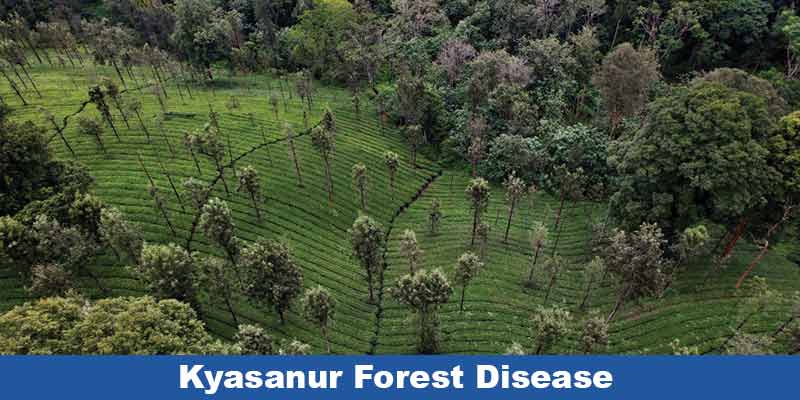
• The Indian Council of Medical Research (ICMR) has initiated human clinical trials towards developing an improved vaccine against Kyasanur Forest Disease (KFD).
• KFD is a regional infectious disease in the Western Ghats region, in states like Karnataka, Tamil Nadu, Kerala, Goa, and Maharashtra.
• On request of the Karnataka government, ICMR embarked on development of the KFD vaccine.
• The Indian Immunologicals Limited (IIL) and ICMR-National Institute of Virology (NIV) are working collaboratively to develop a fully indigenous two dose adjuvanted inactivated vaccine which will be given 28 days apart.
• The vaccine has been successfully developed, and animal challenge and toxicity studies have been completed.
• The GLP-grade (Good Laboratory Practice) vaccine material has been manufactured, and a phase I human clinical trial has been initiated following approval from the Central Drugs Standard Control Organisation (CDSCO).
• If the phase 1 trial is successful, further clinical trials will be initiated and if the vaccine is found to be safe and immunogenic, approval of CDSCO will be sought.
Kyasanur Forest Disease (KFD)
• Kyasanur Forest Disease (KFD) is a zoonotic disease caused by the KFD virus.
• The KFD virus is a member of the genus flavivirus and family Flaviviridae.
• Hard ticks (Hemaphysalis spinigera) spread the KFD virus to people and to animals like monkeys and rodents.
• It was first identified in Kyasanur forest area, Shimoga district of Karnataka.
• It derives its name from the forest range where the virus was first isolated.
• Hunters, herders, forest workers, and farmers are at higher risk for getting KFD. This is because they are more likely to be bitten by infected ticks.
• People with KFD usually start having symptoms three to eight days after being infected with the virus.
• Some people may not have any symptoms at all, while others may have a sudden onset of chills, fever, and headache. Severe muscle pain, vomiting, gastrointestinal symptoms, and bleeding can follow three or four days after symptoms begin.
• Most patients recover one to two weeks after symptoms begin. About 10 to 20 per cent of patients experience a second wave of symptoms, including severe headache, mental disturbances, shakes (tremors), and problems seeing.
• KFD does not spread between people.
• There is no specific cure for KFD.
(The author is a trainer for Civil Services aspirants.)