
- India
- Feb 13
- Sreesha V.M
Parliament passes Industrial Relations Code (Amendment) Bill
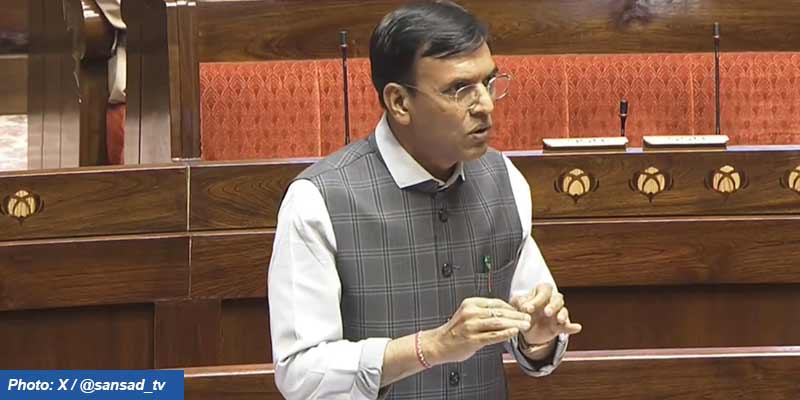
• Parliament passed the Industrial Relations Code (Amendment) Bill, 2026 on February 12.
• The Bill would help avoid any “future unwarranted complication” over the continuity of certain laws replaced by the Industrial Relations Code of 2020.
Industrial Relations Code, 2020
• The four Labour Codes — the Code on Wages, 2019, the Industrial Relations (IR) Code, 2020, the Code on Social Security, 2020 and the Occupational Safety, Health and Working Conditions Code, 2020 — came into force on November 21, 2025, rationalising 29 labour laws for better working conditions, safety, wages, social security & enhanced welfare for worker.
• The Industrial Relations Code, 2020 is designed to consolidate and amend the laws regarding trade Unions, retrenchment, industrial disputes and simplifying compliance by providing uniform definitions.
• The Code seeks to promote industrial harmony by balancing worker protection with business flexibility and facilitating ease of Doing Business.
• With the introduction of The Industrial Relations Code, 2020 the number of rules has been reduced from 105 to 51, number of forms from 37 to 18 and number of registers from 3 to zero, thereby reducing the overall compliance burden to spur employment.
• The Industrial Relations Code, 2020 replaces enactments, namely, the Trade Unions Act, 1926, the Industrial Employment (Standing Orders) Act, 1946 and the Industrial Disputes Act, 1947, relating to trade unions, industrial employment and industrial disputes, and contains savings provisions under section 104 thereof to ensure continuity and legal certainty.
• Though the repeal has occurred by operation of section 104 of the Code itself, there is a possibility of future confusion being created on a misconceived ground that the Act delegates the power to repeal the said enactments to the executive.
• The government introduced the amendment to avoid any future unwarranted complication.
• Labour Minister Mansukh Mandaviya said this amendment is brought for legal clarity.
(The author is a trainer for Civil Services aspirants.)