
- India
- Feb 13
- Sreesha V.M
Relevance of radio as a trusted, easily accessible and inclusive medium
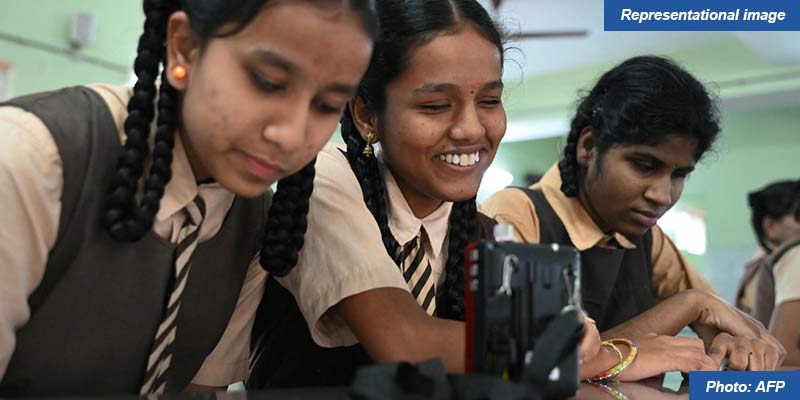
• World Radio Day, observed annually on February 13, commemorates the establishment of United Nations Radio in 1946.
• Long before screens dominated attention, radio was the trusted voice in the room — connecting distant geographies, diverse languages and countless lives through shared listening.
• Many historical moments are etched in collective memory through radio announcements.
• In the night of August 14-15, 1947, the radio sets cackled to announce the independence of India.
• In that singular broadcast, radio did not simply deliver news — it united a vast, diverse nation in one shared sound of freedom.
• Radio plays a critical role during emergencies. When natural disasters or crises disrupt electricity, internet services, or other communication networks, radio often remains the most reliable source of trusted and timely information.
All India Radio
• All India Radio (AIR), popularly known as Akashvani, is the radio vertical of Prasar Bharati, India’s national broadcaster and has been serving the nation since its inception with the motto “Bahujan Hitaya, Bahujan Sukhaya”, (for the welfare and happiness of the masses).
• Established in 1936 and brought under public ownership after Independence, AIR has grown into one of the largest broadcasting organisations in the world, in terms of the number of languages broadcast and the diversity of audiences served.
• AIR’s Home Service comprises 591 broadcasting centres across the country, covering nearly 92 per cent of India’s geographical area and 99.19 per cent of its population.
• Terrestrially, it originates programming in 23 languages and 182 dialects, reflecting India’s vast socio-economic and cultural diversity.
• Through Medium Wave (MW), Short Wave (SW), FM and digital platforms, AIR reaches audiences in metropolitan cities as well as in remote, rural and border regions.
• During emergencies and natural disasters, AIR has consistently provided timely alerts and verified information.
Private FM Radio
• Private FM radio complements public broadcasting by delivering local entertainment and information across urban and regional India.
• In August 2024, the Union Cabinet approved the rollout of 730 new FM channels in 234 previously uncovered cities and towns, with a reserve price of Rs 784.87 crore, marking a significant step toward expanding regional content and generating new employment opportunities.
• As per the Ministry of Information & Broadcasting, 391 private FM channels are currently operational in 119 cities under the FM Phase-III policy.
Community Radio
• Community Radio Stations (CRSs) are low-power, non-commercial stations set up and operated by local communities to address their specific communication needs.
• Community Radio is the third tier of radio broadcasting in India, distinct from Public Service and Commercial Radio.
• The journey of Community Radio in India started in the year 2002, when the government of India approved a policy for the grant of licenses for setting up of Community Radio Stations to well established educational institutions including IITs/IIMs.
• The first Community Radio Station was inaugurated on February 1, 2004 by L.K. Advani.
• A key milestone followed in 2005 with the launch of Anna Community Radio (90.4 MHz) by Anna University.
• Community Radio serves as a platform for local voices, focusing on issues such as health, nutrition, education, agriculture, and social development.
• India currently has 528 Community Radio Stations.
• The Indian Army launched ‘Ibex Tarana 88.4 FM’ in Jyotirmath, Uttarakhand in June 2025 to amplify local voices and disseminate information on education, health and disaster preparedness.
• In January 2026, the Army, along with civil authorities and local residents, launched ‘Radio Sangam 88.8 FM’ in Rajouri, Jammu & Kashmir. It is the first community radio station along the Line of Control, aimed at promoting verified information and counter cross-border propaganda.
PM Modi’s ‘Mann Ki Baat’
• Launched on October 3, 2014, ‘Mann Ki Baat’ is a monthly radio programme broadcast on All India Radio (AIR) and carried across multiple languages and regions, ensuring its reach to the remotest corners of the country.
• Aired usually on the last Sunday of every month, Mann Ki Baat has completed 130 editions, making it one of the longest-running radio outreach initiatives by a head of government.
• The programme exemplifies how radio continues to be an effective tool for mass communication even in the digital age, transcending barriers of literacy, internet access and geography.
• Through Mann Ki Baat, the PM highlights grassroots innovations, social movements, cultural traditions and citizen-led initiatives, reinforcing participatory governance and national integration.
• Despite rapid digitalisation, radio remains vital in reaching diverse and underserved populations, overcoming barriers of literacy, language and connectivity, and supporting public information, education and disaster communication.
(The author is a trainer for Civil Services aspirants.)