
- India
- Feb 17
- Sreesha V.M
Jabalpur hosts UN training programme on small arms control
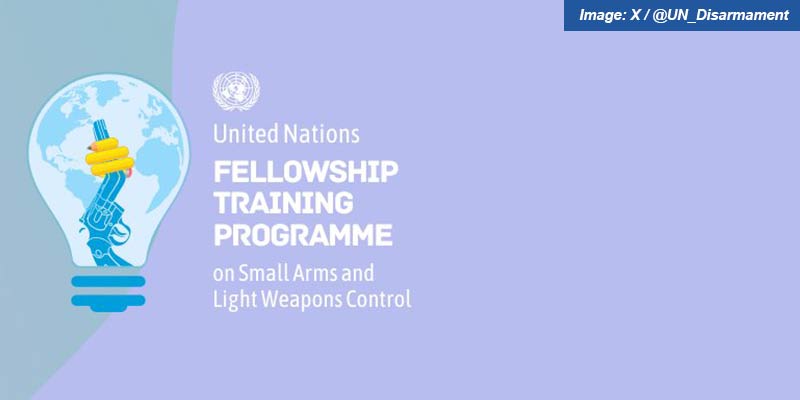
• The Indian Army is hosting the inaugural Asia-Pacific United Nations Fellowship Training Programme on Small Arms and Light Weapons (SALW) Control at the Military College of Materials Management in Jabalpur from February 16 to March 6.
• Delegates from 13 countries in the Asia-Pacific region are participating in the programme held under the aegis of the Ministries of External Affairs and Defence.
• The three-week fellowship is being organised by the United Nations Office for Disarmament Affairs (UNODA) through its Regional Centre for Peace and Disarmament in Asia and the Pacific (UNRCPD).
• The fellowship is designed to build the technical and operational capacity of government officials responsible for implementing the UN Programme of Action (PoA) and the International Tracing Instrument (ITI) — key global frameworks aimed at preventing the illicit trade, diversion and misuse of SALW.
• With illicit SALW proliferation being a major driver of conflict, terrorism and organised crime worldwide, this initiative marks a crucial step toward enhancing regional cooperation, improving tracing systems, and strengthening responsible stockpile management practices.
• The programme not only strengthens global disarmament efforts but also showcases India's growing contribution to multilateral peace and security initiatives.
What is the role of UNODA?
• The United Nations Office for Disarmament Affairs (UNODA) was established in January 1998 as the Department for Disarmament Affairs.
• It was originally established in 1982 upon the recommendation of the General Assembly’s second special session on disarmament.
• In 1992, its name was changed to the Centre for Disarmament Affairs, under the Department of Political Affairs.
• At the end of 1997, it was renamed Department for Disarmament Affairs and in 2007, it became the United Nations Office for Disarmament Affairs.
• The Office for Disarmament Affairs supports multilateral efforts aimed at achieving the ultimate goal of general and complete disarmament under strict and effective international control.
• The mandate for the programme is derived from the priorities established in relevant General Assembly resolutions and decisions in the field of disarmament.
• Weapons of mass destruction, in particular nuclear weapons, continue to be of primary concern owing to their destructive power and the threat that they pose to humanity.
• The Office also works to address the humanitarian impact of major conventional weapons and emerging weapon technologies, such as autonomous weapons, as these issues have received increased attention from the international community.
• UNODA provides substantive and organisational support for norm-setting in the area of disarmament through the work of the General Assembly and its First Committee, the Disarmament Commission, the Conference on Disarmament and other bodies.
• It fosters disarmament measures through dialogue, transparency and confidence-building on military matters, and encourages regional disarmament efforts. These include the United Nations Register of Conventional Arms and regional forums.
• It also provides objective, impartial and up-to-date information on multilateral disarmament issues and activities to Member States, States parties to multilateral agreements, intergovernmental organisations and institutions, departments and agencies of the United Nations system, research and educational institutions, civil society, especially non-governmental organisations, the media and the general public.
• UNODA supports the development and implementation of practical disarmament measures after a conflict, such as disarming and demobilising former combatants and helping them to reintegrate in civil society.
(The author is a trainer for Civil Services aspirants.)