
- India
- Feb 26
- Sreesha V.M
India, Nepal to strengthen cooperation in forests, environment
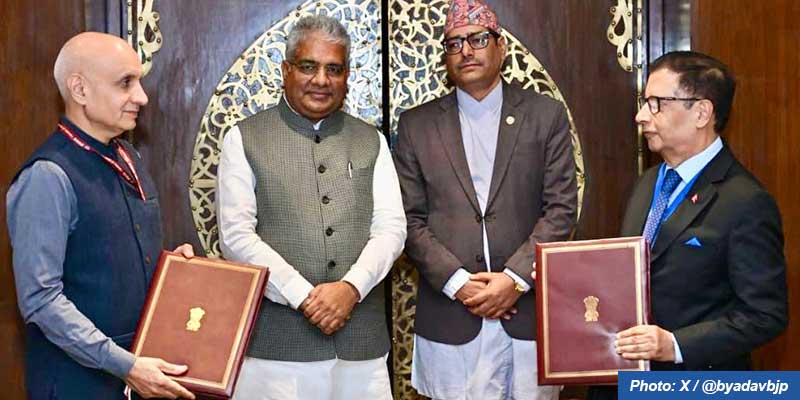
• India and Nepal signed a Memorandum of Understanding (MoU) to promote bilateral cooperation in the areas of forests, wildlife, environment, biodiversity conservation and climate change, including restoration of wildlife corridors and interlinking areas, and exchange of knowledge, technical expertise and best practices.
• The signing of this MoU is expected to further deepen India-Nepal cooperation in conservation of wildlife and biodiversity, and contribute to protection of shared ecosystems and sustainable management of natural resources in the region.
What is the need for such an MoU?
• India and Nepal are endowed with rich biodiversity and natural heritage and have established extensive networks of protected areas in their respective territories.
• Both countries are also Parties to several multilateral environmental agreements and conventions.
• In view of the shared ecosystems and transboundary wildlife habitats, a need was felt to further strengthen coordination and cooperation between the two governments in the fields of forests, wildlife, environment, biodiversity conservation and climate change.
Provisions of the MoU
• The MoU envisages cooperation in formulation of biodiversity conservation strategies at the landscape level with emphasis on key species such as elephant, Gangetic dolphin, rhinoceros, snow leopard, tiger and vultures.
It also provides for:
• Strengthened forest and protected area management.
• Restoration of corridors and other interlinking areas towards creation of transboundary conservation landscapes.
• Addressing biodiversity conservation threats.
• Combating forest and wildlife crime.
• Strengthening the capacity of frontline staff of enforcement agencies.
• Promoting smart green infrastructure in biodiversity hotspots.
(The author is a trainer for Civil Services aspirants.)