
- India
- Mar 04
How oil supply disruptions in Middle East could affect India?
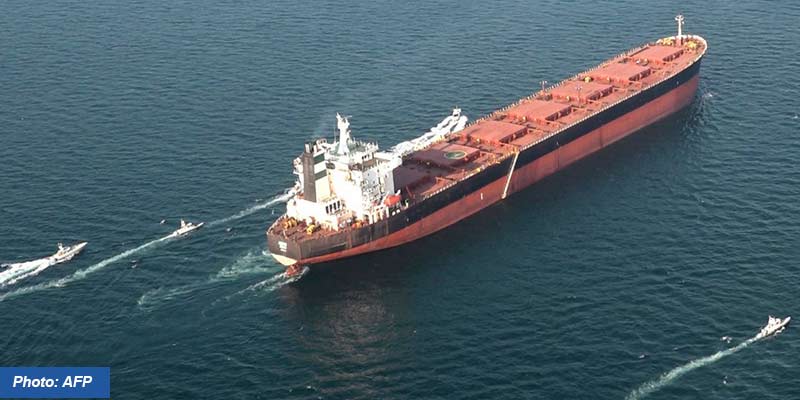
• India is one of the most vulnerable to crude oil supply disruptions caused by the escalating Middle East crisis and the closure of the Strait of Hormuz.
• As of January, about 55 per cent of India’s crude exports came from the Middle East via the Strait of Hormuz.
• The Strait of Hormuz transports about a fifth of the global oil supply.
• Iran has announced that it would not let any ship pass through the Strait of Hormuz as Tehran’s tensions with the US and Israel escalated.
• Asian countries like China, India, Japan and South Korea are at the most risk from a disruption in the region.
• However, Japan’s reserves can cover 254 days of consumption and South Korea’s stockpiles can cover 208 days.
• India would be forced to seek alternatives in case of prolonged closure.
Strategic Petroleum Reserves in India
• Keeping in view India’s high import dependence for oil and gas and in the interest of meeting the objective of country’s energy security, the Ministry of Petroleum and Natural Gas (MoP&NG), in pursuance to the decision of the Union Cabinet on January 7, 2004 took up construction of crude oil reserve facilities as a buffer to deal with any situation of supply chain disruption due to external reasons.
• A Special Purpose Vehicle (SPV) called Indian Strategic Petroleum Reserves Limited (ISPRL) was created on June 16, 2004.
• ISPRL has been mandated to build and operate strategic crude oil reserves. Subsequently, on May 9, 2006, ISPRL became a fully owned subsidiary of Oil Industry Development Board (OIDB).
• Under phase-I of Strategic Petroleum Reserve (SPR) programme, the government through ISPRL, has built SPR facilities with a total capacity of 5.33 Million Metric Tonnes (MMT) at three locations.
1) Visakhapatnam (1.33 MMT)
2) Mangaluru (1.5 MMT)
3) Padur (2.5 MMT).
• The facility in Visakhapatnam was commissioned in 2015. The facility has two compartments Cavern A (1.03 MMT) and Cavern B (0.3 MMT). Cavern A is for strategic crude oil and is filled through funds made available by the government. Hindustan Petroleum Corporation Limited (HPCL) has taken Cavern B on a proportionate cost sharing basis. This is being regularly used by HPCL for its refinery operations at Visakhapatnam.
• Both the compartments of the facility in Mangaluru were commissioned in October 2016. Abu Dhabi National Oil Company (ADNOC) of UAE stores crude oil, at its own cost, in Cavern A under an Amended and Restated Agreement on Oil Storage and Management. The Cavern B has been filled with the government’s crude oil.
• The Padur facility was commissioned in December 2018. It is an underground rock cavern with a total capacity of 2.5 MMT having four compartments of 0.625 MMT each.
• The total reserve of Phase-I of SPR is currently estimated to supply approximately 9.5 days of India’s crude requirement.
• In addition, oil marketing companies (OMCs) in the country have storage facilities for crude oil and petroleum products for 64.5 days
• The crude oil storages are constructed in underground rock caverns and are located on the east and west coast of India. Crude oil from these caverns can be supplied to the refineries either through pipelines or through a combination of pipelines and coastal movement. Underground rock caverns are considered as the safest means of storing hydrocarbons.
• These strategic storages are in addition to the storages of crude oil and petroleum products with the oil companies and serve as a cushion during any supply disruptions.
• To further augment the petroleum reserves’ capacity, in July 2021, the government approved the establishment of two additional facilities with total storage capacity of 6.5 MMT at Chandikhol (4 MMT) in Odisha and Padur (2.5 MMT) in Karnataka on public-private partnership (PPP) mode with a total project cost of Rs 14,527 crore.
• This expansion will increase the oil reserve equivalent to 12 days of import.
• Work for construction at Padur was awarded on October 1, 2025.
• Further, assessment of new sites for establishing additional petroleum reserves is a continuous process.