
- India
- Mar 06
- Sreesha V.M
What is Raisina Dialogue?
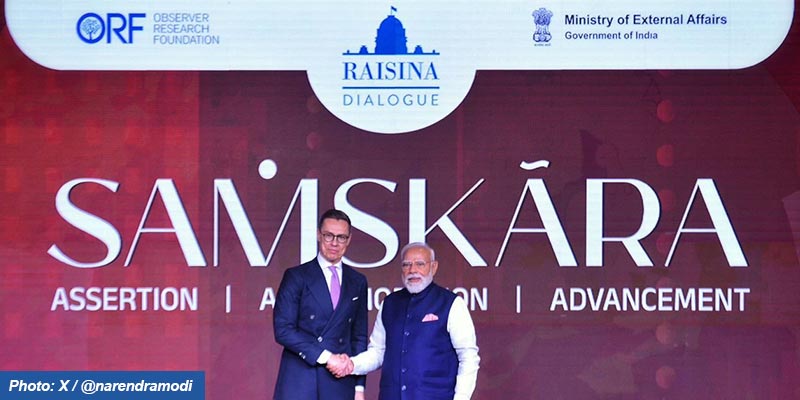
• Prime Minister Narendra Modi inaugurated the 11th edition of the Raisina Dialogue on March 5.
• The opening day of the flagship event was attended by a host of dignitaries, including Minister of External Affairs S. Jaishankar, members of the diplomatic corps, and strategic affairs experts and thinkers from various countries.
Raisina Dialogue
• The Raisina Dialogue is India’s flagship conference on geopolitics and geo-economics.
• The conference is hosted by the Observer Research Foundation in partnership with the Ministry of External Affairs.
• Every year, leaders in politics, business, media, and civil society converge in New Delhi to discuss the state of the world and explore opportunities for cooperation on a wide range of contemporary matters.
• The Dialogue is structured as a multi-stakeholder, cross-sectoral discussion, involving Heads of State, Cabinet ministers and local government officials, who are joined by thought leaders from the private sector, media and academia.
• The first Raisina Dialogue was held from March 1 to 3, 2016.
• The theme of the 2026 edition is ‘Samskara – Assertion, Accommodation, Advancement’.
• Over the course of three days, decision makers and thought leaders of the world will engage each other across conversations in various formats, over six thematic pillars:
i) Contested Frontiers: Power, Polarity, and Periphery.
ii) Repairing the Commons: New Groups, New Guardians, New Avenues
iii) White Whale: The Pursuit of Agenda 2030
iv) The Eleventh Hour: Climate, Conflict, and the Cost of Delay
v) Tomorrowland: Towards a Tech-topia
vi) Trade in the Time of Tariffs: Recovery, Resilience, Reinvention
• This edition will witness participation of representatives from 110 countries including ministers, former Heads of State and Heads of Government, members of parliament, military commanders, captains of industry, technology leaders, academics, journalists, scholars on strategic affairs, experts from leading think tanks, and youth.
(The author is a trainer for Civil Services aspirants.)