
- India
- Mar 10
India remains world’s second-largest arms importer
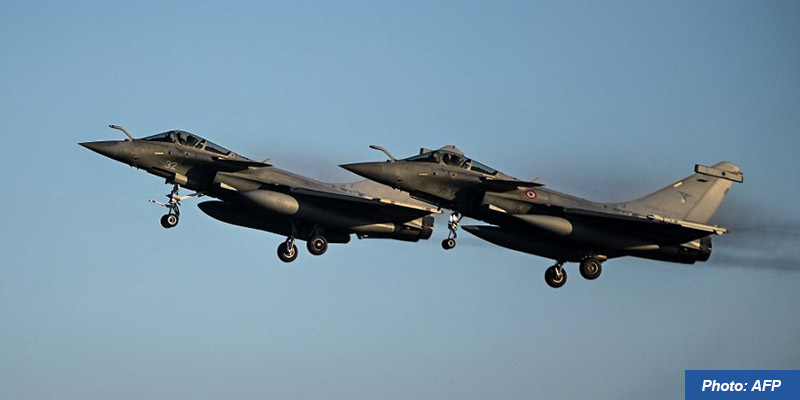
• India was the world’s second largest recipient of major arms in 2021-25 with an 8.2 per cent share of total global arms imports, according to new data published by the Stockholm International Peace Research Institute (SIPRI).
• Ukraine was the world’s largest recipient of major arms in 2021-25.
• The five largest recipients of major arms were Ukraine, India, Saudi Arabia, Qatar and Pakistan.
What is SIPRI?
• SIPRI is an independent international institute dedicated to research into conflict, armaments, arms control and disarmament. Established in 1966, SIPRI provides data, analysis and recommendations, based on open sources, to policymakers, researchers, media and the interested public.
• SIPRI was established on the basis of a decision by the Swedish Parliament and receives a substantial part of its funding in the form of an annual grant from the Swedish government.
Indian arms imports fall by 4%
• India’s arms imports are driven by its tensions with both China and Pakistan.
• These tensions have regularly led to armed conflict, as they did briefly between India and Pakistan in May 2025, with both sides using imported major arms.
• Indian arms imports fell by 4 per cent between 2016-20 and 2021-25.
• The decrease can be partly attributed to India’s growing ability to design and produce its own weapons — although there are often substantial delays in domestic production.
• However, India’s recent orders or planned orders — including up to 140 combat aircraft from France and six submarines from Germany — indicate its continued and probably increasing reliance on foreign suppliers.
• India has shifted its arms relations away from Russia towards Western suppliers, especially France, Israel and the US, over the past decade.
• Russia’s share of Indian arms imports dropped from 70 per cent in 2011-15 to 51 per cent in 2016-20 and then to 40 per cent in 2021-25.
• Arms imports by Pakistan grew by 66 per cent between 2016-20 and 2021-25. China supplied 80 per cent of Pakistan’s arms imports in 2021-25, up from 73 per cent in 2016-20.
Sharp increase in arms flows to European states
• The volume of major arms transferred between states increased by 9.2 per cent between 2016-20 and 2021-25.
• States in Europe more than trebled their arms imports, making it the biggest recipient region.
• Total exports by the United States, the world’s largest supplier of arms, increased by 27 per cent.
• This included a 217 per cent increase in US arms exports to Europe.
• The increase in global arms flows was the biggest since 2011-15.
• It was overwhelmingly due to the growth in transfers to Ukraine (which received 9.7 per cent of all arms transfers in 2021-25) and other European states.
• European states received 33 per cent of global arms imports, with the region’s imports increasing by 210 per cent between 2016-20 and 2021-25.
• After Ukraine, Poland and the United Kingdom were the biggest importers in Europe in the past five years.
• Almost half of arms transferred to European states came from the USA (48 per cent), followed by Germany (7.1 per cent) and France (6.2 per cent).
• Besides Europe and the Americas, arms imports to all other world regions decreased.
USA increases its dominance of arms exports
• The United States supplied 42 per cent of all international arms transfers in 2021-25, up from 36 per cent in 2016-20.
• The USA exported arms to 99 states in 2021-25.
• For the first time in two decades, the largest share of US arms exports went to Europe (38 per cent) rather than the Middle East (33 per cent).
• The top single recipient of US arms was Saudi Arabia (12 per cent of US arms exports).
• France was the second largest supplier of major arms in 2021-25, accounting for 9.8 per cent of global exports. Its arms exports increased by 21 per cent between 2016-20 and 2021-25.
• Russia was the only top 10 supplier to see its arms exports fall. Its share of global arms exports shrank from 21 per cent in 2016-20 to 6.8 per cent in 2021-25.
• Germany overtook China to become the fourth largest arms exporter in 2021-25, with 5.7 per cent of global arms exports.
• Arms exports by Italy increased by 157 per cent, pushing it from the tenth largest exporter in 2016-20 to the sixth largest in 2021-25. Over half of Italy’s exports went to the Middle East (59 per cent), while 16 per cent went to Asia and Oceania and 13 per cent to Europe.
• Israel, the seventh largest arms supplier, increased its share of global arms exports from 3.1 per cent in 2016-20 to 4.4 per cent in 2021-25, and for the first time ever overtook the United Kingdom (3.4 per cent).