
- India
- Mar 12
- Sreesha V.M
In a first, SC allows passive euthanasia for a 32-year-old man
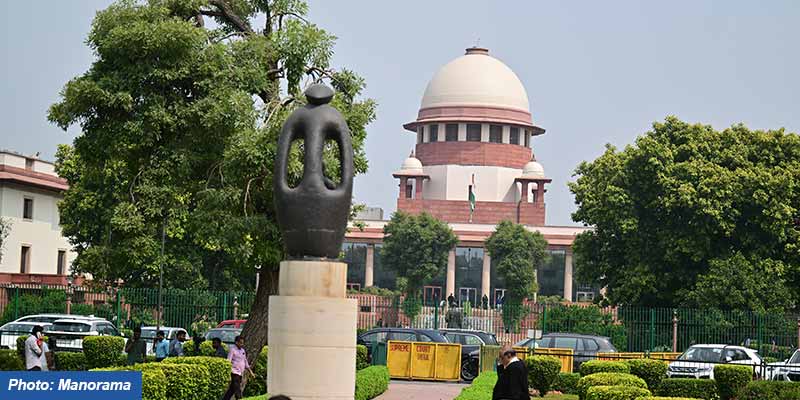
• In a historic judgment, the Supreme Court allowed passive euthanasia for 32-year-old Harish Rana, who has been in a permanent vegetative state since a tragic accident in 2013.
• A bench of justices J.B. Pardiwala and K.V. Viswanathan directed All India Institute of Medical Sciences (AIIMS), Delhi to ensure that life support is withdrawn with a tailored plan so that dignity is maintained.
• The bench allowed the plea filed by Rana through his father Ashok Rana and said AIIMS-Delhi should grant him admission in palliative care so medical treatment can be withdrawn in a humane manner.
• The ruling marks the judicial implementation of the Supreme Court’s landmark 2018 Constitution Bench verdict in Common Cause vs Union of India, which recognised passive euthanasia and the right to die with dignity under Article 21 of the Constitution.
• Under the framework, the decision must be approved by both a Primary Medical Board and a Secondary Medical Board before treatment can be withdrawn.
• These procedures were further simplified by the Supreme Court in January 2023.
Who is Harish Rana?
• Harish Rana from Ghaziabad is now 32 years old.
• In August 2013, while pursuing a BTech degree at Punjab University, he met with a tragic and life-altering accident.
• He fell from the fourth floor of his paying guest accommodation, as a result of which he sustained a diffuse axonal injury.
• Ever since the incident, he has been on tracheostomy, urinary catheter and Clinically Assisted Nutrition and Hydration (CANH) administered through the Percutaneous Endoscopic Gastrostomy (PEG) tube.
• Following his discharge, his fragile health condition necessitated frequent hospital admissions and regular medical treatments for his head injury, seizures, pneumonia and bedsores.
• Medical reports indicate that he exhibits no evidence of awareness of his environment and is incapable of interacting with others.
• He also does not indicate by any facial gesture, grunting, or body movement if he is hungry, has soiled himself or is in any other discomfort.
What the court said in its verdict?
• The Supreme Court bench noted that the twin legal requirements for the withdrawal and withholding of medical treatment have been unequivocally met.
• In light of the unanimous consensus arrived at by the parents/next of kin and the constituted medical boards respectively, it was of the opinion that the medical treatment ought not to be prolonged any further.
• The right to die with dignity is inseparable from the right to receive quality palliative and End of Life (EOL) care. It is imperative to ensure that the withdrawal process is not marred by pain, agony, or suffering.
• AIIMS shall grant admission to the Rana in its palliative care department so that the withdrawal and/or withholding of his medical treatment, including CANH, can be given effect to.
• The decision does not neatly fit within logic and reason alone. It sits in a space between love, loss, medicine and mercy. This decision is not about choosing death, but is rather one of not artificially prolonging life. It is the decision to withdraw life sustaining treatment when that treatment no longer heals, restores, or meaningfully improves life. It is allowing nature to take its course when medicine can only delay the inevitable because survival is not always the same as living.
Previous cases on passive euthanasia
• In 2011, the Supreme Court rejected a euthanasia plea on behalf of Aruna Shanbaug, bedridden in a vegetative state in a Mumbai hospital since a brutal sexual assault in November 1973. The apex court then had also said passive euthanasia can be allowed in cases of permanent vegetative state. Shanbaug finally died in 2015 of pneumonia.
• In 2018, in Common Cause vs Union of India, the Supreme Court recognised the “right to die with dignity” as a fundamental right under Article 21. It legalised passive euthanasia and “living wills” and laid down strict procedures for implementing these directives.
(The author is a trainer for Civil Services aspirants.)