
- India
- Mar 14
- Sreesha V.M
Restructuring of Jal Jeevan Mission
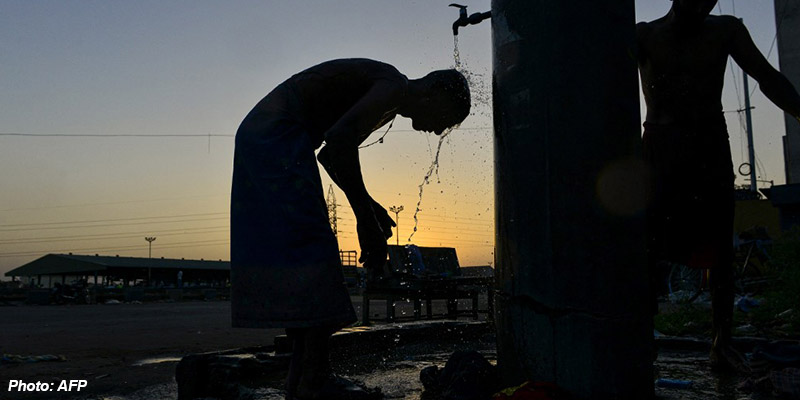
• Launched in August 2019, the Jal Jeevan Mission (JJM) aims to provide every rural household with safe and adequate drinking water through a Functional Household Tap Connection (FHTC).
• At the start of the programme, only 3.23 crore rural households had tap water connections.
• As of March 3, 2026, more than 15.82 crore rural households across the country are reported to have tap water supply in their homes.
What is Jal Jeevan Mission?
• Drinking water is a State Subject, and hence, the responsibility of planning, approval, implementation, operation, and maintenance of drinking water supply schemes, including those under JJM, lies with state/UT governments.
• The central government supports the states/UTs by providing technical and financial assistance.
• The central government assistance to states for rural water supply began in 1972 with the launch of Accelerated Rural Water Supply Programme. It was renamed as National Rural Drinking Water Programme (NRDWP) in 2009.
• The Modi government restructured NRDWP into Jal Jeevan Mission in August 2019.
• The Jal Jeevan Mission (JJM) was announced on August 15, 2019 to provide Functional Household Tap Connection (FHTC) to every rural home by 2024.
• Under JJM, every rural household is to be provided with a functional tap water connection and ‘no one is left out’, irrespective of their socio-economic conditions.
• It is about achieving long-term drinking water security in such a way as to avoid making emergency arrangements through deployment of tankers or trains, hand pump installation, etc in any village.
How is JJM being implemented?
• The Mission forms part of one of the government’s biggest community infrastructure outlays with an amount of Rs 3.6 lakh crore giving a boost to manufacturing industry, creating job opportunities and extending support to lift the rural economy.
• In addition, an amount of Rs 26,940 crore was allocated to the states in 2021-22 as 15th Finance Commission tied grants for water and sanitation to rural local bodies and Panchayati Raj institutions.
• An amount of Rs 60,000 crore has been allocated to ‘Har Ghar Jal’ in Union Budget 2022-23 to provide tap water to 3.8 crore households.
• There is an assured funding of Rs 1,42,084 crore up to 2025-26.
• With JJM, focus is on ‘assured and regular water supply at household level’, which means water supply in adequate quantity (55 litres per person per day) of prescribed quality (as per Bureau of Indian Standards) on long-term and regular basis, which constitutes the very definition of the ‘functionality’ of taps or water supply systems.
• It is implemented in a decentralised manner following the ‘bottom-up’ approach, wherein the local village community plays a key role starting from planning to implementation and from management to operation & maintenance.
• Village Water & Sanitation Committees (VWSCs)/ Pani Samitis are being constituted and strengthened.
• States are giving priority to SC/ST majority populated villages, aspirational districts, villages in drought prone and desert areas and quality-affected habitations.
• Special focus is given to the districts affected with Japanese Encephalitis/ Acute Encephalitis Syndrome (JE-AES) which is one of the reasons behind infant mortality in the affected districts.
• Water quality monitoring & surveillance activities are given top priority under the Jal Jeevan Mission. Five women in each village are being trained to test water samples of any kind of contamination by using field test kits (FTKs).
Restructuring of JJM
• The Union Cabinet has approved the Ministry of Jal Shakti’s proposal to restructure and reorient the implementation of the JJM from infrastructure creation to a service delivery, supported by drinking water governance and institutional ecosystem for sustainable rural piped potable water supply.
• For restructuring JJM focussing on structural reforms, the Union Cabinet has approved enhancement of total outlay to Rs 8.69 lakh crore with total central assistance of Rs 3.59 lakh crore enhancing from Rs 2.08 lakh crore approved in 2019-20, that is additional central share of Rs. 1.51 lakh crore.
• The revamped programme is called Jal Jeevan Mission 2.0.
Highlights of JJM 2.0
• JJM 2.0 would facilitate the certification of all Gram Panchayats as ‘Har Ghar Jal’, by provisioning tap water connection to all the 19.36 crore rural households across the country by December 2028
• A uniform national digital framework, namely ‘Sujalam Bharat’, shall be instituted, under which every village shall be assigned a unique Sujal Gaon / Service Area ID, digitally mapping the complete drinking water supply system from source to tap.
• For ensuring transparency and accountability the involvement of Gram Panchayats and Village Water and Sanitation Committees (VWSCs) in the commissioning and formal handover of schemes through ‘Jal Arpan’.
• A Gram Panchayat shall certify completion of works and declare itself ‘Har Ghar Jal’ only upon confirmation that adequate in-village operation and maintenance mechanisms have been established by the state government.
• Recognising that community ownership and participation are critical for operational efficiency and source sustainability, the programme shall promote ‘Jal Utsav’ as an annual, community-led maintenance and review event, integrating local cultural ethos while reinforcing collective responsibility for drinking water secure future.
Impact of Jal Jeevan Mission
• As many as 11 states/UTs have become ‘Har Ghar Jal’ states/UTs. It means that 100 per cent households of these states/UTs are having tap water supply.
• The remaining states/UTs are at various stages of achieving the objectives of the mission.
• Beyond the physical achievements, impacts of JJM have been assessed by reputed national and international institutions/ individuals.
• SBI Research reported that JJM has freed 9 crore women from fetching water, enabling greater participation in other economic activities.
• The World Health Organisation (WHO) estimated reduction in women’s drudgery by saving 5.5 crore hours daily, prevention of 400,000 diarrheal deaths, and savings of 14 million Disability Adjusted Life Years (DALYs).
• Nobel laureate Michael Kremer estimated a potential of 30 per cent reduction in under-five mortality, saving 1,36,000 lives annually.
• IIM Bangalore & International Labour Organisation (ILO) estimated generation of 59.9 lakh direct and 2.2 crore indirect person-years of potential employment, strengthening rural livelihoods through JJM.
(The author is a trainer for Civil Services aspirants.)