
- India
- Mar 26
- Sreesha V.M
Parliament passes Transgender Persons Amendment Bill
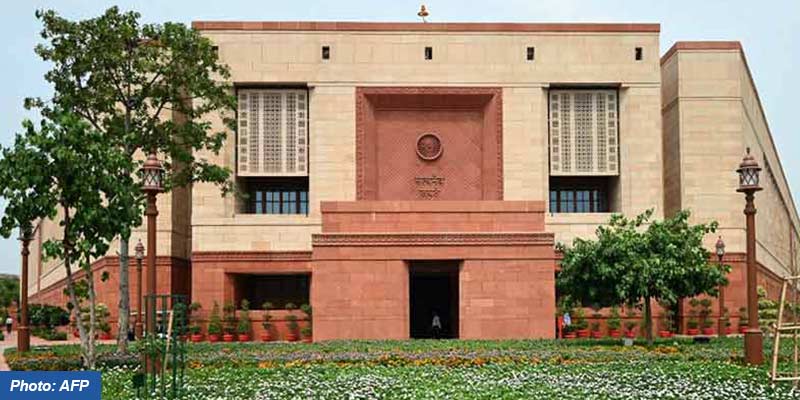
• The Parliament passed Transgender Persons (Protection of Rights) Amendment Bill, 2026 on March 25.
• The Bill amends a law on protection and rights of transgender persons that proposes excluding social orientations from the ambit of the statute.
• Replying to the debate on the Bill in the Rajya Sabha, Union Social Justice and Empowerment Minister Virendra Kumar said the proposed legislation aims to provide protection to only those who face discrimination due to biological reasons.
• The Bill was passed by a voice vote in the Rajya Sabha after rejecting amendments moved by the Opposition.
• The House did not approve the demands by the Opposition for sending the Bill to a select committee.
Why the government brings in amendment Bill?
• The Transgender Persons (Protection of Rights) Bill, 2019 was assented to by the President on December 5, 2019.
• It is the legislative policy to recognise a specific class of transgender persons, who face social issues and to create a regime for their protection.
• The legislative policy was and is intended to protect only those who face severe social exclusion due to biological reasons for no fault of their own and no choice of their own.
• Over the course of time, during the implementation of this enactment, certain doubts and difficulties have arisen with regard to the expansion of the definition of transgender persons and how the identification of such persons is to be done under the existing definition.
• The purpose was and is not to protect each and every class of persons with various gender identities, self-perceived sex/gender identities or gender fluidities.
• The existing vague definition of the expression “transgender person” not only makes it impossible to identify the genuine oppressed persons to whom the benefits of the Act are intended to reach, but also makes the operation and enforcement of several provisions under penal, civil and personal laws unworkable.
• Any enactment conferring rights, privileges and protections cannot have a definition clause whereby the status entitling such rights, privileges and protections can be acquired.
• It is therefore imperative to give a precise definition for proper and definitive identification and protection of transgender persons to whom the benefits of the Act must reach.
• The protection and benefits that are provided under the Act are vast in nature, and therefore, care has to be taken that such identification cannot be extended on the basis of any acquirable characteristics or personal choice or claimed self-perceived identity of an individual.
Why opposition raised voice against the Bill?
• The Opposition members raised concerns that the proposed legislation excludes social orientations from the ambit of the statute.
• While the government said the objective is to provide protection to transgenders, the opposition slammed the proposed legislation for taking away the right to self-determination of identity, such as gay and lesbian individuals, and demanded that it be sent to a standing committee for proper consultations.
• The Bill seeks to give a precise definition of the term “transgender” and exclude “different sexual orientations and self-perceived sexual identities” from the ambit of the proposed law
• MPs from various opposition parties said the Bill violates basic constitutional rights of transgenders and the Supreme Court judgment which provided them dignity and self-identification.
(The author is a trainer for Civil Services aspirants.)