
- India
- Mar 28
- Sreesha V.M
Govt introduces Jan Vishwas amendment Bill in Lok Sabha
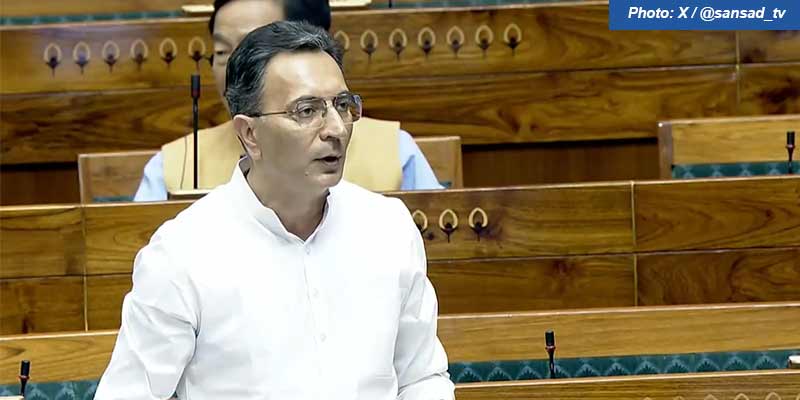
Minister of State for Commerce and Industry Jitin Prasada introduced Jan Vishwas (Amendment of Provisions) Bill, 2026 in the Lok Sabha on March 27.
Why is it called Jan Vishwas Bill 2.0?
• The Jan Vishwas (Amendment of Provisions) Bill, 2026 is a continuation of the regulatory reforms started under the Jan Vishwas (Amendment of Provisions) Act, 2023.
• The 2023 Act, notified on August 11, 2023, decriminalised 183 provisions in 42 Central Acts administered by 19 ministries/departments.
• Jan Vishwas (Amendment of Provisions) Bill, 2025 was introduced in Lok Sabha on August 18, 2025.
• The 2025 Bill proposed amendments to 355 provisions across 16 central Acts administered by 10 ministries/departments.
• It was referred to the select committee by the Speaker for examination and report.
• The select committee examined the said Bill and submitted its report to Lok Sabha on March 13.
• In addition to the Bill referred to it, the committee made recommendations to bring several other enactments within the ambit of the Bill.
• The Jan Vishwas (Amendment of Provisions) Bill, 2025 was thereafter withdrawn and Jan Vishwas (Amendment of Provisions) Bill, 2026 was introduced in Lok Sabha.
The Bill proposes:
i) Amendment of 784 provisions of 79 central Acts administered by 23 ministries.
ii) Decriminalisation of 717 provisions to promote Ease of Doing Business.
iii) Amendment of 67 provisions to facilitate Ease of Living.
• It seeks to rationalise more than 1,000 offences, removing outdated and redundant provisions thereby improving the overall regulatory environment.
• It envisages a shift from criminal penalties for minor, technical, or procedural defaults to civil and administrative enforcement mechanisms.
Key measures include:
i) Replacement of imprisonment provisions with monetary penalties or warnings.
ii) Graded enforcement mechanisms, including warnings for first-time contraventions.
iii) Rationalisation of fines and penalties in proportion to the nature of the offence.
To ensure efficient and time-bound enforcement, the Bill provides for:
• Appointment of Adjudicating Officers
• Establishment of Appellate Authorities
• These measures aim to facilitate speedy disposal of cases and reduce litigation burden on courts, while ensuring adherence to principles of natural justice.
The Bill also proposes 67 amendments under the:
• New Delhi Municipal Council Act, 1994
• Motor Vehicles Act, 1988.
• These amendments are aimed at simplifying procedures and enhancing citizen convenience in areas such as municipal taxation and vehicle-related compliance.
• The proposed reforms are based on a comprehensive consultative process involving Inter‑Ministerial Committee meetings, High‑Level Committee meetings under NITI Aayog, interactions with industry associations, and civil society organisations.
• By reducing the burden of criminal liability and simplifying regulatory processes, the Bill is expected to enhance compliance, promote investment, and strengthen economic growth.
(The author is a trainer for Civil Services aspirants.)