
- India
- Mar 31
- Sreesha V.M
Lok Sabha passes Insolvency and Bankruptcy Code (Amendment) Bill, 2025
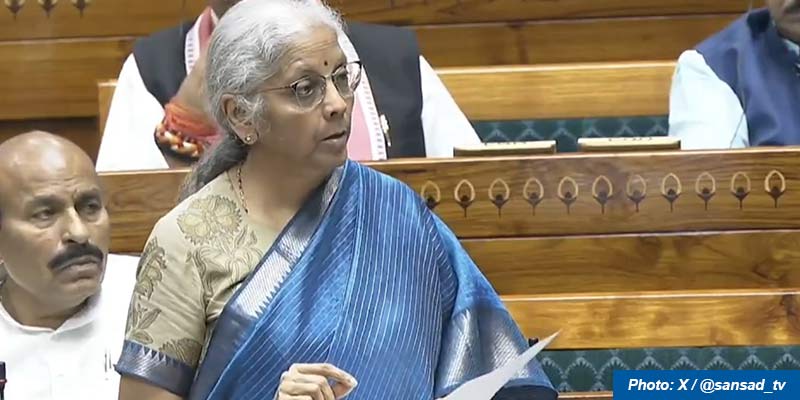
• The Lok Sabha passed the Insolvency and Bankruptcy Code (Amendment) Bill, 2025 on March 30.
• Finance and Corporate Affairs Minister Nirmala Sitharaman said that 12 amendments are being made in the Insolvency and Bankruptcy Code (IBC), which came into force in 2016, that would help maximise the value for stakeholders and improve the governing process itself.
• The Insolvency and Bankruptcy Code (Amendment) Bill, 2025, was introduced in the Lok Sabha on August 12, 2025 and referred to the select committee of Lok Sabha for further examination.
• The report of the Select Committee was received on December 17, 2025.
• Sitharaman stated that all the committee’s recommendations have been accepted.
• The Insolvency and Bankruptcy Code has been amended seven times so far.
Why the govt brings in amendments?
• The Insolvency and Bankruptcy Code, 2016 was enacted to consolidate and amend the laws relating to reorganisation and insolvency resolution of corporate persons, partnership firms and individuals in a time bound manner for maximisation of value of assets of such persons, to promote entrepreneurship, availability of credit and balance the interests of all the stakeholders including alteration in the order of priority of payment of government dues and to establish an Insolvency and Bankruptcy Board of India (Board) and for matters connected therewith or incidental thereto.
• The primary objective of the Code is to resolve insolvency and bankruptcy cases in a time bound manner for maximisation of value of assets of individuals, partnership firms and corporate persons.
• The Code, as an economic legislation, requires periodic updates to align with changing market needs and lessons learnt from practical experience.
• Over the past three years, extensive stakeholder consultations have been undertaken.
• Issues arising in the implementation of the Code and new concepts were discussed in a colloquium with key stakeholders held in November 2022, followed by deliberations in the Insolvency Law Committee in January 2023.
• Subsequently, the government issued a discussion paper inviting public comments on proposed changes to the Code.
• The government decided to amend the Code to improve its operation, enhance its effectiveness, clarify its original intent and incorporate novel concepts.
• The proposed amendments aim to reduce delays, maximise value for all stakeholders, and improve governance of all processes under the Code.
• They seek to modify existing provisions to better align with the overall objectives of the Code and to introduce new provisions that follow global best practices for resolving insolvency.
• Among other measures, the proposed legislation introduces a “creditor initiated insolvency resolution process” with an out-of-court initiation mechanism for genuine business failures to facilitate faster and more cost-effective insolvency resolution, with minimal business disruption.
• Once implemented, this will help ease the burden on judicial systems, promote ease of doing business and improve access to credit.
• The proposed legislation also introduces provisions for “group insolvency” and “cross-border insolvency”.
• The group insolvency framework seeks to efficiently resolve insolvencies involving complex corporate group structures, minimising value destruction caused by fragmented proceedings and maximising value for creditors through coordinated decision-making.
• The cross-border insolvency framework seeks to lay the foundation for protecting stakeholder interests in domestic and foreign proceedings, promoting investor confidence and aligning domestic practices with international best practices.
• This will also pave the way for improved recognition of Indian insolvency proceedings in other jurisdictions.
(The author is a trainer for Civil Services aspirants.)