
- India
- Apr 08
Amit Shah pays tributes to Bankim Chandra Chatterjee on his death anniversary
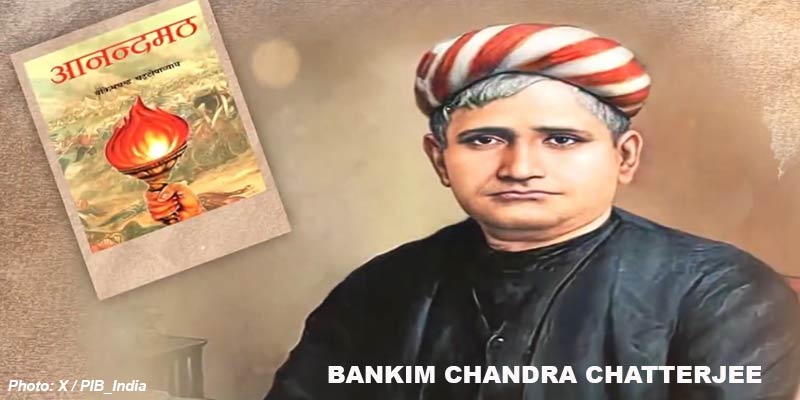
• Union Home Minister Amit Shah paid tributes to Bankim Chandra Chatterjee on his death anniversary on April 8.
• ‘Vande Mataram’, written by Bankim Chandra Chatterjee, was first published in the literary journal ‘Bangadarshan’ on November 7, 1875.
• Later, Bankim Chandra Chatterjee incorporated the hymn in his novel ‘Anandamath’.
• ‘Vande Mataram’ was sung at the 1896 session of the Congress by Rabindranath Tagore.
• This composition, an enduring anthem, has inspired countless generations of freedom fighters and nation builders, standing as a lasting emblem of India’s national identity and collective spirit.
• It has become an integral part of the nation’s civilisational, political and cultural consciousness.
• On January 24, 1950, Dr. Rajendra Prasad addressed the Constituent Assembly, stating that ‘Vande Mataram’, due to its significant role in the freedom movement, should have the same status as the National Anthem, ‘Jana Gana Mana’, and be honored equally.
• His statement was adopted with Rabindranath Tagore’s ‘Jana Gana Mana’ being adopted as the National Anthem of independent India, and Bankim Chandra Chatterjee’s ‘Vande Mataram’ being adopted as the National Song.
Bankim Chandra Chatterjee
• Bankim Chandra Chatterjee (1838-1894) was one of the most prominent figures of 19th-century Bengal.
• He holds a pivotal role in the intellectual and literary history of Bengal during the 19th century.
• He was born on June 26, 1838, in Naihati, Bengal Presidency, British India (present-day West Bengal).
• As a distinguished novelist, poet, and essayist, his contributions significantly influenced the development of modern Bengali prose and the articulation of an emerging Indian nationalism.
• His notable works, including ‘Anandamath’ (1882), ‘Durgeshnandini’ (1865), ‘Kapalkundala’ (1866), and ‘Devi Chaudhurani’ (1884), reflect the social, cultural, and moral concerns of a colonised society striving for self-identity.
• The composition of ‘Vande Mataram’, is recognised as a milestone in nationalist thought, symbolising the synthesis of devotion to the motherland and spiritual idealism.
• ‘Anandamath’ was serialised in the Bengali monthly magazine ‘Bangadarshan’, of which Chatterjee was the founder editor.
• The song ‘Vande Mataram’ appeared in the very first instalment of the serialisation of the novel in the March-April 1881 issue.
• The central plot of the novel ‘Anandamath’ revolves around a group of Sanyasins known as Santanas (meaning children), who dedicate their lives to the cause of their motherland. They venerate the motherland personified as the mother goddess. Their devotion is solely to their land of birth.
• It stood as the symbol of the “religion of patriotism” that was the central theme of ‘Anandamath’.
• Through his writings, Bankim Chandra Chatterjee not only enriched Bengali literature but also laid the foundational ideological principles for India’s early nationalist movement.