
- India
- Apr 08
LS Speaker, RS Chairman reject notice to remove CEC Gyanesh Kumar
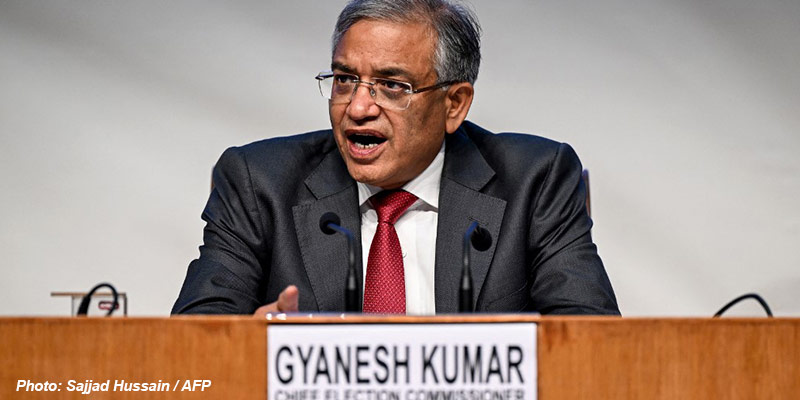
• Rajya Sabha Chairman C.P. Radhakrishnan and Lok Sabha Speaker Om Birla rejected separate notices from the opposition to move a motion for the removal of Chief Election Commissioner Gyanesh Kumar from his post.
• In March, the opposition submitted the notices against the Chief Election Commissioner.
• This was the first time a notice was moved seeking the removal of the Chief Election Commissioner.
• The notice of Motion was signed by 63 members of the Rajya Sabha under Article 324(5) of the Constitution, read with Article 124(4) thereof, Section 11(2) of the Chief Election Commissioner and Other Election Commissioners (Appointment, Conditions of Service and Term of Office) Act, 2023 and the Judges (Inquiry) Act, 1968, was submitted to the Rajya Sabha Chairman.
• Rajya Sabha Chairman, in exercise of the powers vested to him under Section 3 of the Judges (Inquiry) Act, 1968, refused to admit the said notice of Motion, a notification from the Rajya Sabha Secretary General said.
• A separate notification from the Lok Sabha Secretary General said a notice of motion signed by 130 Members of Lok Sabha was submitted to the Speaker.
• The Lok Sabha Speaker, in exercise of the powers vested to him under Section 3 of the Judges (Inquiry) Act, 1968, refused to admit the said notice of motion.
• Gyanesh Kumar took charge as the 26th Chief Election Commissioner on February 19, 2025. He is a 1988 batch Kerala cadre officer of the Indian Administrative Service.
Process for removing Chief Election Commissioner
• The process for removing the Chief Election Commissioner is similar to that for the removal of a Supreme Court or a High Court judge, meaning an impeachment can be effected only on the ground of “proven misbehaviour or incapacity”.
• Article 324(5) of the Constitution says the Chief Election Commissioner shall not be removed from office except in like manner and on like grounds as a judge of the Supreme Court, and the conditions of service of the Chief Election Commissioner shall not be varied to his disadvantage after his appointment.
• The motion for removal may be introduced in either House of Parliament and must be passed by a special majority — a majority of the total membership of the House and a two-thirds majority of the members present and voting.