
- India
- Apr 10
- Sreesha V.M
India withdraws bid to host COP33 climate summit in 2028
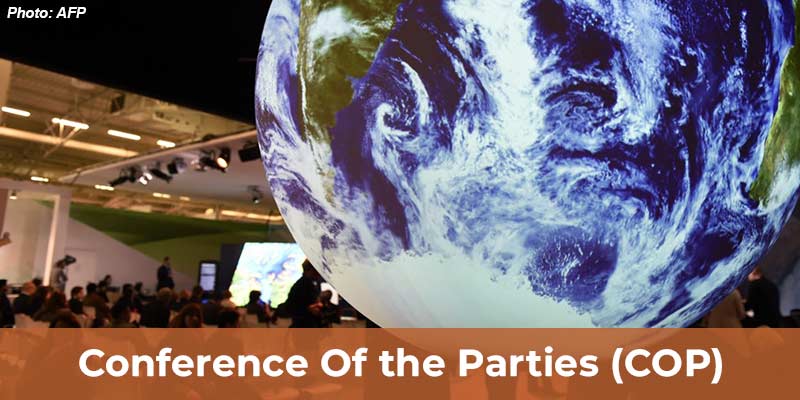
• India has reportedly withdrawn its offer to host the United Nations annual climate Conference of the Parties (COP33) in 2028.
• During his address at COP28 in Dubai in 2023, Prime Minister Narendra Modi had proposed India as the host country for COP33.
• Usually, the venue for a COP edition is decided two years in advance.
• In July 2025, the Environment Ministry in India had set up a dedicated COP33 Cell to address the professional and logistical requirements for the 2028 summit.
• The right to host the annual climate COP negotiations rotates between the UN’s five regional groups.
• This year, COP 31 will be held in Antalya, Turkey, from November 9 to 20.
• In 2027, COP32 will be held in the capital city of Ethiopia.
What is COP?
• The United Nations Framework Convention on Climate Change (UNFCCC) is a multilateral treaty adopted in 1992, shortly after the first assessment report by the Intergovernmental Panel on Climate Change (IPCC) in 1990, to stabilise greenhouse gas concentrations at a level that would prevent dangerous anthropogenic (human-induced) interference with the climate system.
• Since entering into force in 1994, the UNFCCC has provided the basis for international climate negotiations, including landmark agreements such as the Kyoto Protocol (1997) and the Paris Agreement (2015).
• The Conference of the Parties (COP) is the main decision-making body of the UNFCCC.
• It brings together 198 countries and the European Union.
• The inaugural COP gathering took place in Berlin, Germany, in March 1995, and today the COP secretariat is headquartered in Bonn.
• COPs serve as the formal meeting place each year for the Parties to negotiate and agree on how to tackle climate change, reduce emissions and limit global warming. A primary task at COPs is the examination of national reports and emission inventories submitted by participating countries.
• These reports offer essential insights into each country’s actions and their progress toward achieving the overarching goals of the Convention.
• COPs are meant to be inclusive affairs and, as well as world leaders and government representatives, a diverse range of people from all aspects of society, from business leaders and climate scientists to Indigenous Peoples and youth, are involved, taking part in order to share insights and best practices to strengthen climate action that benefits all.
• COP decisions are made by consensus, meaning nearly every country in the world must agree. This ensures broad support and protects the interests of developing and climate-vulnerable nations.
• The COP presidency rotates among the five recognised UN regions — Africa, Asia, Latin America and the Caribbean, Central and Eastern Europe and Western Europe and others. This rotation ensures that different corners of the world have the opportunity to host and showcase their commitment to addressing climate challenges.
How is the host country of COP selected?
• Regional group members hold consultations to determine which country from their region will make an offer to host a conference.
The host country of the COP normally rotates among the five United Nations regional groups:
i) The African Group
ii) The Asia-Pacific Group
iii) The Eastern Europe Group
iv) The Latin American and Caribbean Group (GRULAC)
v) The Western European and Others Group (WEOG).
• Once agreed, the country selected by the regional group to host the conference sends, through its regional group, its offer formally to the UNFCCC secretariat.
• The COP considers the offers and adopts a decision, usually titled “Dates and Venues of Future Sessions”, accepting the offer.
• The secretariat then undertakes a fact-finding mission to the prospective host country to determine that all “logistical, technical and financial elements for hosting the sessions are available” and reports back to the Bureau.
Landmark agreements from previous COPs
a) 1997 Kyoto Protocol — first legally binding emissions targets for industrialised countries.
b) 2015 Paris Agreement — all Parties committed to limit warming below 2°C (compared to pre-industrial levels) and pursue 1.5°C.
• Over three decades, COP decisions have shaped national laws, clean energy investments and climate programmes across the world.
• While progress can be gradual and negotiations complex, COP remains the only global platform where all countries work together to respond to the climate crisis, and it continues to drive real-world action.
(The author is a trainer for Civil Services aspirants.)