
- India
- Apr 15
- Sreesha V.M
Veto power in the UNSC
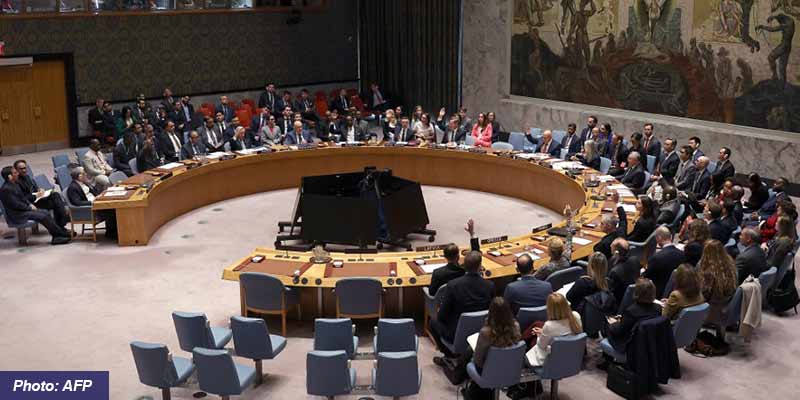
• India said that expanding the permanent category with veto powers is essential for any meaningful reform of the United Nations Security Council (UNSC).
• India emphasized that the current structure of the UNSC, designed over 80 years ago, no longer reflects contemporary geopolitical realities.
• Speaking at the Intergovernmental Negotiations (IGN) on Security Council reforms, India’s Permanent Representative Ambassador P. Harish noted that consideration of a new category under the framework of UNSC reform, with or without veto, would complicate an already existing discussion that involves wide-ranging views.
• He emphasized that reforms must address both the composition of the Council and the issue of veto power to correct longstanding imbalances.
• The Indian envoy recalled that the sole reform of the Council in the 1960s, which expanded only the non-permanent category, led to an increase in the relative power of veto-wielders.
• Any reform not accompanied by an expansion in the permanent category with veto would perpetuate existing imbalances and inequities, Harish said.
• For a resolution to be adopted, it must secure at least nine votes in favour, and no negative votes (or vetoes) by any of the five permanent members.
• India has often said that the country deserves a permanent seat.
UN Security Council
• The United Nations Charter established six main organs of the United Nations, including the Security Council. It gives primary responsibility for maintaining international peace and security to the Security Council.
• All members of the United Nations agree to accept and carry out the decisions of the Security Council. While other organs of the United Nations make recommendations to Member States, only the Security Council has the power to make decisions that member states are then obligated to implement under the Charter.
• The Security Council held its first session on January 17, 1946 at Church House, Westminster, London. Since its first meeting, the Security Council has taken permanent residence at the United Nations Headquarters in New York City.
• A representative of each of its members must be present at all times at UN headquarters so that the Security Council can meet at any time as the need arises.
• The Security Council takes the lead in determining the existence of a threat to the peace or act of aggression.
• It calls upon the parties to a dispute to settle it by peaceful means and recommends methods of adjustment or terms of settlement.
• In some cases, the Security Council can resort to imposing sanctions or even authorise the use of force to maintain or restore international peace and security.
• The Council is composed of 15 members.
• Five permanent members are: China, France, Russian Federation, the United Kingdom, and the United States.
• Ten non-permanent members are elected for two-year terms by the General Assembly.
The right to veto
• The creators of the United Nations Charter conceived that five countries — China, France, the USSR (which was succeeded in 1990 by the Russian Federation), the United Kingdom and the United States — because of their key roles in the establishment of the United Nations, would continue to play important roles in the maintenance of international peace and security.
• They were granted the special status of Permanent Member States at the Security Council, along with a special voting power known as the “right to veto”.
• It was agreed by the drafters that if any one of the five permanent members cast a negative vote in the 15-member Security Council, the resolution or decision would not be approved.
• All five permanent members have exercised the right of veto at one time or another.
• If a permanent member does not fully agree with a proposed resolution but does not wish to cast a veto, it may choose to abstain, thus allowing the resolution to be adopted if it obtains the required number of nine favourable votes.
• In the years following the end of the Cold War, vetoes were rare, often numbering one or two per year, and sometimes none at all.
• Since the mid-2010s, hands have been raised inside the chamber more often: seven times in 2023 and eight in 2024.
• Diplomats often point to this trend as evidence of widening geopolitical rifts, which have made consensus harder to achieve and limited the Council’s ability to respond decisively.
What is Veto Initiative?
• On April 26, 2022, the General Assembly adopted a landmark resolution aimed at holding the five permanent Council members accountable for their use of veto.
• Following the resolution adopted by consensus without a vote, any such use will now trigger a General Assembly meeting, where all UN members can scrutinise and comment on the veto.
• The UNGA decided that its President shall convene a formal meeting of the 193‑member organ within 10 working days of the casting of a veto by one or more permanent members of the Council and hold a debate on the situation as to which the veto was cast, provided that the Assembly does not meet in an emergency special session on the same situation.
• The aim is to hold these five permanent members accountable for exercising this special voting power, which allows them to block any Council resolution or decision.
• The ‘Veto Initiative’ gave the Assembly’s wider membership a greater voice in Council matters when the Council is prevented from taking action by one of its permanent members.
(The author is a trainer for Civil Services aspirants.)