
- India
- Apr 17
Govt notifies India’s first chip fabrication plant at SEZ Dholera
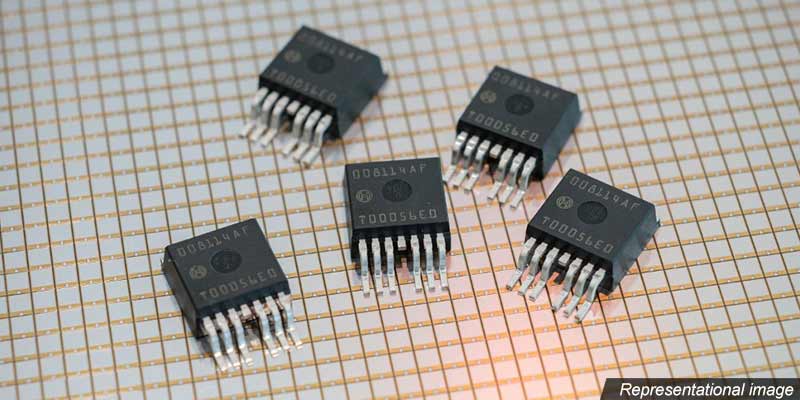
• The government has notified a Special Economic Zone (SEZ) to be set up by Tata Semiconductor Manufacturing Pvt Ltd for electronic hardware and software, including IT-enabled services, at Dholera in Gujarat.
• This is India’s first chip fabrication plant.
• The company has proposed an investment of Rs 91,000 crore.
• The SEZ includes enabling infrastructure and a dedicated approval mechanism to streamline operations and logistics.
Govt eases SEZ rules for semiconductor, electronics manufacturing
• The government had taken several significant steps to strengthen India’s semiconductor and electronics manufacturing ecosystem through progressive reforms in the Special Economic Zones (SEZ) law and targeted approvals of sector-specific SEZs.
• In line with the government’s focus, these reforms are aimed at promoting high-value, capital-intensive investments, fostering innovation, and enhancing ease of doing business in developing a globally competitive semiconductor ecosystem.
• Key amendments to the SEZ Rules, 2006 were carried out through the notification on June 3, 2025 to address the unique requirements of semiconductor and electronics manufacturing, including reduction in minimum land requirement from 50 hectares to 10 hectares, flexibility in encumbrance norms, inclusion of free-of-cost supplies in Net Foreign Exchange calculations, and permitting domestic sales in the Domestic Tariff Area (DTA) on payment of applicable duties.
• Following through on these reforms, the Board of Approval for SEZs has accorded approvals to major proposals of setting up of SEZs for semiconductor and electronics.
• So far, five new SEZs for this sector have been notified.
• It includes CG Semi (with proposed investment of Rs 2,150 crore), Kaynes Semicon (Rs 681 crore), Micron Semiconductor Technology India (Rs 13,000 crore), and Hubballi Durable Goods CLuster (Rs 100 crore).
• These projects are expected to catalyse the development of domestic value chains, generate high-skilled employment, and reduce import dependence.
• These SEZs are envisaged to contribute to the gradual build-up of a robust, competitive, resilient, and future-ready semiconductor ecosystem.
• Together with industry participation and policy support, these projects are facilitating and paving a way for the creation of integrated manufacturing clusters, strengthening domestic capabilities, and positioning India as an emerging hub for semiconductor and electronics production.
Importance of semiconductors
• Semiconductor is a foundational industry touching almost every aspect of life, powering everything from fridges to ACs and cars, aircraft to trains.
• Semiconductor chips are the essential building blocks of digital and digitised products. From smartphones and cars, through critical applications and infrastructures for healthcare, energy, communications and industrial automation, chips are central to the modern digital economy.
• Recent global semiconductors shortages forced factory closures in a wide range of sectors from cars to health care devices. In the car sector, for example, production in some European countries decreased by one-third in 2021. This made more evident the extreme global dependency of the semiconductor value chain on a very limited number of actors in a complex geopolitical context.
• By 2030, the global semiconductor industry is expected to grow to $1 trillion.
• The Indian semiconductor market, worth $15 billion in 2020, is estimated to reach $63 billion by 2026.
• India currently imports most of its semiconductors, but the government wants to change that through domestic manufacturing.