
- India
- Apr 20
Cabinet approves extension of Pradhan Mantri Gram Sadak Yojana-III to March 2028
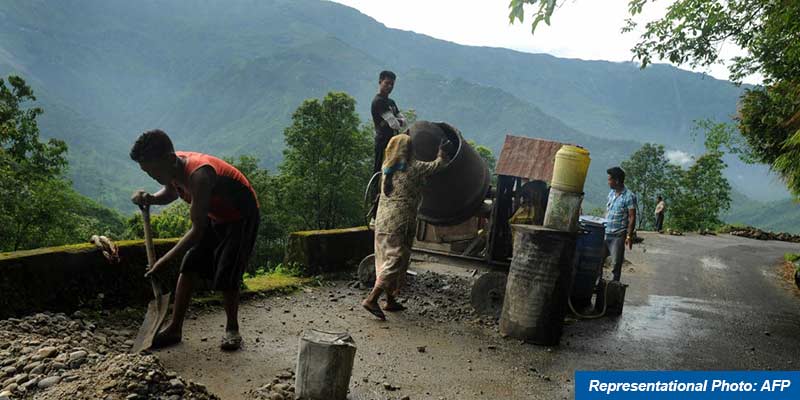
• The Union Cabinet, chaired by Prime Minister Narendra Modi, has given its approval for the continuation of Pradhan Mantri Gram Sadak Yojana-III (PMGSY-III) up to March 2028.
• The revised outlay of the scheme will be Rs 83,977 crore.
Pradhan Mantri Gram Sadak Yojana
• Road connectivity is a key component of rural development by promoting access to economic and social services and thereby generating employment opportunities and increased agricultural income.
• It is also a key ingredient in ensuring sustainable poverty reduction.
• The unit for this programme is habitation and not revenue village or panchayat. A habitation is a cluster of population living in an area and the location of which does not change over time. Desam, dhanis, tolas, majras, hamlets, etc are commonly used terminology to describe habitation.
• It aims to provide rural connectivity, by way of a single all-weather road, to the eligible unconnected habitations of designated population size (500+ in plain areas and 250+ in northeast states, Himalayan States, desert and tribal areas as per 2001 Census) for uplifting the socio-economic condition of the rural population. In selected left wing extremism blocks, habitations of 100-plus population were also to be provided connectivity.
• Various independent impact evaluation studies carried out on PMGSY have concluded that the scheme has had a positive impact on agriculture, health, education, urbanization and employment generation, etc.
• Rural connectivity is a development imperative. All weather road connectivity to balance habitations would unlock the economic potential of the connected habitations. Upgradation of the existing rural roads would improve the overall efficiency of road network as a provider of transportation services for people, goods and services.
• The construction/upgradation of roads would generate both direct and indirect employment to the local populace.
• The PMGSY promotes use of new and green technology in construction of rural roads and locally available materials are used in road construction in order to promote cost-effective and fast construction.
• The PMGSY envisages a three tier quality assurance mechanism to ensure quality of road works during construction and post-construction. The number of quality monitors both at central and state levels as also the intensity of the inspections have been increased for better quality management.
Phases of PMGSY
• PMGSY-I was launched in December 2000 as a one-time special intervention to provide rural connectivity, by way of a single all-weather road, to the eligible unconnected habitations. The phase-I was a 100 per cent Centrally Sponsored Scheme.
• As the programme unfolded, a need was felt for consolidation of the existing rural road network to improve its efficiency not only as a provider of transportation services, but also as a vehicle of social and economic development. Accordingly, in the year 2013, PMGSY-II was launched for upgradation of selected through routes and major rural links with a target to upgrade 50,000 km in various states and Union Territories.
• Subsequently, in 2016, Road Connectivity Project for Left Wing Extremism Affected Areas (RCPLWEA) for construction/upgradation of strategically important roads was launched as a separate vertical under PMGSY.
• The phase-III of the scheme was launched in 2019. It involves consolidation of 125,000 km through routes and major rural links connecting habitations to Gramin Agricultural Markets (GrAMs), higher secondary schools and hospitals. It also includes maintenance of the roads constructed under the scheme.
Extension of PMGSY-III
• The extension of the timeline of PMGSY-III will enable the full realization of its intended socio-economic benefits by ensuring completion of targeted upgradation of rural roads.
• It will significantly boost the rural economy and trade by enhancing market access for agricultural and non-farm products, reducing transportation time and costs, and thereby improving rural incomes.
• Improved connectivity will facilitate better access to education and healthcare institutions, ensuring timely delivery of essential services, particularly in remote and underserved areas.
• The continued implementation will also generate substantial employment opportunities, both directly through construction activities and indirectly by promoting rural enterprises and services.
• Overall, the extension will contribute to inclusive and sustainable development by bridging the rural-urban divide and advancing the vision of Viksit Bharat 2047.