
- India
- Apr 22
Meghalaya approves Khasi, Garo as official languages alongside English
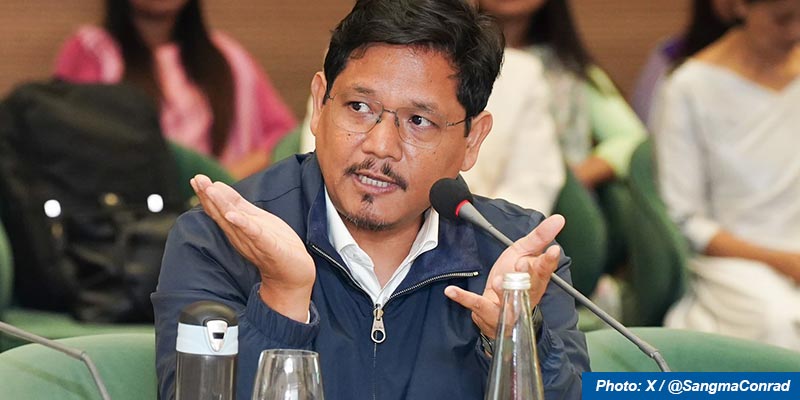
• Meghalaya Chief Minister Conrad K. Sangma said the state Cabinet cleared an ordinance to accord official language status to Khasi and Garo, in addition to English.
• The Meghalaya Official Languages Ordinance, 2026, which was approved by the state Cabinet, will also repeal the Meghalaya State Language Act, 2005.
• Under the new ordinance, Khasi and Garo can be used in official government communications, marking a significant step towards promoting and preserving the state’s indigenous languages.
• Sangma said necessary amendments will also be made to relevant laws, including the Meghalaya State Legislature (Continuance of English Language) Act, 1980, to facilitate the use of Khasi and Garo in legislative proceedings.
• Once these amendments are in place, legislators will be able to speak and participate in debates in Khasi and Garo during Assembly sessions, alongside English.
• The decision will also pave the way for the gradual introduction of Khasi and Garo in various examinations conducted in the state.
• However, the changes will not take effect immediately and will require time for implementation, as the necessary framework and systems need to be put in place.
• The move comes in line with a resolution adopted by the Assembly seeking inclusion of Khasi and Garo in the Eighth Schedule of the Constitution.
• Sangma said granting official status to the languages at the state level would strengthen the case for their inclusion in the Eighth Schedule and send a strong message to the Centre.
Languages in the Eighth Schedule
• Languages included in the Eighth Schedule of the Constitution of India are known as Scheduled Languages.
• Of the total population of India, 96.71 per cent have one of the Scheduled Languages as their mother tongue. The remaining 3.29 per cent is accounted for by other languages.
The Eighth Schedule to the Constitution consists of 22 languages:
1) Assamese
2) Bengali
3) Bodo
4) Dogri
5) Gujarati
6) Hindi
7) Kannada
8) Kashmiri
9) Konkani
10) Maithili
11) Malayalam
12) Manipuri
13) Marathi
14) Nepali
15) Odia
16) Punjabi
17) Sanskrit
18) Santhali
19) Sindhi
20) Tamil
21) Telugu
22) Urdu.
• Of these languages, 14 were initially included in the Constitution in January 1950. Sindhi language was added in April 1967. Thereafter three more languages — Konkani, Manipuri and Nepali — were included in August 1992. Subsequently Bodo, Dogri, Maithili and Santhali were added in January 2004.
Demand for more languages for inclusion in the Eighth Schedule
According to the Ministry of Home Affairs, there are demands for inclusion of 38 more languages in the Eighth Schedule to the Constitution. They are:
1) Angika
2) Banjara
3) Bazika
4) Bhojpuri
5) Bhoti
6) Bhotia
7) Bundelkhandi
8) Chhattisgarhi
9) Dhatki
10) English
11) Garhwali (Pahari)
12) Gondi
13) Gujjar/Gujjari
14) Ho
15) Kachchhi
16) Kamtapuri
17) Karbi
18) Khasi
19) Kodava (Coorg)
20) Kok Barak
21) Kumaoni (Pahari)
22) Kurak
23) Kurmali
24) Lepcha
25) Limbu
26) Mizo (Lushai)
27) Magahi
28) Mundari
29) Nagpuri
30) Nicobarese
31) Pahari (Himachali)
32) Pali
33) Rajasthani
34) Sambalpuri/Kosali
35) Shauraseni (Prakrit)
36) Saraiki
37) Tenyidie
38) Tulu.
• At present, there are no fixed criteria for any language to be considered for inclusion in the Eighth Schedule to the Constitution and therefore, no time-frame is fixed for consideration of the demands for inclusion of more languages in the Eighth Schedule to the Constitution.
• Many of these languages are spoken in several states and therefore, their use is not restricted by state boundaries.
• As the evolution of dialects and languages is a dynamic process, influenced by socio-cultural, economic and political developments, it is difficult to fix any criterion for languages for inclusion in the Eighth Schedule to the Constitution.