
- India
- Apr 25
Explainer - Anti-defection law
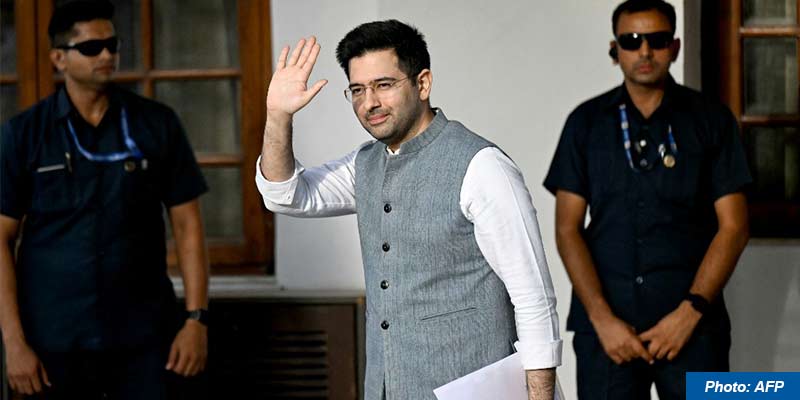
• Rajya Sabha MPs Raghav Chadha and Sandeep Pathak announced in Delhi that they were quitting the Aam Aadmi Party (AAP), along with five other parliamentarians — Ashok Mittal, Harbhajan Singh, Swati Maliwal, Rajinder Gupta and Vikram Sawhney.
• Chadha also said that all seven have merged with the Bharatiya Janata Party (BJP).
• In the Rajya Sabha, the Aam Aadmi Party has 10 MPs. By moving as a bloc, they have strategically met the two-thirds threshold required under the anti-defection law to merge with the BJP without losing their seats.
• Seven Rajya Sabha MPs, including six from Punjab, quitting the AAP has come as a big setback for the party ahead of the Assembly polls in Punjab in 2027.
What is the Tenth Schedule of the Indian Constitution?
• Defection may be defined as the practice of floor crossing by a member of one political outfit to another.
• The Constitution (Fifty-second Amendment) Act, 1985 popularly known as the anti-defection law came into force on March 1, 1985. It amended Articles 101, 102, 190 and 191 of the Constitution regarding vacation of seats and disqualification from membership of Parliament and the State Legislatures and added a new schedule — the Tenth Schedule — to the Constitution.
• The 52nd Amendment to the Constitution sought to put an end to the scourge of political defections.
• The Tenth Schedule contains the following provisions with respect to the disqualification of members of Parliament and the state legislatures on the grounds
• This law was introduced to address the frequent defections by legislators, which had destabilised many state governments, especially after the 1967 general elections.
The anti-defection law deals with situations of defection in Parliament or state legislatures by:
a) members of a political party,
b) independent members, and
c) nominated members.
A legislator could be disqualified:
i) If he or she voluntarily gives up the membership of a political party or joins any other political party after the election, votes or abstains from any crucial voting contrary to the directive circulated by his/her respective political party.
ii) A nominated member if he/she joins any political party after six months from the date he/she takes his seat.
iii) If, not less than two-thirds of the members of the legislature party have agreed to merge with other party they are exempted from disqualification.
• The Chairman or the Speaker of the House have absolute power in deciding the cases pertaining to disqualification of members on the ground of defection.
Exceptions:
Legislators may change their party without the risk of disqualification in certain circumstances.
i) The law allows a party to merge with or into another party provided that at least two-thirds of its legislators are in favour of the merger.
ii) If a person is elected as the Speaker of Lok Sabha or the Chairman of Rajya Sabha, then he could resign from his party and rejoin the party once he demits that post.
• While these decisions are initially vested with the Speaker or Chairman, they are not immune from judicial scrutiny. The Supreme Court has ruled that such decisions are subject to judicial review to ensure fairness and adherence to constitutional principles.
• This means courts can intervene if there are concerns over bias, procedural irregularities, or violation of natural justice in the disqualification process.
• It must be noted here that the provision of the Tenth Schedule pertaining to exemption from disqualification in case of split by one-third members of legislature party has been deleted by the 91st Amendment Act of 2003.