
- India
- May 06
- Sreesha V.M
Explainer - Fair and Remunerative Price (FRP) of sugarcane
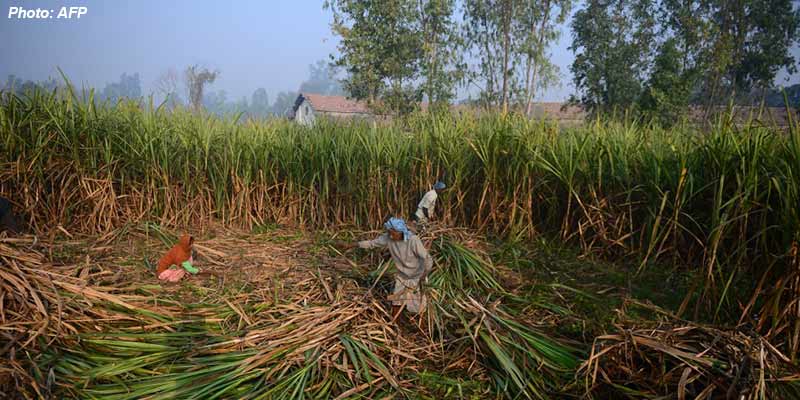
• The Cabinet Committee on Economic Affairs, chaired by Prime Minister Narendra Modi, approved Fair and Remunerative Price (FRP) of sugarcane for sugar season 2026-27 at Rs 365/qtl for a basic recovery rate of 10.25 per cent.
• FRP is the minimum price that mills have to pay to sugarcane growers.
• Sugar season runs from October to September.
• The approved FRP is 2.81 per cent higher than the current 2025-26 season rate of Rs 355 per quintal.
• For every 0.1 per cent increase in recovery above 10.25 per cent, the FRP will rise by Rs 3.56 per quintal, incentivising higher sugar recovery by mills.
• The government has also decided that there shall not be any deduction in case of sugar mills where recovery is below 9.5 per cent. Such farmers will get Rs 338.3/qtl for sugarcane in the ensuing sugar season 2026-27.
• While the production cost of sugarcane for 2026-27 has been pegged at Rs 182 per quintal, the FRP fixed is 100.5 per cent higher than the production cost.
• The decision is expected to benefit nearly one crore sugarcane farmers, support farm labourers engaged in sugarcane cultivation and ensure the continued operation of sugar factories.
• The FRP has been increased every year over the last ten years.
• Sugarcane is grown mainly in Maharashtra, Uttar Pradesh, and Karnataka.
• The sugar sector is an important agro-based sector that impacts the livelihood of about 5 crore sugarcane farmers and their dependents and around 5 lakh workers directly employed in sugar mills, apart from those employed in various ancillary activities including farm labour and transportation.
What is FRP? How is it calculated?
• FRP is the minimum price that mills have to pay to sugarcane growers.
• With the amendment of the Sugarcane (Control) Order, 1966 on October 22, 2009, the concept of Statutory Minimum Price (SMP) of sugarcane was replaced with the ‘Fair and Remunerative Price (FRP)’ of sugarcane.
• The cane price announced by the central government is decided on the basis of the recommendations of the Commission for Agricultural Costs and Prices (CACP) in consultation with the state governments and after taking feedback from associations of sugar industry.
• The Commission for Agricultural Costs & Prices (CACP) is an attached office of the ministry of agriculture and farmers welfare. It was established in January 1965.
The amended provisions of the Sugarcane (Control) Order, 1966 provides for fixation of FRP of sugarcane having regard to the following factors:
1) Cost of production of sugarcane.
2) Return to the growers from alternative crops and the general trend of prices of agricultural commodities.
3) Availability of sugar to consumers at a fair price.
4) Price at which sugar produced from sugarcane is sold by sugar producers.
5) Recovery of sugar from sugarcane.
6) The realisation made from sale of byproducts — molasses, bagasse and press mud or their imputed value.
7) Reasonable margins for the growers of sugarcane on account of risk and profits.
• Under the FRP system, the farmers are not required to wait till the end of the season or for any announcement of the profits by sugar mills or the government. This system also assures margins on account of profit and risk to farmers, irrespective of the fact whether sugar mills generate profit or not.
• In order to ensure that higher sugar recoveries are adequately rewarded and considering variations amongst sugar mills, the FRP is linked to a basic recovery rate of sugar, with a premium payable to farmers for higher recoveries of sugar from sugarcane.
(The author is a trainer for Civil Services aspirants.)