
- India
- May 13
ICMR, ICAR launch SEHAT Mission
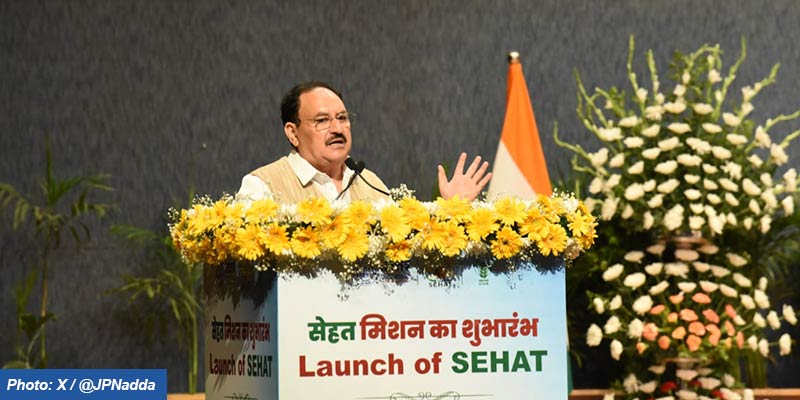
• The Indian Council of Medical Research (ICMR) and Indian Council of Agricultural Research (ICAR) jointly launched SEHAT - ‘Science Excellence for Health through Agricultural Transformation’ initiative on May 11.
• It is designed to translate agricultural advancements into tangible health outcomes for the people of India.
• The joint initiative was unveiled by Union Minister of Health & Family Welfare J.P. Nadda and Union Minister of Agriculture and Farmers’ Welfare Shivraj Singh Chouhan.
What is SEHAT Mission?
• SEHAT has been envisioned as a mission-mode initiative to strategically align agricultural research and innovation with national priorities in nutrition, preventive and promotive healthcare, non-communicable diseases, farmer well-being, and One Health.
• The initiative embodies a structured convergence of the health and agriculture sectors, aimed at generating robust, evidence-based solutions to improve nutritional outcomes and strengthen public health.
• The mission focuses on five priority areas of national significance.
They are:
i) The development and evaluation of biofortified and nutrient-dense crop varieties to address malnutrition and improve nutritional status.
ii) Strengthening integrated farming systems to promote dietary diversification, enhance farm incomes, and build resilience.
iii) Addressing occupational health risks among agricultural workers through targeted, evidence-based interventions.
iv) Advancing agriculture-enabled strategies for the prevention and management of non-communicable diseases through the promotion of functional foods and nutritionally superior crop varieties.
v) Strengthening One Health preparedness through integrated surveillance, diagnostics, and research at the human-animal-environment interface.
• The launch of SEHAT marks an important step towards adopting an integrated approach to health by leveraging agricultural transformation as a key determinant of public health outcomes.
• It is aimed at linking agriculture with improved nutrition, disease prevention, farmer welfare, and scientific policymaking.
• The expected impacts of the mission include improved nutritional quality, reduced hidden hunger and micronutrient deficiencies, prevention of non-communicable diseases, farmer health, sustainable food systems, and science-based policy support.