
- India
- May 14
EC announces phase-3 of Special Intensive Revision of electoral rolls
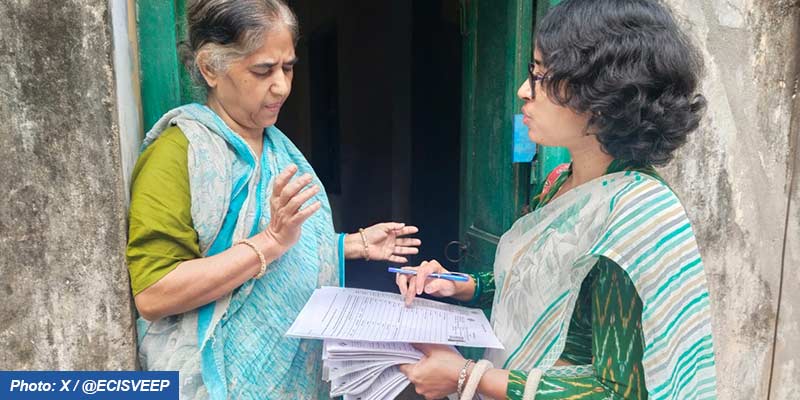
• The Election Commission(EC) announced the schedule for the Special Intensive Revision (SIR) of electoral rolls in 16 states and three Union Territories in a phased manner beginning May 30.
• The states and UTs where the SIR will be carried out are Delhi, Odisha, Mizoram, Sikkim, Manipur, Uttarakhand, Andhra Pradesh, Arunachal Pradesh, Haryana, Chandigarh, Telangana, Punjab, Karnataka, Meghalaya, Maharashtra, Jharkhand, Nagaland, Tripura, Dadar and Nagar Haveli and Daman and Diu.
• The objective of the exercise is to ensure that the names of all eligible citizens are included in the electoral roll so as to enable them to exercise their franchise, no ineligible voter is included in the electoral rolls and also to introduce complete transparency in the process of addition or deletion of electors in the electoral rolls.
• SIR phase-3 will cover 36.73 crore electors.
• Over 3.94 lakh Booth Level Officers (BLOs) will go house-to-house assisted by 3.42 lakh Booth Level Agents (BLAs) appointed by political parties during the enumeration phase.
• Schedule for SIR in Himachal Pradesh, Jammu & Kashmir and Ladakh will be announced later keeping in view weather conditions in snow-bound areas.
• The SIR has already been conducted in Bihar, West Bengal, Tamil Nadu, Kerala, Puducherry, Uttar Pradesh, Rajasthan, Madhya Pradesh, Gujarat, Chhattisgarh, Goa, Andaman and Nicobar Islands and Lakshadweep.
• A special revision was conducted in Assam.
What is the need for SIR?
• In exercise of its powers under Article 324 of the Constitution of India, Section 21 along with other applicable provisions of the Representation of the People Act, 1950 and the relevant provisions of the Registration of Electors Rules, 1960, Election Commission has ordered Special Intensive Revision (SIR) in nine states and three UTs.
• As per law, electoral rolls have to be revised before every election, or as per requirement.
• Political parties have been raising issues relating to the quality of electoral rolls.
Many changes in electoral rolls have occurred due to:
a) Frequent migration.
b) Voters getting registered at more than one place.
c) Non-removal of dead voters.
d) Young citizens becoming eligible to vote.
d) Wrongful inclusion of any foreigner.