
- India
- May 14
Govt approves scheme to promote coal gasification projects
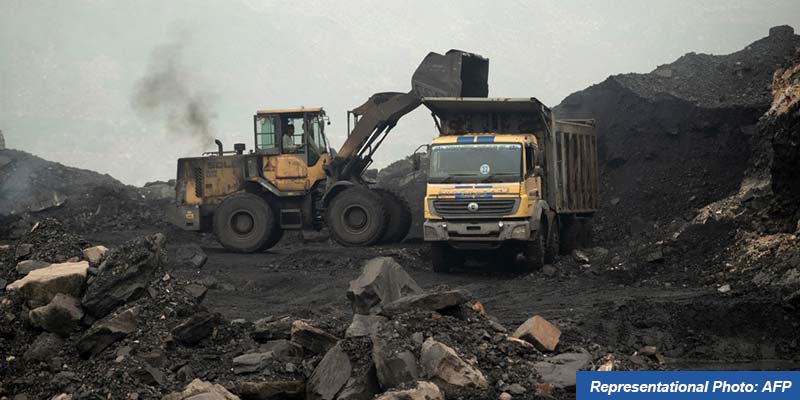
• The Union Cabinet approved Scheme for Promotion of New Surface Coal/Lignite Gasification Projects with a financial outlay of Rs 37,500 crore.
India’s coal sector
• India is the second largest producer of coal in the world after China.
• India holds one of the world’s largest coal reserves (401 billion tonnes) and lignite reserves (47 billion tonnes).
• Coal remains the backbone of India's energy sector, accounting for over 55 per cent of the country's energy mix.
• Nearly 90 per cent of the coal reserves in India constitute non-coking coal or thermal coal which is primarily used for power generation and in industries such as cement and brick-kilns.
• Whereas, approximately 10 per cent of the reserves are coking coal reserves which are majorly used in the steel production process. India imports a quarter of its coal requirements.
• In India, about 80 per cent of coal is used in thermal power plants.
• With environmental concerns and development of renewable energy, diversification of coal for its sustainable use is inevitable.
• India’s import bill for key substitutable products LNG, urea, ammonium nitrate, ammonia, coking coal, methanol, DME and others stood at approximately Rs 2.77 lakh crore in FY 2025, a vulnerability further exposed by the ongoing geopolitical situation in West Asia.
What is coal gasification?
• Gasification is a technological process that can convert any carbon-based raw material such as coal into fuel gas, also known as synthesis gas (syngas).
• Coal gasification is considered a cleaner option as compared to burning of coal and has diversified use of coal in other forms of energy.
• Gasification facilitates utilization of chemical properties of coal.
• Syngas produced from coal gasification can is usable in producing Synthetic Natural Gas (SNG), energy fuel (methanol & ethanol), ammonia for fertilizers and petro-chemicals.
• In the gasification process, sulphur present in the coal is converted to hydrogen sulphide (H2S) and minor amounts of carbonyl sulphide (COS).
• These sulphur compounds can be easily and economically removed from gas streams by a wide variety of commercially available processes (acid gas removal systems).
• The separated acid gas is further processed to recover elemental sulphur.
• After the acid gas removal treatment, only few parts per million (ppm) of sulphur remains in the coal gas.
• Nitrogen oxides (NOx) are not formed to any appreciable extent in the reducing atmosphere of coal gasification. The particulate content in the fuel gas after gasification is negligible since the gas cleaning steps (hot cyclones, water scrubbing or hot gas cleaning) capture almost all the particulate.
• Except for hot gas clean up, other two systems are commercially established and practiced.
• Most part of the wash water is recycled and the residual waste waters from gasification plants can be effectively treated. The coal gasification plants do not produce any scrubber sludge which needs careful and costly disposal.
• The fine ash generated in the processes using pulverized coal feed may be used for value added products like manufacturing of fly ash bricks.
• The major advantage of gasification is that coal is converted into a gaseous fuel which is easy to handle and is a clean form of energy. In the gaseous form, it enables the substitution of petroleum products and natural gas. The synthesis gas (syngas) has a wide range of applications.
• The Ministry of Coal has taken initiatives for coal gasification and it has prepared a National Mission document to achieve 100 MT coal gasification by the year 2030.
Highlights of the scheme:
• Total financial outlay of Rs 37,500 crore to incentivise new surface coal/lignite gasification projects for production of syngas and its downstream products.
• Coal/lignite utilisation is expected to generate Rs 6,300 crore annually from 75 Million Tonnes of gasification envisaged under the scheme.
• The scheme is aimed at accelerating surface coal and lignite gasification projects across the country, promoting self-reliance by reducing import dependence on critical commodities such as LNG, urea, ammonium nitrate, ammonia, and coking coal, while enabling enhanced utilisation of domestic resources.
• The scheme is projected to create around 50,000 jobs (direct and indirect) across 25 projects in coal-bearing regions.