
- India
- May 16
- Sreesha V.M
Explainer - Dam Rehabilitation and Improvement Project (DRIP)
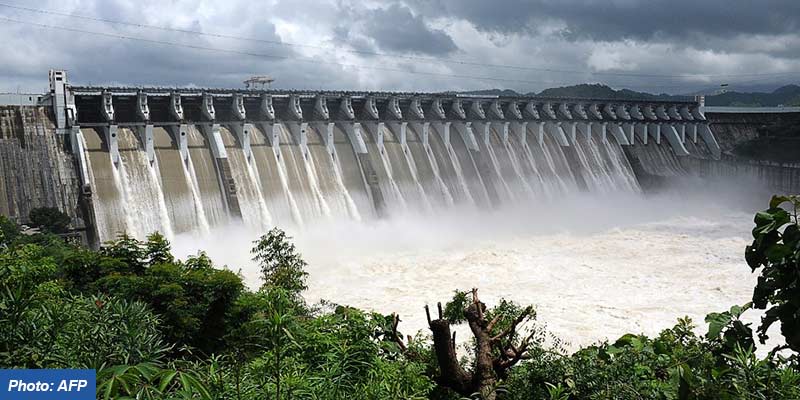
• India’s dams play a critical role in irrigation, hydropower generation, flood moderation, drinking water supply and overall water security.
• Over the decades, dams have contributed significantly to agricultural growth, industrial development and socio-economic progress across the country.
Dams in India
• India ranks third in the world with 6,628 specified dams, following China and the United States.
• Out of the 6,628 dams in India, 6,545 are operational and 83 are under construction.
• The gross water storage capacity of these dams is about 330 billion cubic metres.
• Around 98.5 per cent of these dams, which comes to 6,448, are owned by state governments.
• Central Public Sector Undertakings have 49 dams; private entities own 36 dams, and the central government owns 12 dams.
• Maharashtra has the highest number of specified dams, followed by Madhya Pradesh, Gujarat, Chhattisgarh, Rajasthan, Karnataka and Odisha.
• About 26 per cent (1,681 dams) of these dams are more than 50 years old.
• This includes 291 that are more than 100 years old.
• About 42 per cent fall within the 25-50 years age bracket.
• India’s oldest, the Kallanai (Grand Anicut) in Tamil Nadu, has functioned for nearly 2,000 years.
• As a large number of dams age and climatic variability increases, the issue of their rehabilitation, operational safety and long-term resilience becomes important.
• The government of India addresses this through a comprehensive approach combining structural rehabilitation, institutional reforms, digital monitoring systems and risk-based safety management.
Dam Rehabilitation & Improvement Programme (DRIP)
• The flagship initiative, the Dam Rehabilitation and Improvement Project (DRIP), is being implemented in three phases to improve the safety and operational performance of existing dams through structural repairs, modernisation of spillways and gates, and installation of advanced monitoring systems.
• The project, implemented with external funding, emphasizes rehabilitation works, safety improvement, and capacity building, ensuring that vulnerable dams are strengthened against structural and hydrological risks.
• DRIP is among the largest dam rehabilitation programmes globally.
DRIP phase I (2012-2021)
• DRIP phase I was launched in April 2012 with support from the World Bank.
• The programme covered 223 dams across seven states, namely Jharkhand, Karnataka, Kerala, Madhya Pradesh, Odisha, Tamil Nadu and Uttarakhand.
• The programme contributed significantly to strengthening dam safety practices and institutional capacity in participating states and agencies.
• Design flood reviews, dam health inspections, and finalisation of rehabilitation proposals, and its implementation for 223 dams completed, with rehabilitation works awarded for 144 dams.
The programme focused on:
i) Rehabilitation and modernisation of dam structures.
ii) Dam safety inspections and evaluations.
iii) Development of Emergency Action Plans (EAPs).
iv) Capacity building and training programmes.
v) Introduction of the Dam Health and Rehabilitation Monitoring Application (DHARMA).
DRIP phase II and III
• DRIP phase II and III was operationalised in October 2021.
• The phase II is co-financed by the World Bank and Asian Infrastructure Investment Bank (AIIB).
• The total project outlay is Rs 10,211 crore — phase II with Rs 5,107 crore and phase III Rs 5,104 crore.
• Of this, Rs 7,000 crore is external loan and Rs 3,211 crore is borne by participating states and central agencies.
• Phase II and III together will last for 10 years, each phase continuing for six years with two years overlap.
• Rehabilitation proposals (Project Screening Templates) for 191 dams, amounting to Rs 5,053 crore, have been approved.
• The total expenditure under DRIP phase II up to March 31, 2025 stands at Rs 2,225 crore, with major physical rehabilitation works completed at 43 dams.
• The scheme covers 736 dams across 19 states and three central agencies (Central Water Commission, Bhakra Beas Management Board, and Damodar Valley Corporation).
• Major dams planned for safety improvement under DRIP phases II and III include: Bhakra Dam (Himachal Pradesh), Ranjit Sagar Dam (Punjab), NTR Sagar (Telangana), Nagarjuna Sagar Dam (Telangana), Gandhi Sagar Dam (Madhya Pradesh), Kadana (Gujarat), Jirgo Dam (Uttar Pradesh), Imphal barrage (Manipur), Myntdu Leshka Dam (Meghalaya), Silabati Barrage (West Bengal) and Gayathri Dam (West Bengal) among others.
DRIP phases II and III have four components:
i) Rehabilitation of dams and associated structures to improve safety and performance.
ii) Institutional strengthening to enhance dam safety systems at the state and central levels.
iii) Revenue generation measures to support sustainable operation and maintenance.
iv) Project management for effective implementation.
Dam Safety Act
• The Dam Safety Act, 2021 came into force on December 30, 2021 and provides a comprehensive framework for surveillance, inspection, operation and maintenance of specified dams across the country.
• A specified dam under the Act refers to a dam that is more than 15 metres in height, or between 10 and 15 metres in height if it satisfies prescribed technical criteria.
• The compliance of the various provisions under the Act has now become the statutory obligations of the dam owners coupled with definite timelines.
It establishes a four-tier institutional mechanism comprising:
i) The National Committee on Dam Safety (NCDS) as the apex body.
ii) The National Dam Safety Authority (NDSA) as the regulatory and implementing arm.
iii) State Committees on Dam Safety (SCDS).
iv) State Dam Safety Organisations (SDSO) responsible for surveillance, inspection, and compliance at the state level.
• All 31 dam owning states have constituted SDSO.
(The author is a trainer for Civil Services aspirants.)