
- India
- May 25
- Sreesha V.M
Govt advises citizens to avoid travel to Ebola-hit countries
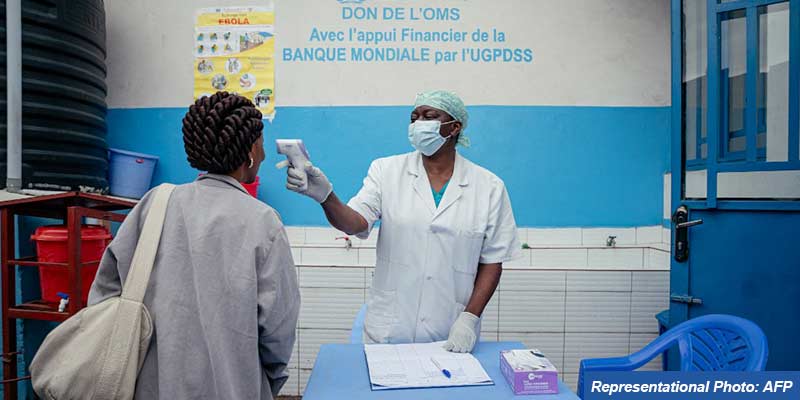
• The Indian government has advised citizens to avoid non-essential travel to the Democratic Republic of the Congo (DRC), Uganda and South Sudan in view of the Ebola outbreak caused by Bundibugyo virus.
• The advisory comes after the World Health Organisation (WHO) declared the situation a Public Health Emergency of International Concern (PHEIC) under the International Health Regulations (IHR), 2005 on May 17.
• The Africa Centres for Disease Control and Prevention (Africa CDC) has also designated the outbreak affecting Congo and Uganda as a PHEIC.
• On May 22, the WHO’s IHR Emergency Committee issued temporary recommendations to strengthen disease surveillance at points of entry to detect, assess, report and manage travellers with unexplained febrile illness arriving from areas with documented Bundibugyo virus detection while discouraging travel to the affected regions.
• Countries bordering Congo and Uganda, including South Sudan, have been assessed to be at high risk of disease transmission.
• The epidemic is caused by Bundibugyo virus (BDBV), a virus belonging to the Orthoebolavirus genus.
• Unlike Ebola virus causing Ebola virus disease, there are no currently approved therapeutics or vaccines against Bundibugyo virus.
• Indian citizens currently residing in or travelling to these countries have been urged to strictly follow public health guidance issued by local authorities, maintain heightened hygiene precautions, avoid contact with symptomatic persons and seek immediate medical attention in case of fever or related symptoms.
• India has not reported any case of Ebola linked to the Bundibugyo strain so far, according to the advisory.
Bundibugyo virus disease
• Bundibugyo virus disease (BVD) is a type of Ebola disease.
• BVD is a severe and often fatal form of Ebola disease caused by the Bundibugyo virus, one of the Orthoebolavirus species.
• It is a zoonotic disease, with fruit bats suspected to be the natural reservoir.
• Human infection occurs through close contact with the blood or secretions of infected wildlife, such as bats or non-human primates, and subsequently spreads from person to person through direct contact with the blood, secretions, organs, or other bodily fluids of infected individuals or contaminated surfaces.
• Transmission is particularly amplified in health-care settings when infection prevention and control (IPC) measures are inadequate, and during unsafe burial practices involving direct contact with the deceased.
• Early symptoms are non-specific, including fever, fatigue, muscle pain, headache, and sore throat, which complicates clinical diagnosis and can delay detection.
• These progress to gastrointestinal symptoms, organ dysfunction, and in some cases haemorrhagic manifestations.
• Case fatality rates in the past two BVD outbreaks, reported in Uganda and in DRC in 2007 and 2012, have ranged from approximately 30 to 50 per cent.
(The author is a trainer for Civil Services aspirants.)