
- India
- Jun 01
President Murmu appoints five new judges to Supreme Court
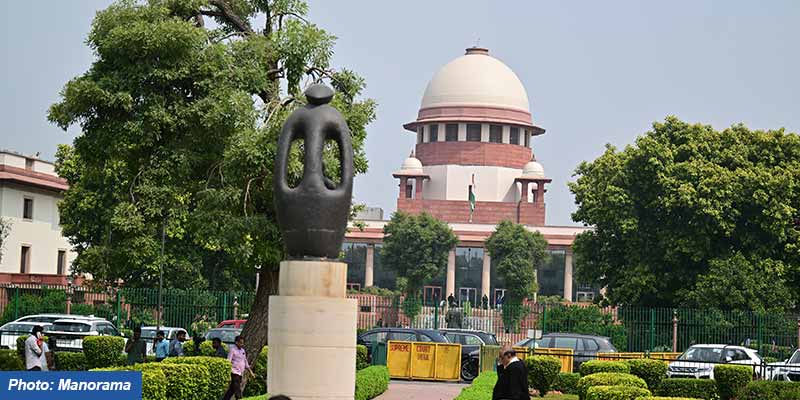
• In exercise of the powers conferred by Article 124(2) of the Constitution, President Droupadi Murmu appointed five new judges to the Supreme Court on June 1.
The new judges are:
i) Justice Shree Chandrashekhar, Chief Justice of Bombay High Court
ii) Justice Sheel Nagu, Chief Justice of Punjab and Haryana High Court
iii) Justice Sanjeev Sachdeva, Chief Justice of Madhya Pradesh High Court
iv) Justice Arun Palli, Chief Justice of Jammu & Kashmir and Ladakh High Court
v) Venkita Subramani Mohana, senior advocate.
• The five names were recommended by the Supreme Court Collegium on May 27.
• Once they take oath and assume charge, the Supreme Court will have 37 judges.
• In May, the government promulgated an ordinance amending a law to increase the sanctioned strength of the Supreme Court to 38 from 34, including the Chief Justice of India.
Appointment of SC judges
• The CJI and judges of the Supreme Court are appointed by the President under clause (2) of Article 124 of the Constitution.
• In order to be appointed as a judge of the Supreme Court, a person must be a citizen of India and must have been, for at least five years, a judge of a High Court or of two or more such courts in succession, or an advocate of a High Court or of two or more such courts in succession for at least 10 years or he must be, in the opinion of the President, a distinguished jurist.
• Provisions exist for the appointment of a judge of a High Court as an ad-hoc judge of the Supreme Court and for retired Judges of the Supreme Court or High Courts to sit and act as judges of that court.
• Whenever a vacancy is expected to arise in the office of a judge of the Supreme Court, the CJI will initiate a proposal and forward his recommendation to the law minister to fill up the vacancy.
• The opinion of the CJI for appointment of a judge of the Supreme Court should be formed in consultation with a collegium of the four senior-most judges of the apex court.
• The opinion of members of the collegium in respect of each of the recommendations as well as the senior-most judge in the Supreme Court from the High Court from which a prospective candidate comes, would be made in writing. The CJI must transmit his opinion as also the opinion of all concerned to the government of India as part of record.
• After receipt of the final recommendation of the CJI, the law minister will put up the recommendations to the Prime Minister, who will advise the President in the matter of appointment.
• Supreme Court judges retire upon attaining the age of 65 years.