
- India
- Jun 05
Economist Neelkanth Mishra appointed as World Bank Executive Director
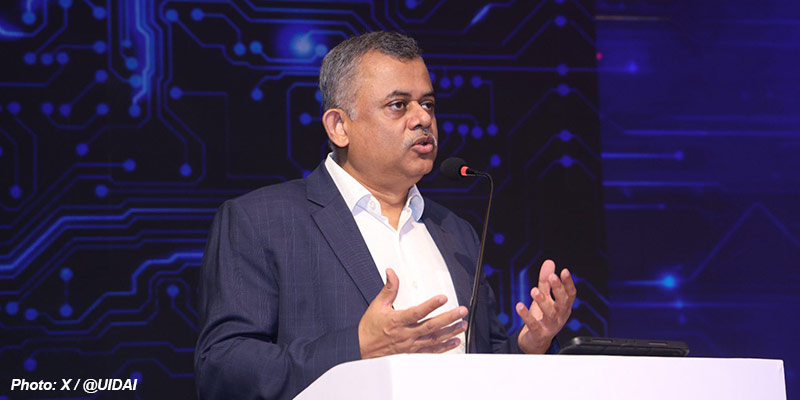
• The Appointments Committee of the Cabinet (ACC) has approved economist Neelkanth Mishra’s appointment as Executive Director of the World Bank for a tenure of three years.
• He will succeed Parameswaran Iyer, a 1981 batch retired Indian Administrative Service (IAS) officer of Uttar Pradesh cadre.
• Iyer was appointed to the post in February 2023.
• Mishra is a part-time member of the Economic Advisory Council to the Prime Minister (EAC-PM).
• He is also a part-time chairperson of Unique Identification Authority of India (UIDAI) and part-time member of Telecom Regulatory Authority of India (TRAI).
• He was part of the advisory council to the 15th Finance Commission.
• A gold medallist from the Indian Institute of Technology, Kanpur, Mishra is the Managing Director and co-head of Equity Strategy, Asia Pacific, and the India Strategist for Credit Suisse.
World Bank
• On July 1, 1944, as the battles of the Second World War raged in Europe and the Pacific, delegates from 44 countries met in Bretton Woods, New Hampshire to participate in what became known as the Bretton Woods Conference.
• Their purpose was to agree on a system of economic order and international cooperation that would help countries recover from the devastation of the War and foster long-term global growth.
• At its conclusion, the conference attendees produced the Articles of Agreement for the International Bank for Reconstruction and Development (soon called the World Bank) and the International Monetary Fund (IMF).
• The World Bank Group is an international development organisation with 189 member countries.
• It works to reduce poverty and boost shared prosperity on a livable planet by providing policy advice, technical expertise, and financing to the governments of low and middle-income countries.
• As one of the world’s largest sources of funding and knowledge for developing countries, it plays a key role in promoting sustainable development for people and the planet.
• This includes strengthening economies, raising living standards, and ensuring all people have access to essential services and opportunities, especially jobs.
• The World Bank Group is a unique global partnership with five institutions working for sustainable solutions that reduce poverty and build shared prosperity in developing countries.
Five institutions:
i) The International Bank for Reconstruction and Development: IBRD is a global development cooperative owned by 189 member countries. As the largest development bank in the world, it supports the World Bank Group’s mission by providing loans, guarantees, risk management products, and advisory services to middle-income and creditworthy low-income countries, as well as by coordinating responses to regional and global challenges.
ii) The International Development Association: IDA helps the world’s poorest countries. Established in 1960, IDA aims to reduce poverty by providing zero to low-interest loans (called “credits”) and grants for programs that boost economic growth, reduce inequalities, and improve people’s living conditions.
• Together, IBRD and IDA make up the World Bank.
iii) International Finance Corporation: Established in 1956, IFC is the largest global development institution focused exclusively on the private sector. It helps developing countries achieve sustainable growth by financing investment, mobilising capital in international financial markets, and providing advisory services to businesses and governments. Although part of the Bank Group, IFC is a separate legal entity with separate Articles of Agreement, share capital, financial structure, management, and staff.
iv) Multilateral Investment Guarantee Agency: MIGA was created in 1988 to promote foreign direct investment into developing countries to support economic growth, reduce poverty, and improve people’s lives. MIGA fulfills this mandate by offering political risk insurance (guarantees) to investors and lenders.
v) International Centre for Settlement of Investment Disputes: ICSID provides international facilities for conciliation and arbitration of investment disputes.
How the World Bank works?
• The World Bank Group is run like a giant cooperative. Its members are shareholders, and it is operated for the benefit of those using its services.
• The number of shares a country has is based roughly on the size of its economy.
• The United States is the single largest shareholder, followed by Japan, China, Germany, France, and the United Kingdom. The remaining shares are divided among the other member countries.
• A Board of Governors represents the World Bank Group’s government shareholders. Generally, these people are the member countries’ ministers of finance, central bank governors, or other senior officials.
• The governors are the ultimate policymakers. They meet once a year at the Annual Meetings of the World Bank Group and International Monetary Fund (IMF) that take place in October.
• At the Annual Meetings, the governors of the World Bank Group and IMF review the organisations’ operations and policies, discuss major development issues, and approve key documents like financial statements.
• They also set global priorities for the coming year (and near future) to speed up progress on reducing poverty and boosting shared prosperity.
• Since the governors meet only once a year and are more focused on the overall strategic direction, they give specific duties to their Executive Directors, who work on-site at the World Bank Group.
• Every member country is represented by an Executive Director.
• Executive Directors oversee the World Bank Group’s regular, ongoing business, including approving loans and guarantees, new policies, the administrative budget, country assistance strategies, and borrowing and financial decisions.