
- India
- Jun 15
- Sreesha V.M
Global Wind Day on June 15
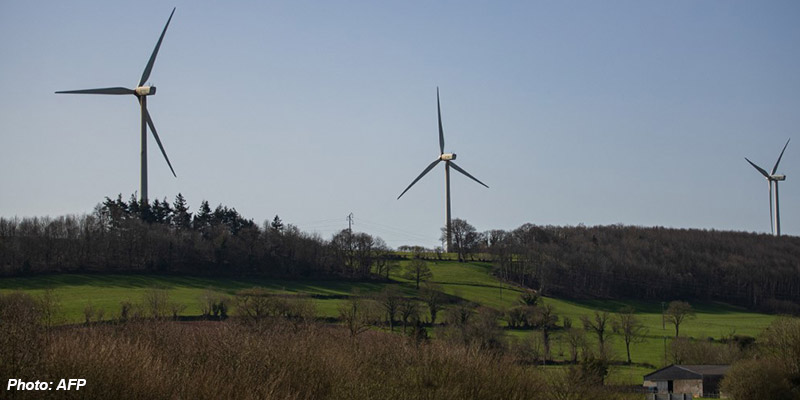
• Global Wind Day is celebrated annually on June 15 to promote wind energy and its role in combating climate change.
• Wind is a renewable energy source.
• Using wind to produce energy has fewer effects on the environment than many other energy sources.
• Wind energy harnesses the kinetic energy of moving air by using large wind turbines located on land (onshore) or in sea or freshwater (offshore).
• Wind turbines work on a simple principle. Wind turns the propeller-like blades of a turbine around a rotor, which spins a generator, which creates electricity.
• Wind turbines may also reduce electricity generation from fossil fuels, which results in lower total air pollution and carbon dioxide emissions.
India’s wind energy landscape
• India’s wind energy sector is expanding steadily with rising installed capacity and strong wind resource potential across key states. It is increasingly supported by domestic manufacturing and its role in meeting renewable energy targets.
• India ranks fourth globally in installed wind power capacity.
• Wind energy is becoming a more stable and integrated part of India’s power system.
• Its role will expand further with technological upgrades and diversified deployment.
• Installed wind capacity reached 56.09 GW in March 2026.
• An additional 28 GW is under implementation.
• India recorded its highest-ever annual wind capacity addition of 6.05 GW in 2025-26, surpassing the previous record of 4.15 GW in 2024-25.
Nearly 45% of wind generation occurs during peak demand hours, complementing solar power and strengthening grid reliability.
• Wind turbine manufacturing capacity has increased from 10 GW in 2014 to about 24 GW, as of March 2026.
• The sector has achieved 70-80 per cent indigenisation across key components. Strong domestic supply chains exist for blades, towers, gearboxes, and other critical equipment.
• India’s estimated gross wind power potential is 695.5 GW at 120 metres and 1,163.9 GW at 150 metres above ground level.
Majority of the assessed wind potential at 150 meters is concentrated in eight high-resource states:
i) Rajasthan - 284.2 GW
ii) Gujarat - 180.8 GW
iii) Maharashtra - 173.9 GW
iv) Karnataka - 169.3 GW
v) Andhra Pradesh - 123.3 GW
vi) Tamil Nadu - 95.1 GW
vii) Madhya Pradesh - 55.4 GW
viii) Telangana - 54.7 GW.
• More than 900 wind-monitoring stations have been installed nationwide to map wind resources and identify high-potential sites for wind energy development.
• India’s vast wind resource base provides a strong foundation for achieving 100 GW wind capacity by 2030 and 156 GW by 2036.
• India is strengthening wind energy cooperation with the UK, Denmark, and Belgium to accelerate sector development. These partnerships focus on offshore wind deployment, advanced technology transfer, and improved grid integration. They also enable knowledge sharing on policy design, financing models, and project execution.
(The author is a trainer for Civil Services aspirants.)