
- India
- Jun 18
- Sreesha V.M
India-UK CETA to come into force from July 15
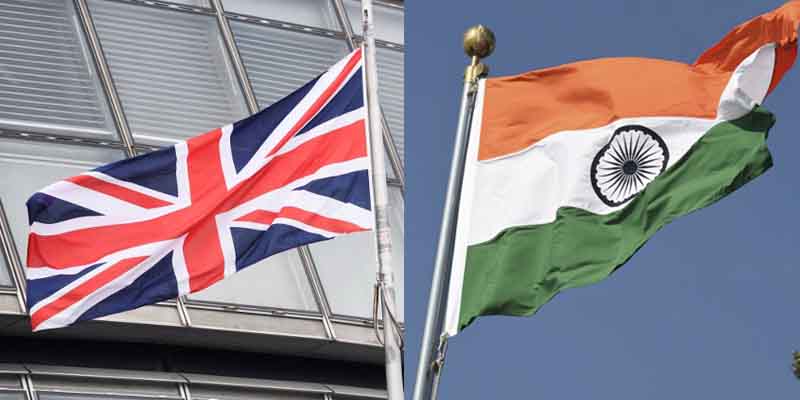
• India and the United Kingdom announced that the Comprehensive Economic and Trade Agreement (CETA) will enter into force on July 15.
• The Agreement on Social Security, also referred to as the Double Contribution Convention (DCC), will also come into effect on the same date.
• The groundwork for this agreement was laid in May 2021 through the Enhanced Trade Partnership and the adoption of the India-UK Roadmap 2030, which set the goal of elevating bilateral ties to a Comprehensive Strategic Partnership and doubling trade to $100 billion by 2030.
• Following 14 intensive rounds of negotiations, CETA was concluded on May 6, 2025.
• The agreement was officially signed on July 24, 2025 in London by Union Minister of Commerce and Industry Piyush Goyal and the UK’s Secretary of State for Business and Trade Jonathan Reynolds, in the presence of Prime Minister Narendra Modi and his British counterpart Keir Starmer.
• To complete the framework, the companion Double Contribution Convention (DCC) was subsequently signed on February 10, 2026.
Highlights of the trade agreement:
• CETA marks a significant milestone in India’s engagement with major developed economies and reflects a shared commitment to strengthening economic integration.
• This is expected to open new opportunities for labour-intensive industries such as textiles, marine products, leather, footwear, sports goods, toys, and gems and jewellery, alongside fast-growing sectors like engineering goods, auto components, and organic chemicals.
• Indian exporters will benefit from the complete elimination of UK tariffs across several key sectors.
• Tariffs of up to 70 per cent on processed food products, up to 21.5 per cent on marine products, up to 18 per cent on engineering goods and auto components, up to 16 per cent on leather and footwear products, up to 12 per cent on textiles and clothing, and up to 8 per cent on chemicals and pharmaceutical products will be reduced to zero.
• Indian service providers in IT and IT-enabled services, financial services, professional services, healthcare, education, engineering, telecommunications and consultancy services will benefit from enhanced market access and greater regulatory certainty.
Agreement on Social Security
• The Agreement on Social Security exempts Indian workers and employers from making dual social security contributions in the UK during temporary assignments.
• The period of exemption has been increased from three years to five years.
• More than 75,000 Indian professionals and over 900 companies are expected to benefit.
• The agreement will support mobility and continued social security coverage of the employees on temporary overseas assignments.
• This will enhance India-UK partnerships in the service sector, leveraging the high skills and innovative service sectors of both countries.
(The author is a trainer for Civil Services aspirants.)