
- India
- Jun 19
International Tribunal of the Law of the Sea (ITLOS)
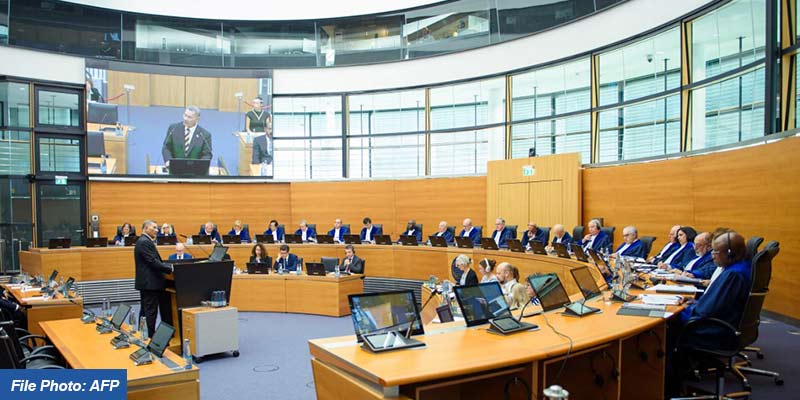
• An eminent Indian jurist, Bimal N. Patel, has been elected as a judge of the International Tribunal of the Law of the Sea (ITLOS).
Who is Bimal N. Patel?
• Bimal Patel is an esteemed educationalist, jurist and administrator.
• Patel is a member of the UN International Law Commission and chairman of Working Group Succession of States in respect of State Responsibility.
• He is vice-chancellor and professor of Public International Law at Rashtriya Raksha University.
• He is also a member of the National Security Advisory Board, National Security Council Secretariat, Prime Minister’s Office.
• During his professional career of over three decades, he has served in various roles such as the director at the Gujarat National Law University and Member of the 21st Law Commission of India.
• He has worked for 15 years at global organisations such as the United Nations of Youth and the Organisation for the Prohibition of Chemical Weapons (OPCW) at the Hague, Netherlands.
International Tribunal for the Law of the Sea (ITLOS)
• The International Tribunal for the Law of the Sea (ITLOS) is an independent judicial body established by the United Nations Convention on the Law of the Sea (UNCLOS) to adjudicate disputes arising out of the interpretation and application of the Convention.
• The Tribunal is composed of 21 independent members, elected from among persons enjoying the highest reputation for fairness and integrity and of recognised competence in the field of the law of the sea.
• No two members may be nationals of the same State and in the Tribunal as a whole it is necessary to assure the representation of the principal legal systems of the world and equitable geographical distribution.
• The Tribunal has jurisdiction over any dispute concerning the interpretation or application of the Convention, and over all matters specifically provided for in any other agreement which confers jurisdiction on the Tribunal.
• Disputes relating to the Convention may concern the delimitation of maritime zones, navigation, conservation and management of the living resources of the sea, protection and preservation of the marine environment and marine scientific research.
• The Tribunal is open to States Parties to the Convention (i.e. States and international organisations which are parties to the Convention).
• Its current vice president is Neeru Chadha of India.
United Nations Convention on the Law of the Sea (UNCLOS)
• UNCLOS is an international agreement that resulted from the third United Nations Conference on the Law of the Sea (UNCLOS III), which took place between 1973 and 1982.
• The Convention, concluded in 1982, replaced four 1958 treaties.
• UNCLOS came into force in 1994.
• It has been ratified by 171 Member States and the European Union.
• India ratified the Convention on June 29, 1995.
• The UNCLOS lays down a comprehensive regime of law and order in the world’s oceans and seas establishing rules governing all uses of the oceans and their resources.
• It enshrines the notion that all problems of ocean space are closely interrelated and need to be addressed as a whole.
• It also established three institutions: the International Tribunal for the Law of the Sea (ITLOS), the International Seabed Authority (ISA) and the Commission on the Limits of the Continental Shelf (CLCS).