
- India
- Jun 19
- Sreesha V.M
ICAR-IIOR develops smart seed coating technology
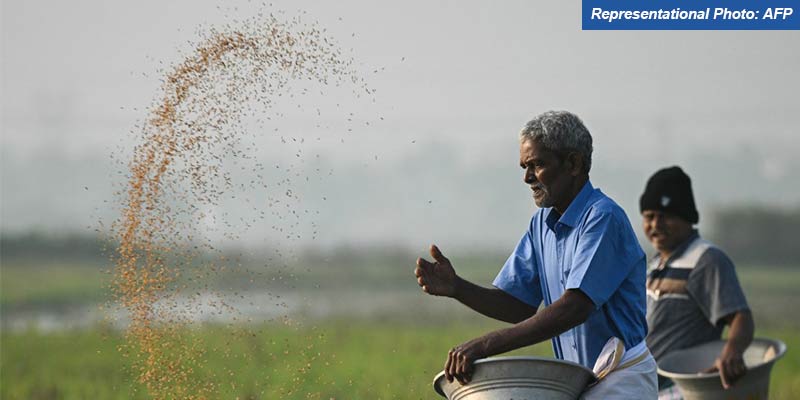
• The Indian Council of Agricultural Research’s Institute of Oilseeds Research (ICAR-IIOR), Hyderabad has developed and demonstrated an innovative biopolymer-based smart seed coating technology.
Significance of this technology
• As agriculture faces increasing challenges from climate change, erratic rainfall, drought, temperature extremes, soil degradation, emerging pests and diseases, and declining resource-use efficiency, ensuring superior seed performance has become more critical than ever.
• Seed is the primary carrier of agricultural technology and serves as the foundation of crop productivity.
• Even under optimal management conditions, poor seed establishment can significantly limit yield realisation.
• Strengthening seed performance during the early stages of crop growth therefore offers one of the most cost-effective and scalable approaches to improving agricultural productivity.
• The smart seed coating technology developed by ICAR-IIOR utilises biodegradable biopolymeric materials to create a multifunctional protective layer around seeds.
• The coating acts as a carrier system for beneficial microorganisms, nutrients, micronutrients, crop protection agents, and plant growth-promoting compounds, delivering them directly at the seed-soil interface.
• This protective microenvironment promotes rapid germination, vigorous seedling growth, enhanced root development, and improved tolerance to environmental stresses during the critical crop establishment phase.
• The technology is particularly relevant for rainfed agriculture, which accounts for a major share of India’s cultivated area and is highly vulnerable to climatic uncertainties.
• Delayed monsoons, intermittent droughts, moisture stress, poor soil conditions, and pest and disease pressures frequently affect seedling emergence and crop establishment, ultimately reducing yields.
• By improving seed performance and protecting emerging seedlings during the most vulnerable stages of growth, smart seed technologies can significantly enhance crop resilience and reduce production risks.
• Unlike conventional seed treatments that serve a single purpose, the ICAR-IIOR platform functions as a comprehensive seed enhancement system capable of integrating multiple beneficial inputs into a single application.
• The technology can be customised for cereals, millets, pulses, oilseeds, fibre crops, fodder crops, vegetables, spices, and horticultural crops, making it a versatile solution for diverse farming systems across the country.
• Wider adoption of advanced seed enhancement technologies can contribute significantly to increasing agricultural productivity, reducing input losses, improving nutrient and biological use efficiency, and supporting the country's efforts towards food, nutritional, and economic security.
Test results
• Field demonstrations conducted under farmer field conditions have shown substantial improvements in crop establishment, plant vigour, and productivity.
• In groundnut and soybean, demonstrations conducted in Telangana recorded yield improvements of nearly 30 per cent compared to conventional farmer practices, highlighting the potential of the technology to enhance productivity and profitability.
• Similar seed enhancement approaches have demonstrated positive impacts across multiple crops under diverse agro-climatic conditions.
• Multi-location seed trials across soybean, maize, groundnut, chickpea, cotton, mustard, and pigeon pea demonstrated consistent improvements in seedling vigour, crop establishment, and yield, with productivity gains ranging from 12-37 per cent over untreated controls, highlighting the potential of biopolymer-based multilayer seed treatments as a scalable smart seed technology for diverse cropping systems.
(The author is a trainer for Civil Services aspirants.)