
- India
- Jun 20
- Sreesha V.M
Govt to revive Qadian-Beas railway line in Punjab
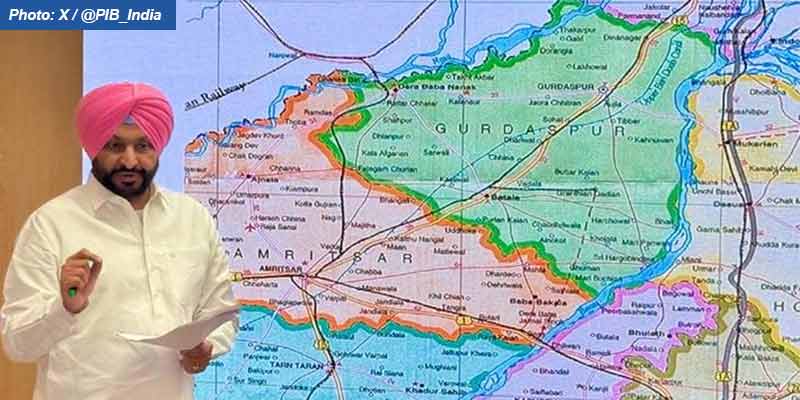
• The Ministry of Railways has decided to revive the Qadian-Beas railway line project, which will connect Qadian in Gurdaspur district with Beas in Amritsar district, Punjab.
• Announcing the revival, Minister of State for Railways Ravneet Singh Bittu said the 39.68-km broad-gauge corridor will be built at an estimated cost of approximately Rs 1,400 crore.
• The proposed alignment will pass through the important towns and villages of Qadian, Dhapai, Ghuman, Butala, Sathiala and Beas, bringing several areas of the Majha belt onto the railway network and significantly improving mobility for local residents.
• The project is expected to improve access to several prominent religious and spiritual destinations, including Qadian, Dera Baba Jaimal Singh, Beas, Sri Darbar Sahib, Dera Baba Nanak, Gurdwara Achal Sahib and many others.
• The project was first approved in 1928-29 by the then North-Western Railway.
• Construction had progressed substantially by the early 1930s, but changing circumstances and shifting planning priorities led to its discontinuation.
• The UPA government later recognised its strategic importance and revived it under the Socially Desirable Rail Connectivity Programme in 2010-11.
• The Final Location Survey was started in May 2012, but was repeatedly stopped and took about five years due to local protests against the project.
• After years of delays and procedural hurdles, the project has now been revived.
• The project will be executed by the Northern Railway.
• The new rail line is expected to unlock significant economic opportunities by improving market access for farmers and agricultural produce, facilitating faster and more efficient transportation, and boosting trade, commerce and small-scale industries.
• Beyond enhancing regional connectivity, the line holds strategic significance as an alternative rail corridor to the vital Amritsar-Pathankot section during emergencies and contingencies.
(The author is a trainer for Civil Services aspirants.)