
- India
- Jun 23
- Sreesha V.M
India emerges as world’s top ship recycling nation in 2025
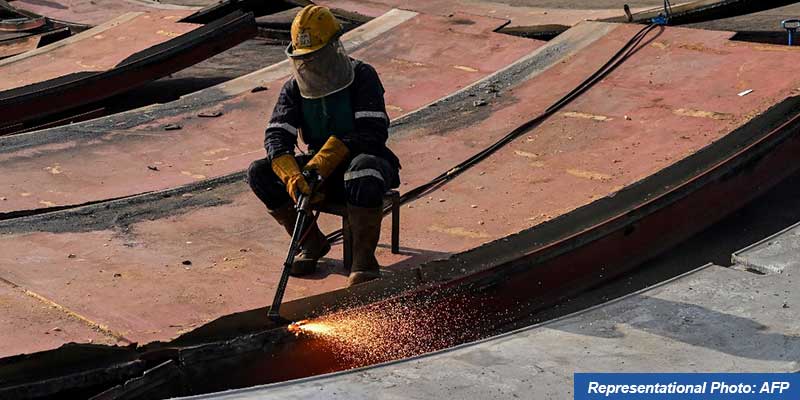
• India has emerged as the world’s top ship recycling nation, according to the latest report by the United Nations Conference on Trade and Development (UNCTAD).
• Ship recycling in India rose significantly to 2.99 million gross tonnes (GT) in 2025, up nearly 60 per cent from 1.86 million GT in 2024.
• With this achievement, the target set under Maritime India Vision (MIV) 2030 to become the world’s leading ship recycling nation has been achieved well ahead of schedule.
What is ship recycling?
• Ship recycling is a long-established practice for dealing with ships at the end of their operational life and is widely regarded as the most practicable option.
• Safe recycling processes are vital to ensure the careful and secure handling of environmentally hazardous substances such as asbestos, heavy metals, hydrocarbons and ozone-depleting substances.
• When conducted properly, ship recycling embraces the “cradle to grave” concept.
• It results in almost all materials and equipment used in the manufacture of a ship being re-used in other forms, an outcome which is both environmentally sound and energy efficient.
• For instance, using recycled steel requires just one third of the energy used in the manufacture of steel from raw materials.
Hong Kong International Convention for the Safe and Environmentally Sound Recycling of Ships
• The Hong Kong Convention is aimed at ensuring that ships, when being recycled after reaching the end of their operational lives, do not pose any unnecessary risk to human health and safety or to the environment.
• It was adopted at a diplomatic conference held in Hong Kong, China, in 2009.
• It entered into force on June 26, 2025.
• The Hong Kong Convention addresses all environmental and safety aspects relating to ship recycling by placing responsibilities and obligations on all parties concerned — shipowners, ship building yards, ship recycling facilities, flag States, port States, and recycling States — regarding the responsible management and disposal of associated waste streams in a safe and environmentally sound manner.
• Regulations in the Convention cover the design, construction, operation and preparation of ships to facilitate safe and environmentally sound recycling of vessels, and the establishment of an appropriate enforcement mechanism for ship recycling, incorporating certification and reporting requirements.
Govt initiatives to strengthen ship recycling
To strengthen India’s ship recycling ecosystem and capture a larger share of the global market, the Ministry of Ports, Shipping and Waterways (MoPSW) has undertaken several initiatives:
i) Hong Kong Convention Compliance:
The government enacted the Recycling of Ships Act, 2019, to develop a ship recycling ecosystem aligned with the Hong Kong International Convention for the Safe and Environmentally Sound Recycling of Ships (HKC), which India ratified in 2019. The government has provided financial assistance of Rs 53.5 crore to support the modernisation of ship recycling yards, helping 115 facilities become HKC-compliant.
ii) Ship-breaking Credit Note Scheme:
The ministry launched the Ship-breaking Credit Note Scheme, under which ship owners receive a credit note equivalent to 40 per cent of the scrap value of a recycled ship. The credit note can be utilised toward payment of up to 5 per cent of the value of a new vessel built at an Indian shipyard, thereby promoting both ship recycling and domestic shipbuilding.
iii) Stakeholder Engagement:
The ministry regularly engages with the Gujarat Maritime Board, the Ship Recycling Industries Association, global shipping companies, cash buyers, classification societies and international organisations to identify challenges and implement targeted solutions.
iv) Inclusion Under European Union Ship Recycling Regulations (EUSRR):
The government is actively pursuing the inclusion of Indian ship recycling yards in the European Union's approved list of recycling facilities. Continuous engagement with relevant authorities is underway to facilitate approvals.
v) Expansion of Alang Ship Recycling Yard:
India aims to nearly double its ship recycling capacity to about 9 million light displacement tonnes (LDT) through the planned expansion of the Alang Ship Recycling Yard. The Gujarat government has prepared a comprehensive master plan to support future demand, improve infrastructure and enhance India’s competitiveness in the global market.
Strong Growth Prospects
• According to the Baltic and International Maritime Council (BIMCO), more than 16,000 vessels are expected to be recycled globally over the next decade.
• With a current market share of 35.4 per cent, India is well-positioned to recycle approximately 500 to 600 vessels annually while continuing to expand its ship recycling capacity.
• India’s rise to the top position in global ship-recycling is the result of a coordinated strategy focused on sustainability, regulatory reforms, infrastructure development and industry collaboration.
• With strong future demand, increasing compliance with international standards and continued government support, India is well-positioned to strengthen its leadership in ship-recycling while advancing the objectives of the circular economy and sustainable maritime development.
(The author is a trainer for Civil Services aspirants.)