
- India
- Jun 25
Passport not proof of citizenship, says MEA
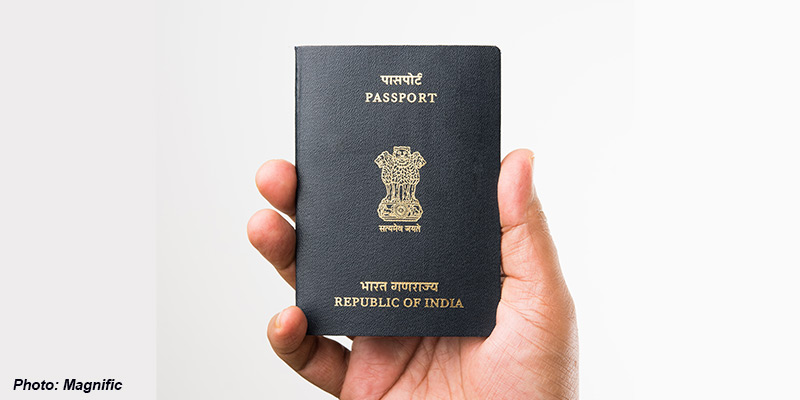
• The Ministry of External Affairs (MEA) reportedly said that an Indian passport is primarily a travel document and should not be regarded as conclusive proof of citizenship.
• This has sparked a debate on what constitutes definitive proof of Indian citizenship.
• At present, India does not have a single national document that automatically establishes citizenship for every citizen.
• In September 2025, the Supreme Court observed that Aadhaar can be accepted as a proof of identity and not as a proof of citizenship.
• The government has previously clarified that neither the PAN card nor the voter ID card can be treated as proof of citizenship.
Citizenship in India
• The Constitution of India provides for a single citizenship for the whole of India.
• The provisions relating to citizenship have been dealt in Part II of the Constitution of India under Articles 5 to 11. However, these provisions do not contain either any permanent or any elaborate provisions towards Citizenship. It only identifies the persons who became citizens of India at its commencement (on January 26, 1950).
• The Citizenship Act, 1955 was enacted to provide for the acquisition and determination of Indian citizenship.
Acquisition of citizenship
The Citizenship Act, 1955 confers the right to acquire citizenship in India in the following ways:
• By birth
• By descent
• By registration
• By naturalisation
• By acquisition of territory.
Loss of citizenship
Termination of citizenship is covered in the Citizenship Act, 1955. It prescribes three ways in which a person may lose his citizenship, whether acquired under this Act or prior to it under the Constitution of India.
i) Renunciation of Citizenship (Section 8)
If any citizen of India of full age and capacity, who is also a citizen or national of another country, makes a declaration renouncing his Indian citizenship, then that person shall cease to be a citizen of India. Provided that if any such declaration is made during any war in which India may be engaged, registration thereof shall be withheld until the government of India otherwise directs.
Where a person ceases to be a citizen of India, every minor child of that person shall thereupon cease to be a citizen of India, provided that any such child may, within one year after attaining 18 years of age, make a declaration that he/she wishes to resume Indian citizenship and shall thereupon again become a citizen of India.
ii) Termination of Citizenship (Section 9)
Any citizen of India who voluntarily acquires, or has at any time between the January 26, 1950 and the commencement of this Act voluntarily acquired, the citizenship of another country, ceases to be a citizen of India. However, this provision does not apply during any war in which India may be engaged.
If any question arises as to whether, when or how any person has acquired the citizenship of another country, it shall be determined by such authority, in such manner, and having regard to such rules of evidence, as may be prescribed in this behalf. The acquisition of another country’s passport is also deemed under the Citizenship Rules, 1956 to be voluntary acquisition of another country’s nationality.
iii) Deprivation of Citizenship (Section 10)
The government can deprive any citizen of Indian citizenship if it is satisfied that:
• The citizen has obtained citizenship by means of fraud, false representation or concealment of any material fact, or
• That citizen has shown himself by act or speech to be disloyal or disaffected towards the Constitution of India as by law established, or
• That citizen has, during the war in which India may be engaged, unlawfully traded or communicated with an enemy or been engaged in or associated with, any business that was to his knowledge carried on in such a manner as to assist any enemy in that war.
• That citizen has, within five years after registration or naturalization, been sentenced in any country to imprisonment for a term of not less than two years, or
• That citizen has been ordinarily resident out of India for a continuous period of seven years. However, this will not apply, if he has been at any time a student of any educational institution in a country outside India or in the service of a government of India or of an international organisation of which India is a member, or has registered annually in the prescribed manner at an Indian consulate his intention to retain his citizenship of India.
• The central government shall not deprive a person of citizenship unless it is satisfied that it is not conducive to the public good that person should continue to be a citizen of India.