
- India
- Jun 30
- Sreesha V.M
Nadda launches ‘SUMAN Roadmap 2030’
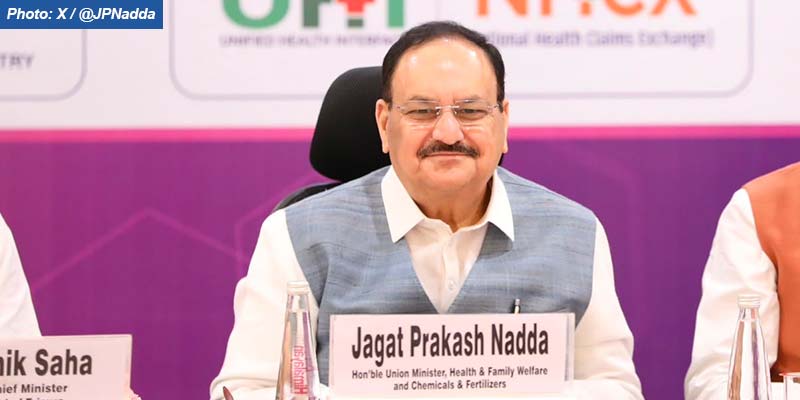
• Union Minister of Health and Family Welfare J.P. Nadda launched the SUMAN Roadmap 2030 on June 29.
• It is a comprehensive and forward-looking strategic framework aimed at transforming maternal and newborn healthcare across the country and accelerating India’s progress towards achieving the Sustainable Development Goals (SDGs) by 2030.
Significance of SUMAN Roadmap 2030
• India has registered significant gains in maternal and newborn health through sustained policy interventions and strengthened healthcare delivery systems.
• However, despite this remarkable progress, maternal and newborn mortality continues to remain a challenge in certain geographies, particularly in high-focus states.
• Recognising the need for a more targeted and differentiated approach, the Ministry of Health and Family Welfare has developed the SUMAN Roadmap 2030.
• It is an evidence-driven strategy that combines national priorities with local realities to deliver equitable, high-quality maternal and newborn healthcare across the country.
• The Roadmap envisions reducing the Maternal Mortality Ratio (MMR) to below 70 per 100,000 live births by 2030, further lowering the Neonatal Mortality Rate (NMR) and Infant Mortality Rate (IMR), achieving universal saturation of maternal and newborn health services across all states and Union Territories, and ultimately realising the goal of zero preventable maternal and newborn deaths.
• It seeks to achieve the Sustainable Development Goals (SDGs) related to maternal and newborn health by the end of the decade.
Highlights of SUMAN Roadmap 2030:
• The RMNCAH+N framework (Reproductive, Maternal, Newborn, Child, Adolescent Health and Nutrition) was launched by the Ministry of Health and Family Welfare in February 2013.
• It was launched to influence the key interventions for reducing maternal and child morbidity and mortality.
• Anchored in the RMNCHA+N framework, the Roadmap adopts a comprehensive life-cycle approach, integrating interventions from pre-pregnancy through pregnancy, childbirth and the postnatal period, while ensuring convergence with child health, adolescent health, family planning and nutrition programmes.
• The framework is designed to deliver seamless, person-centric care across every stage of the reproductive and maternal health continuum.
• A defining feature of the Roadmap is its structured approach to the identification, tracking and management of high-risk pregnancies through four critical stages — antenatal care, third-trimester care, intrapartum care and the postnatal period—thereby enabling timely interventions and improved clinical outcomes.
• The strategy addresses challenges related to transportation, healthcare access in tribal and hard-to-reach areas, quality emergency obstetric care, community participation through SUMAN Panchayats, and the growing impact of climate change on maternal and newborn health.
• To accelerate improvements where the burden remains highest, the Roadmap introduces focused, time-bound interventions across 130 districts in 13 high-focus States — Assam, Bihar, Chhattisgarh, Haryana, Jharkhand, Karnataka, Madhya Pradesh, Odisha, Punjab, Rajasthan, Uttar Pradesh, Uttarakhand and West Bengal — while simultaneously outlining strategies for all states and Union Territories to sustain progress and achieve universal coverage of quality maternal and newborn healthcare services.
• For the identified high-focus States, the Roadmap proposes a comprehensive package of interventions, including the SUMAN Package for Pregnant Women to promote early registration, complete antenatal care, quality clinical assessment and adequate post-partum institutional stay.
• It also provides for bi-weekly home visits by ASHAs during the eighth and ninth months of pregnancy to facilitate early identification of danger signs, nutrition counselling, birth preparedness and institutional deliveries.
• The roadmap also proposes establishing Centres of Excellence for maternal and newborn healthcare, a centralised SUMAN Call Centre for grievance redressal and stronger referral linkages across healthcare facilities.
(The author is a trainer for Civil Services aspirants.)