
- India
- Jul 02
- Sreesha V.M
Explainer - 11 years of Digital India
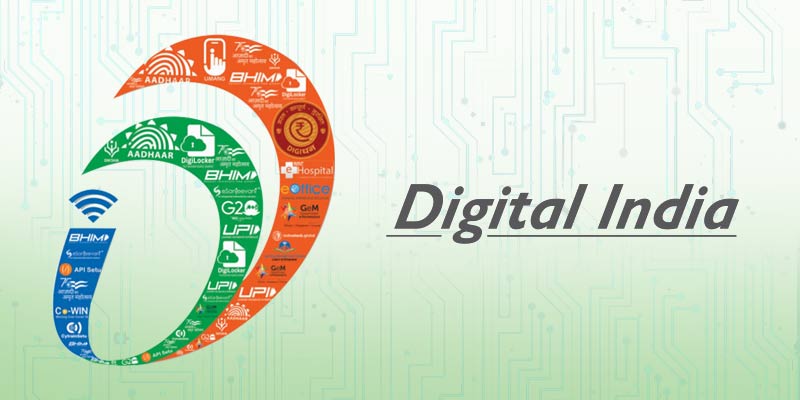
• Prime Minister Narendra Modi lauded the Digital India initiative of the government and marked its 11 anniversary on July 1.
• PM Modi said Digital India is the strong foundation of a developed and self-reliant India and over the past 11 years, it has played a crucial role in empowering the poor and deprived while making the lives of citizens easier.
• This initiative has strengthened education, healthcare, agriculture, commerce and public service delivery, making governance more transparent, efficient and accessible, he said.
What is Digital India?
• It weaves together a large number of ideas and thoughts into a single comprehensive vision so that each of them is seen as part of a larger goal.
• The programme was launched on July 1, 2015.
• It targets to provide digital services, digital access, bridge the digital divide, language divide and thereby, ensure digital inclusion, financial inclusion, and digital empowerment.
• Digital India is an umbrella programme that covers multiple ministries and departments.
• The targets are sought to be achieved with the power of technology that is affordable, developmental, sustainable, and inclusive.
The programme is centered on three key vision areas:
i) Vision Area 1 - Digital Infrastructure as a Utility to Every Citizen
• High speed internet as a core utility.
• Cradle to grave digital identity — unique, lifelong, online, authenticable.
• Mobile phone and bank account enabling participation in digital & financial space.
• Easy access to a Common Service Centre.
• Shareable private space on a public cloud.
• Safe and secure cyberspace.
ii) Vision Area 2: Governance & Services on Demand
• Seamlessly integrated across departments or jurisdictions.
• Services available in real time from online & mobile platform.
• All citizen entitlements to be available on the cloud.
• Services digitally transformed for improving Ease of Doing Business.
• Making financial transactions electronic & cashless.
• Leveraging Geographic Information System (GIS) for decision support systems and development.
iii) Vision Area 3 : Digital Empowerment of Citizens
• Universal digital literacy.
• Universally accessible digital resources.
• All documents/ certificates to be available on cloud.
• Availability of digital resources/services in Indian languages.
• Collaborative digital platforms for participative governance.
• Portability of all entitlements through cloud.
Pillars of Digital India
To ensure focus on each of the above vision areas and implementation in a time bound manner, nine pillars along with digital initiatives were identified under the Digital India programme.
1) Broadband Highways: Mobile connectivity is critical for bridging the digital divide nationwide. Under BharatNet-1 and BharatNet-2, a target was set to connect more than 2.22 lakh Gram Panchayats across the country. As of January 2026, around 2.15 lakh Gram Panchayats — nearly 97 per cent — have been connected, with close to 7 lakh km of optical fiber cable laid nationwide. This has significantly strengthened e-governance, digital payments, online education, telemedicine, and local entrepreneurship in rural India.
2) Universal Access to Mobile Connectivity: Reliable broadband is essential for digital governance and inclusive economic growth. The broadband Internet subscriber base increased to 106.58 crore at the end of March 2026. This strengthened reliable last-mile digital connectivity across rural India.
3) Public Internet Access Programme: Accessible digital centres help citizens access services near their homes. More than 6.5 lakh Common Service Centres and 1.6 lakh post offices now deliver digital services. These centres provide e-Governance, banking, and citizen services in rural and underserved regions.
4) e-Governance - Reforming government through technology: Designed to deliver services electronically, e-Governance promotes paperless, integrated, and public-centric administration. Today, platforms such as DigiLocker and the National Single Sign-On ecosystem enable seamless access to certificates, applications, payments, and public services, reducing paperwork while improving ease of living.
5) e-Kranti - Electronic delivery of services: As the service delivery pillar of Digital India, e-Kranti has accelerated the shift from physical to digital governance. Integrated platforms such as e-Hospital, eSanjeevani, and e-Courts have simplified access to certificates, healthcare and justice services, making governance more efficient and citizen-centric.
6) Information for All: This pillar strengthens transparent and participatory governance by making government information easily accessible and encouraging citizen engagement through digital platforms. Initiatives such as MyGov and Open Government Data enable citizens to access information and stay connected with government programmes and services in real time.
7) Electronics Manufacturing: Digital India has strengthened India’s electronics manufacturing ecosystem through policy support, innovation, and investment. Electronics production has increased from Rs 1.9 lakh crore in FY 2014-15 to about Rs 12 lakh crore as of March 2026. Today, India is the world's second-largest mobile phone manufacturer, reflecting its growing role in global electronics value chains.
8) IT for Jobs: India’s digital economy is creating large-scale employment opportunities. The IT and ITeS industry is estimated to have generated $283 billion in revenue in FY25, according to NASSCOM. India’s over 2,100 Global Capability Centres (GCCs) employ around 26 lakh professionals across engineering, analytics, cybersecurity, and AI-driven roles.
9) Early Harvest Programmes: Quick-impact initiatives such as biometric attendance, secure government email, public WiFi hotspots, eBooks, SMS-based weather alerts, and digital communication platforms demonstrated the immediate benefits of technology-led governance.

Impact of Digital India
• Digital India helped bridge the digital divide by expanding internet access and bringing services online.
• It strengthened digital governance and made services faster, transparent, and more accessible.
• Millions now use digital platforms for healthcare, education, banking, and welfare delivery.
• Government investments in digital infrastructure improved connectivity across rural and urban India.
• The programme also promoted the democratisation of digital technologies through affordable internet and digital access at population scale.
• Over the last decade, Digital India has become the foundation of India’s digital economy and Digital Public Infrastructure (DPI).
• Jan Dhan Yojana expanded banking access rapidly nationwide. Bank accounts increased from 14.72 crore in March 2015 to 57.78 crore by February 2026. Deposits rose from Rs 15,670 crore to Rs 2.94 lakh crore during the same period.
• Aadhaar created a trusted biometric identity platform for secure and instant digital authentication. Aadhaar enrolments increased from 0.42 crore in 2010-11 to over 144 crore by March 2026.
• As of March 2026, 85.5 per cent of Indian households owned at least one smartphone, while over 109 crore people had internet access.
• India now leads global real-time digital payments, with UPI handling nearly 49 per cent of worldwide transaction volume. The digital economy contributes nearly 12-14 per cent of India’s GDP.
• It is expected to contribute around one-fifth over the next decade. Digital India accelerated innovation, startup growth, and technology adoption across sectors.
• DigiLocker is replacing physical documents with a secure digital wallet, and transforming document storage and verification across India. As of March 2026, the platform has registered over 70.69 crore users and issued more than 850 crore documents, making verification faster, paperless, and more reliable.
• Healthcare access is expanding further through eSanjeevani. The telemedicine platform is connecting patients with doctors remotely, especially in rural and underserved regions. As of June 24, 2026, eSanjeevani has facilitated over 48 crore consultations and onboarded more than 2.3 lakh healthcare providers, making telemedicine a major pillar of public healthcare delivery.
• Digital India is bridging educational gaps by making quality learning accessible beyond classrooms and geographical boundaries. DIKSHA (Digital Infrastructure for Knowledge Sharing) is transforming school education through curriculum-linked digital learning resources and teacher training. The platform provides QR-coded textbooks, interactive content, and AI-enabled learning tools for students and educators.
• It also strengthened India’s capabilities in artificial intelligence, cloud computing, and cybersecurity.
(The author is a trainer for Civil Services aspirants.)