
- India
- Jul 03
- Sreesha V.M
Assam’s Borjuli gets Biodiversity Heritage Site status
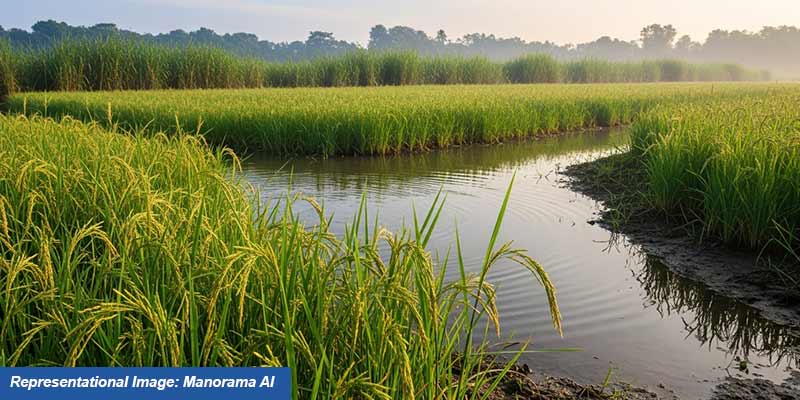
• The Borjuli site in Sonitpur district of Assam, identified under a project run by the National Rainfed Area Authority (NRAA), has been notified as a Biodiversity Heritage Site by the National Biodiversity Authority.
• The NRAA, under the Ministry of Agriculture, has achieved a significant milestone in the conservation of India's wild rice genetic resources through its funded project titled ‘In-situ Conservation and Management of Wild Rice (Oryza rufipogon)’ in Sonitpur district.
• The recognition marks a major step towards conserving India’s rich wild rice diversity and strengthening climate-resilient agriculture.
• The project has been implemented since 2022 by the ICAR-National Bureau of Plant Genetic Resources (ICAR-NBPGR), New Delhi, in collaboration with the Assam State Biodiversity Board.
Oryza rufipogon
• Wild rice species are an invaluable source of genes for developing climate-resilient, high-yielding and nutritionally superior rice varieties.
• Oryza rufipogon possess genes for disease and pest resistance, tolerance to submergence and salinity, thus, an important resource in breeding and improvement of rice crop.
• Many of the current rice varieties derive many genes from this species.
• Oryza rufipogon is a perennial plant commonly found in marsh or aquatic habitats of eastern and southern Asia.
• It is photosensitive in nature and flowers during short days during the months of November and December.
• The seeds have a tendency to shatter as soon as they mature.
• It is tolerant of flooding and acidic soils.
(The author is a trainer for Civil Services aspirants.)