
- India
- Jul 09
IMO to honour Indian Navy, Coast Guard for rescue missions
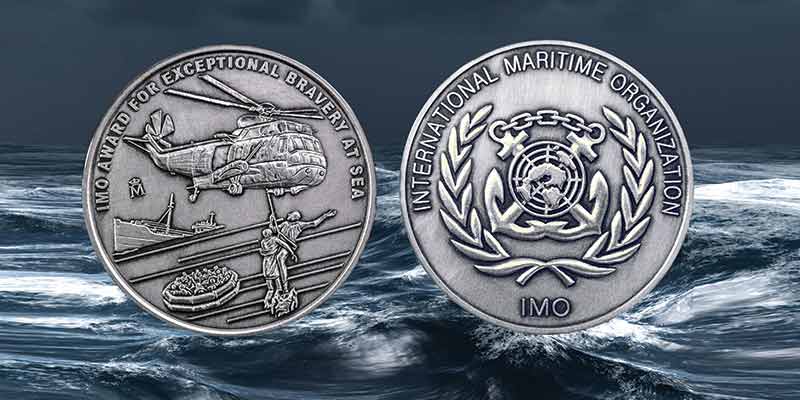
• The International Maritime Organisation (IMO) will award Letters of Commendation to the Indian Navy and Indian Coast Guard for rescue missions in Gulf of Aden and Gulf of Oman.
• The 2026 IMO Award for Exceptional Bravery at Sea will be presented posthumously to Adrian Willyson Brask, in recognition of his extraordinary courage and self-sacrifice during an attempt to rescue a young girl from a capsized fishing vessel in the waters of Nappstraumen in Norway in 2025.
• Brask was nominated for the award by the government of Norway and by the International Federation of Shipmasters’ Associations (IFSMA).
• Following a review of more than 50 nominations by an Assessment Panel and further scrutiny by a distinguished Panel of Judges, the IMO Council, during its 137th session in London on July 7, endorsed the recommendation to bestow Brask with the honour.
• The award will be presented posthumously at the IMO Awards Ceremony scheduled for December 14, 2026.
• The IMO Honours for Exceptional Bravery at Sea are awarded annually to recognise individuals or groups who, at risk to their own lives, perform acts of exceptional bravery in attempting to save life at sea or to prevent or mitigate damage to the marine environment.
The Council agreed to award Letters of Commendations to:
• Captain Sachin Kulkarni and the crew of the INS Trikand, Indian Navy: For nearly three hours of firefighting aboard the M/T Falcon in the Gulf of Aden after an explosion, recovering the remains of two missing crew members and averting a pollution incident.
• Captain Atla Mohan and the crew of the INS Tabar, Indian Navy: For a two-day firefighting and rescue operation after fire broke out in the engine room of the oil tanker M/V Yi Cheng 6 in the Gulf of Oman, evacuating eight crew members.
• Preetam Singh Yadav, diver of the ICGS C-147, Coast Guard Station Mayabunder, Indian Coast Guard: For diving into near-zero-visibility waters to help rescue all seven survivors, including a five-month-old infant, of a helicopter that crash-landed in a mangrove creek.
International Maritime Organisation (IMO)
• The International Maritime Organisation (IMO) is a specialised agency of the United Nations which is responsible for measures to improve the safety and security of international shipping and to prevent pollution from ships.
• It has an integral role in meeting the targets set out in United Nations Sustainable Development Goal (SDG) 14: Conserve and sustainably use the oceans, seas and marine resources for sustainable development.
• It was established by means of a Convention adopted under the auspices of the United Nations in Geneva on March 17, 1948 and met for the first time in January 1959.
• It currently has 176 Member States and three Associate Members. There are 68 inter-governmental organisations which have observer status with IMO, and 98 international non-governmental organisations in consultative status with IMO.
• International shipping transports more than 80 per cent of global trade to peoples and communities all over the world. Shipping is the most efficient and cost-effective method of international transportation for most goods. It provides a dependable, low-cost means of transporting goods globally, facilitating commerce and helping to create prosperity among nations and peoples.
• The mission of the IMO is to promote safe, secure, environmentally sound, efficient and sustainable shipping through cooperation.
• It is also involved in legal matters, including liability and compensation issues and the facilitation of international maritime traffic.
• Its role is to create a level playing-field so that ship operators cannot address their financial issues by simply cutting corners and compromising on safety, security and environmental performance.
• IMO, has promoted the adoption of some 50 conventions and protocols and adopted more than 1,000 codes and recommendations concerning maritime safety and security, the prevention of pollution from shipping and other related matters.
• With regard to the protection of the marine environment, a series of conventions and other instruments, which are periodically updated and amended, have been adopted to address the prevention of pollution, preparedness and response to marine pollution incidents and compensation for pollution damage.
Structure of IMO
• The organisation is led by the Secretary General supported by a Secretariat based at IMO headquarters in London. Secretary Generals are appointed for a maximum of two terms, each lasting four years.
The Organisation consists of an Assembly, a Council and five main Committees:
i) The Maritime Safety Committee
ii) The Marine Environment Protection Committee
iii) The Legal Committee
iv) The Technical Cooperation Committee
v) The Facilitation Committee.
• The IMO Assembly consists of all member states and is the highest governing body of the organisation. It is responsible for approving the work programme, voting the budget and determining the IMO’s financial arrangements.
• The IMO Council is elected by the Assembly for terms of two years. It acts as the executive organ of IMO and is responsible, under the Assembly, for supervising the work of the organisation.
• Between sessions of the Assembly, the council performs the functions of the assembly, except that of making recommendations to governments on maritime safety and pollution prevention.