
- India
- Jul 11
Why govt says offering pure petrol, E10 not feasible?
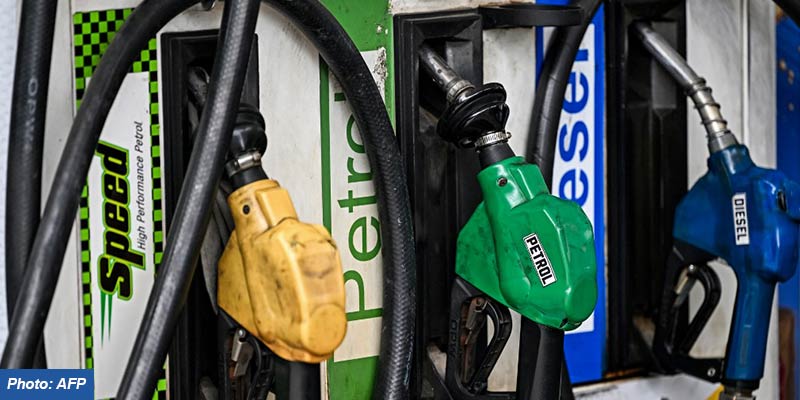
• Petrol blended with 20 per cent ethanol (E20) can reduce fuel economy by 3-5 per cent in some vehicles, the Ministry of Petroleum & Natural Gas said on July 10.
• The ministry issued a detailed question-and-answer document issued to counter criticism of the Ethanol Blended Petrol Programme.
• It argued that E20 offers a significantly higher-octane rating, superior anti-knock characteristics, faster combustion, better pickup, smoother acceleration and cleaner engine operation.
The roadmap for ethanol blending programme
• A pilot ethanol blending programme was launched in 2001, formally announced in 2004, and E5 (5 per cent ethanol blending) was rolled out across several States by 2006.
• The policy framework was subsequently notified in January 2013 during the UPA government.
• India had set a target of achieving 5 per cent ethanol blending across 10 states and Union Territories.
• Despite this, blending stayed stuck at around 1.5 per cent until 2014, because India simply could not produce enough ethanol from sugarcane alone.
• In May 2018, the National Policy on Biofuels widened the raw material base beyond sugarcane, to maize and surplus grain, and turned ethanol production into a genuine whole of government mission.
• In June 2021, NITI Aayog released a detailed roadmap after consulting automakers, oil companies and farm experts.
• In August 2021, IOCL, BPCL and HPCL invited private investment to set up dedicated ethanol plants, backed by guaranteed purchase agreements and bank financing.
• India achieved its E10 target (10 per cent ethanol blending in petrol) in June 2022, five months ahead of the date.
• India achieved its 20 per cent ethanol blending target with petrol, five years ahead of the 2030 schedule.
Advantages of E20 listed by the ministry
• E20 delivers several performance and environmental advantages.
• A Research Octane Number of about 108.5, compared to 84.4 for petrol.
• Raises the effective octane rating of Indian petrol to around 95, improving combustion in modern engines.
• Vehicles calibrated for E20 deliver smoother acceleration.
• E20 offers superior anti-knock characteristics.
• E20 also enables cleaner engine operation with significantly lower particulate emissions.
• E20 can reduce lifecycle carbon emissions by nearly 40 per cent.
Why consumers can’t choose between normal petrol, E10 and E20?
• The ministry said that India runs over one lakh retail outlets through a vast network of refineries, terminals and pipelines.
• Stocking three separate base fuels nationwide would multiply costs and complicate quality control at every single outlet.
• Public sector banks have financed close to Rs 1 lakh crore a year in ethanol plants, storage and logistics.
• Reverting to E10 now would strand this investment and hurt the farmers and entrepreneurs who built it in good faith.
Why E20 isn’t priced lower than pure petrol?
• The government ensures that farmers receive a fair price for the ethanol supplied under the programme.
• For example, maize based ethanol is procured at around Rs 71.86 per litre, even before GST, transport, and storage costs are added.
• When global crude oil prices are around $70 per barrel, producing E20 can cost as much as, or even more than, pure petrol.
• Ethanol becomes the cheaper option only when crude prices rise sharply, typically to $120 to 130 per barrel or higher.
• The ministry said the programme’s objective was to reduce India’s dependence on imported crude, improve price stability and strengthen energy security rather than lower pump prices.
• The ethanol blending programme has saved more than Rs 1.97 lakh crore in foreign exchange, displaced nearly 316 lakh tonnes of crude oil imports, reduced around 952 lakh tonnes of carbon dioxide emissions and transferred over Rs 1.66 lakh crore to farmers since the 2014-15 ethanol supply year.