
- India
- Jul 13
Explainer - PMFME scheme
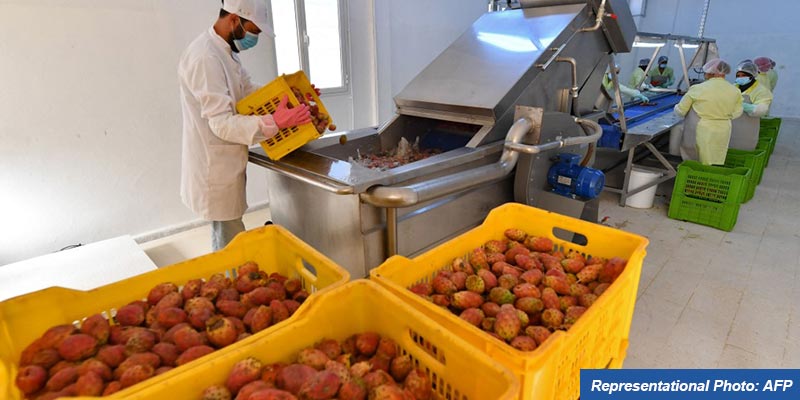
• Union Minister for Food Processing Industries Chirag Paswan announced that over 2 lakh micro enterprises have received credit-linked subsidy under the Pradhan Mantri Formalisation of Micro Food Processing Enterprises (PMFME) Scheme.
• The total subsidy amount provided so far under the scheme is around Rs 6,000 crore.
• The ministry is considering launching PMFME 2.0 with suitable changes to attract more investments in this sector.
What is PMFME scheme?
• The Pradhan Mantri Formalisation of Micro food processing Enterprises (PMFME) is a centrally sponsored scheme that is designed to address the challenges faced by the micro enterprises and to tap the potential of groups and cooperatives in supporting the upgradation and formalization of these enterprises.
• The scheme envisages an outlay of Rs 10,000 crore over a period of five years from 2020-21 to 2024-25.
• The PMFME Scheme has been extended till September 2026.
• The expenditure under the scheme would be shared in 60:40 ratio between central and state governments, in 90:10 ratio with northeastern and Himalayan states, 60:40 ratio with UTs with legislature and 100 per cent by the Centre for other UTs.
• Under the scheme, two lakh micro food processing units will be directly assisted with credit linked subsidy. Adequate supportive common infrastructure and institutional architecture will be supported to accelerate growth of the sector.
• The scheme adopts One District One Product (ODOP) approach to reap the benefit of scale in terms of procurement of inputs, availing common services and marketing of products.
• Under the PMFME, a 35 per cent subsidy for individual micro food processing enterprises (maximum Rs 10 lakh) is being provided to set up or upgrade their individual micro food processing enterprises.
• Further, there is a provision of 35 per cent Credit-linked Subsidy for Farmer Producer Organisation (FPO), Farmer Producer Company (FPC), Self Help Group (SHG), etc to set up or upgrade common infrastructure (maximum Rs 3 crore).
• Seed capital of Rs 40,000 is being given per Self Help Group (SHG) member engaged in food processing for working capital and purchase of small tools.
What is the scope of this scheme?
• The unorganised food processing sector in the country comprises nearly 25 lakh food processing enterprises which are unregistered and informal. With only 7 per cent of investment in plant & machinery and 3 per cent of outstanding credit, the unorganised enterprises contribute to 74 per cent of employment (a third of which are women), 12 per cent of output and 27 per cent of the value addition in the food processing sector.
• Nearly 66 per cent of these units are located in rural areas and about 80 per cent of them are family-based enterprises. Most of these units fall under the category of micro manufacturing units in terms of their investment in plant and machinery and turnover.
• Unorganised micro food processing units need intensive hand holding support for skill training, entrepreneurship, technology, credit and marketing, across the value chain, necessitating active participation of the state government for better outreach.
Objectives of the scheme:
1) Increased access to credit by existing micro food processing entrepreneurs, FPOs, Self Help Groups and cooperatives.
2) Integration with organised supply chain by strengthening branding & marketing.
3) Support for transition of existing 2 lakh enterprises into formal framework.
4) Increased access to common services like common processing facilities, laboratories, storage, packaging, marketing and incubation services.
5) Strengthening of institutions, research and training in the food processing sector.
6) Increased access for the enterprises, to professional and technical support.
Impact of PMFME scheme:
• The scheme has leveraged project investments of over Rs 20,300 crore, while generating nearly 11 lakh direct and indirect employment opportunities.
• Nearly 90 per cent of beneficiaries are first-generation entrepreneurs and 44 per cent are women entrepreneurs, while over 75,000 PMFME-supported enterprises have entered the formal economy through registrations.
• The scheme is not merely supporting enterprises. It is transforming livelihoods, strengthening local value chains and creating sustainable employment opportunities across the country.
• The scheme’s seed capital support has been availed by more than 4.18 lakh SHG members.
• More than 1.76 lakh beneficiaries have been trained under the scheme, of whom 77 per cent are women.