
- India
- Jul 18
- Sreesha V.M
What is the role of Directorate General of Maritime Administration (DGMA)?
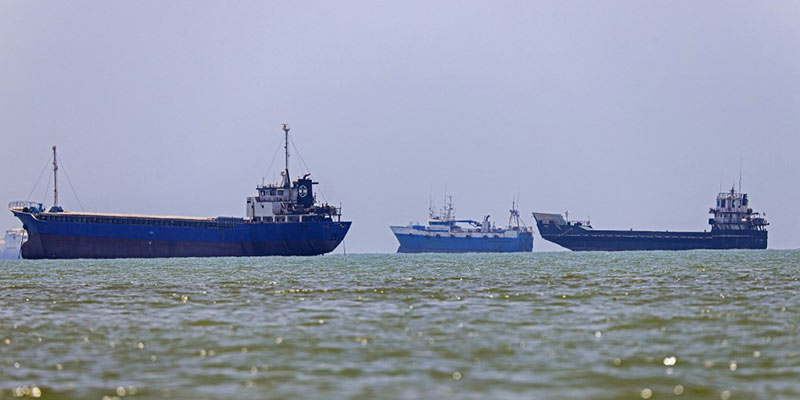
• The Directorate General of Maritime Administration (DGMA) has directed ship owners, ship managers and recruitment and placement service companies to avoid deploying Indian sailors on vessels travelling through the Strait of Hormuz until further orders amid the West Asia crisis.
• In an advisory, the DGMA said masters of vessels operating in the Persian Gulf, the Strait of Hormuz and adjoining waters shall maintain a heightened level of security vigilance.
• They are directed to monitor navigational warnings, security advisories and updates issued by the competent authorities, and implement all applicable ship security measures, in accordance with International Ship and Port Security (ISPS) code.
• The advisory came after the attacks on two vessels this week — MT Al Bahiyah and MT Mombasa — in the Strait of Hormuz.
• They were carrying 30 Indian seafarers among a combined crew of 46.
• One Indian seafarer lost his life while another sustained injuries aboard MT Al Bahiyah. On MT Mombasa, nine Indian nationals were injured.
Transition from DGS to DGMA
• The Director-General of Shipping (DGS), India’s apex maritime regulator, was renamed as the Director-General of Maritime Administration (DGMA) in June, in accordance with Section 7 of the Merchant Shipping Act, 2025.
• Shyam Jagannathan, IAS, officially assumed charge as the DGMA on June 23.
• This transition reflects the expanded role of the maritime administration under the new Act.
• The change recognises Director-General’s broader mandate extending beyond shipping regulation to encompass maritime safety, security, environmental protection, seafarer welfare, implementation of international maritime conventions, and overall maritime governance.
• The change is also in alignment with contemporary international standards.
• The Merchant Shipping Act, 2025 introduces a modern legislative framework that empowers the DGMA to perform functions far beyond the current scope of the DGS.
It reflects the following structural and functional enhancements:
• Expanded Jurisdiction: Covers not only merchant vessels but also fishing boats, offshore units, submersibles, drones, and other emerging marine technologies.
• Inclusive Ownership and Registration: Eases the 100 per cent Indian ownership restriction to 51 per cent, accommodating NRIs, LLPs, and foreign-chartered vessels.
• Stronger Environmental and Safety Governance: Enforces stricter standards through defined responsibilities for marine pollution response, ballast water management, and port reception facilities.
• Full Maritime Labour Convention (MLC) Compliance: Ensures rights and welfare of all Indian seafarers, including those on foreign-flagged ships.
• Digital-First Administration: Shifts from manual to fully digital records, certifications, and compliance platforms.
• Emergency Response Capability: Establishes nodal authorities with the power to requisition resources and coordinate inter-agency responses during maritime incidents.
(The author is a trainer for Civil Services aspirants.)