
- India
- Jul 21
India joins WTO’s agreement on fisheries subsidies
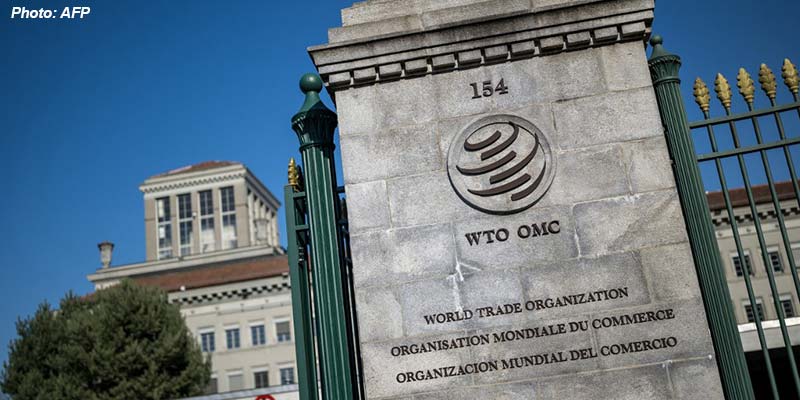
• India officially joined the WTO’s agreement on fisheries subsidies on July 20.
• The agreement prohibits government support to illegal fishing activities and over-exploitation of stocks.
• India deposited its Instrument of Acceptance of the WTO Agreement on Fisheries Subsidies, thereby becoming a Party to the Agreement.
• The formal acceptance was handed over by the Commerce Secretary Rajesh Agrawal to the Director-General of the World Trade Organisation (WTO) Ngozi Okonjo-Iweala in Geneva.
When did this agreement come into force?
• It is estimated that governments spend $22 billion a year in subsidies to expand fishing capacity, contributing to overcapacity, overfishing and other practices that deplete fish stocks and undermine efforts to achieve sustainable fisheries.
• In addition, the total economic losses caused by illegal, unreported and unregulated (IUU) fishing are estimated to be as high as $50 billion.
• The WTO Agreement on Fisheries Subsidies marks a major milestone for ocean sustainability by prohibiting harmful fisheries subsidies, a key factor in the widespread depletion of the world’s fish stocks.
• The agreement was adopted by consensus at the 12th WTO Ministerial Conference in Geneva in June 2022.
• It came into force on September 15, 2025.
• The agreement entered into force only after two-thirds of WTO members (166 at present) deposited their instruments of acceptance.
• Once that threshold was reached, the pact became legally effective for those countries that had accepted it.
• It is the first multilateral WTO agreement with an environmental sustainability objective.
• India is the 123rd member of the WTO to deposit its Instrument of Acceptance.
How the agreement will benefit India?
• The agreement focuses on subsidies related to marine wild capture fishing and fishing-related activities at sea.
• However, aquaculture and inland fisheries remain outside the scope of this pact.
• The agreement protects the livelihoods of traditional and small-scale fishers by promoting sustainable fisheries.
• The pact creates a more equitable global fisheries regime by disciplining harmful subsidies that support large, heavily subsidised industrial fishing fleets being operated by distant water fishing nations.
• This benefits countries like India, where fisheries are predominantly small-scale and which are not major participants in industrial fishing.
• The agreement further enhances India’s credibility as a responsible seafood exporter, thereby supporting improved access to premium markets that increasingly value sustainability and traceability.
• At the same time, the predominance of aquaculture-based shrimp in India’s seafood exports, which falls outside the scope of the agreement, ensures the continued resilience and competitiveness of the country's seafood export sector.
• India has a robust fisheries management framework, strengthened through the Sustainable Harnessing of Fisheries in the Exclusive Economic Zone (EEZ) Rules, 2025 and the Guidelines for Sustainable Harnessing of Fisheries in the High Seas by Indian-Flagged Fishing Vessels, 2025.
• These measures, together with the ongoing capacity-building initiatives under the Pradhan Mantri Matsya Sampada Yojana (PMMSY) and other fisheries management, monitoring and conservation programmes, provide a strong foundation for the effective implementation of the agreement.
• These regulatory, institutional and developmental ecosystem positions India to implement the agreement effectively while preserving policy space for traditional and small-scale fishers.
• The WTO agreement seeks to promote the conservation and sustainable use of marine fisheries resources while providing appropriate flexibilities for developing and least-developed country Members.
• India’s domestic fisheries management framework is in alignment with the agreement and safeguards the interests of traditional and small-scale fishers while contributing to global efforts to promote sustainable fisheries.