
- India
- Jul 28
- Sreesha V.M
What is Public Examinations (Prevention of Unfair Means) Amendment Bill?
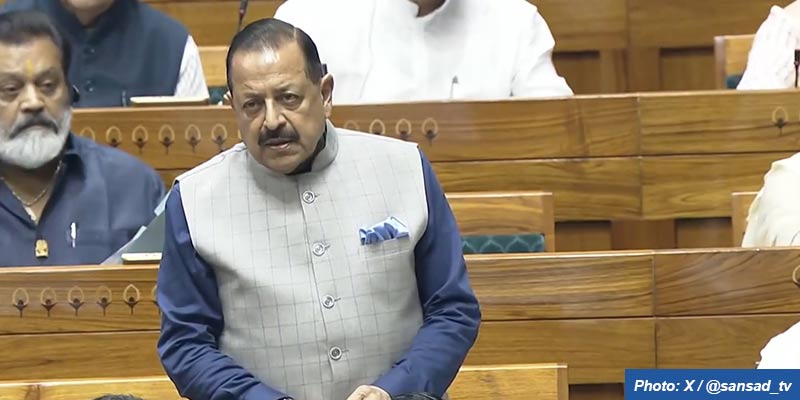
• Union Minister Jitendra Singh introduced the Public Examinations (Prevention of Unfair Means) Amendment Bill, 2026 in the Lok Sabha on July 27.
• The government introduced the Bill in the Lok Sabha days after massive student protests against the NEET fiasco rocking the nation that forced Dharmendra Pradhan to resign as Education Minister.
Public Examinations (Prevention of Unfair Means) Act
• The Public Examinations (Prevention of Unfair Means) Act, 2024, enacted on February 12, 2024 and brought into force with effect from June 21, 2024, provides a comprehensive national legal framework to prevent unfair means in public examinations.
• The Act applies to examinations conducted by the Union Public Service Commission (UPSC), Staff Selection Commission (SSC), Railway Recruitment Boards (RRBs), Institute of Banking Personnel Selection (IBPS), National Testing Agency (NTA), ministries and departments of the central government and their attached and subordinate offices for recruitment, as well as such other authorities as may be notified by the central government.
• It was enacted to prevent resorting to unfair means in public examinations and to provide for related matters.
• The Act, being a pan-Indian legislation, aims at effectively deterring persons, organised groups and institutions from indulging in unfair means thereby committing offences, adversely impacting the sanctity of public examinations.
• The objective of the Act is to bring greater transparency, fairness and credibility and inspire confidence in the public examinations system.
• All offences under the Act are cognizable, non-bailable and non-compoundable, with stringent provisions relating to imprisonment, fine and attachment of property.
What is the purpose of the amendment Bill?
• In recent years, there have been some incidents of question paper leakages and malpractices in examinations conducted by public examination authorities, which tend to affect the transparency and fairness of the public examinations system.
• In order to further strengthen the fairness, to enhance the credibility of the public examinations system and to facilitate speedy trial and ensure time bound investigations of offences under the Act, the government is bringing in some amendments.
The amendments aim to:
i) Empower all state governments and Union Territory administrations to designate any court of session to be a Special Fast Track Court to try offences under the Act.
ii) Provide that the proceedings in such Special Fast Track Courts are continued on a day-to-day basis and the trial shall be completed within a period of three months from the date of filing of the chargesheet.
iii) Empower the central government to also constitute a Special Task Force for investigation of any offence, if necessary.
iv) Provide that the investigations for offences under the Act are completed within a period of two months.
v) Empower all state governments and UT administrations to appoint one or more Special Public Prosecutors for conduct of cases under the Act.
vi) Enhance the punishment for persons resorting to unfair means by increasing the term of imprisonment to not less than five years, extendable up to 10 years, as against the existing provision of imprisonment for a term of not less than three years, extendable up to five years. The maximum fine is also proposed to be enhanced from Rs 10 lakh to Rs 50 lakh.
vii) Provide for appeal mechanism as against any judgment, sentence or order to a bench of two judges of the High Court, and for disposal of the same within a period of three months from the date of admission of appeal.
• The proposed amendments are expected to further strengthen the legal framework for preventing examination-related malpractices, including question paper leakages, impersonation and organised cheating, while ensuring swift investigation, speedy trial and timely disposal of appeals.
(The author is a trainer for Civil Services aspirants.)