
- India
- Jul 31
- Sreesha V.M
Parliament passes Bill to criminalise insult to ‘Vande Mataram’

• The Parliament passed the Prevention of Insults to National Honour (Amendment) Bill, 2026 on July 30.
• The amendment makes it an offence to intentionally prevent the singing of the National Song or to cause a disturbance to an assembly engaged in its singing.
The Prevention of Insults to National Honour Act, 1971
• The Prevention of Insults to National Honour Act, 1971 was enacted on December 23, 1971.
• The Act extends to the whole of India and provides statutory protection to the Indian National Flag, the Constitution of India and the Indian National Anthem ‘Jana Gana Mana’.
Key Provisions of the 1971 Act:
Section 2 - National Flag and Constitution: Deals with insults to the Indian National Flag and the Constitution of India. It stipulates that anyone who burns, mutilates, defaces, defiles, disfigures, destroys, tramples upon, or otherwise shows disrespect to the flag or the Constitution in a public place can face imprisonment for up to three years, a fine, or both.
Lawful criticism protected: Comments criticising the Constitution, the National Flag or government measures, when made with a view to securing lawful amendment or alteration, do not constitute an offence under Section 2.
Section 3 - National Anthem: It states that anyone who intentionally prevents the singing of the Indian National Anthem or causes a disturbance to any assembly engaged in singing it shall be punished with imprisonment extending up to three years, or a fine, or both.
Section 3A - Repeat offences: Added by a 2003 amendment, this section enforces an enhanced minimum penalty of one year of imprisonment for second and subsequent convictions under Sections 2 or 3.
Why the govt brings in amendments?
• At the meeting of the Constituent Assembly held on January 24, 1950, its President, Rajendra Prasad, stated that the ‘Vande Mataram’ composed by Bankim Chandra Chatterjee shall be honoured equally with ‘Jana Gana Mana’ and shall have equal status with it.
• At present, there is no specific legal provision to prevent insults to the singing of Vande Mataram, which is honoured as the National Song.
• In order to prohibit any person from intentionally preventing the singing of the National Song (Vande Mataram) or causing disturbance to any assembly engaged in such singing, the government has proposed to amend section 3 of the 1971 Act to include the National Song also within its ambit, so as to make such acts punishable.
Key provisions of the amendment Bill:
• Expands the scope of Section 3 to include both the National Anthem and the National Song (Vande Mataram).
• Penalises whoever intentionally prevents the singing of the National Anthem or the National Song, or causes disturbance to any assembly engaged in such singing.
• Imprisonment for a term which may extend to three years, or with fine, or with both.
• Repeat offenders who intentionally disrupt the singing of ‘Vande Mataram’ will now also face this mandatory minimum one-year prison sentence.
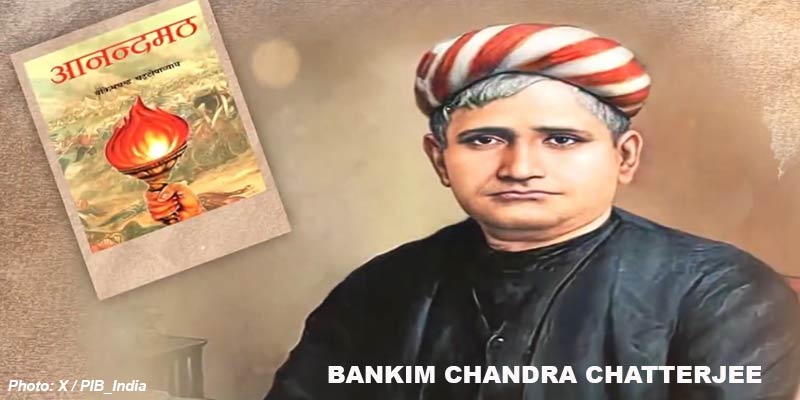
Important points on ‘Vande Mataram’:
• Written by Bankim Chandra Chatterjee, ‘Vande Mataram’ — which translates to “Mother, I Bow to Thee” — was first published in the literary journal ‘Bangadarshan’ on November 7, 1875.
• Later, Bankim Chandra Chatterjee incorporated the hymn in his novel ‘Anandamath’.
• ‘Vande Mataram’ was sung at the 1896 session of the Congress by Rabindranath Tagore.
• This composition, an enduring anthem, has inspired countless generations of freedom fighters and nation builders, standing as a lasting emblem of India’s national identity and collective spirit.
Bankim Chandra Chatterjee
• Bankim Chandra Chatterjee (1838-1894) was one of the most prominent figures of 19th-century Bengal.
• He holds a pivotal role in the intellectual and literary history of Bengal during the 19th century.
• As a distinguished novelist, poet, and essayist, his contributions significantly influenced the development of modern Bengali prose and the articulation of an emerging Indian nationalism.
• His notable works, including ‘Anandamath’ (1882), ‘Durgeshnandini’ (1865), ‘Kapalkundala’ (1866), and ‘Devi Chaudhurani’ (1884), reflect the social, cultural, and moral concerns of a colonised society striving for self-identity.
• The composition of ‘Vande Mataram’, is recognised as a milestone in nationalist thought, symbolising the synthesis of devotion to the motherland and spiritual idealism.
• ‘Anandamath’ was serialised in the Bengali monthly magazine ‘Bangadarshan’, of which Chatterjee was the founder editor.
• The song ‘Vande Mataram’ appeared in the very first instalment of the serialisation of the novel in the March-April 1881 issue.
• The central plot of the novel ‘Anandamath’ revolves around a group of Sanyasins known as Santanas (meaning children), who dedicate their lives to the cause of their motherland. They venerate the motherland personified as the mother goddess. Their devotion is solely to their land of birth.
• It stood as the symbol of the “religion of patriotism” that was the central theme of ‘Anandamath’.
• Through his writings, Bankim Chandra Chatterjee not only enriched Bengali literature but also laid the foundational ideological principles for India’s early nationalist movement.
(The author is a trainer for Civil Services aspirants.)