
- India
- Aug 02
Who was Pingali Venkayya?
• Prime Minister Narendra Modi paid tributes to Pingali Venkayya on his 150th birth anniversary on August 2.
• The PM remembered his invaluable role in giving the country its National Flag.
• Venkayya, a freedom fighter, was born on August 2, 1876 in a village in the Krishna district of Andhra Pradesh.
• He was entrusted with the task of making the national flag by Mahatma Gandhi.
• In 1921 he prepared the flag. Some changes were made to it in the year 1931.
The National Flag
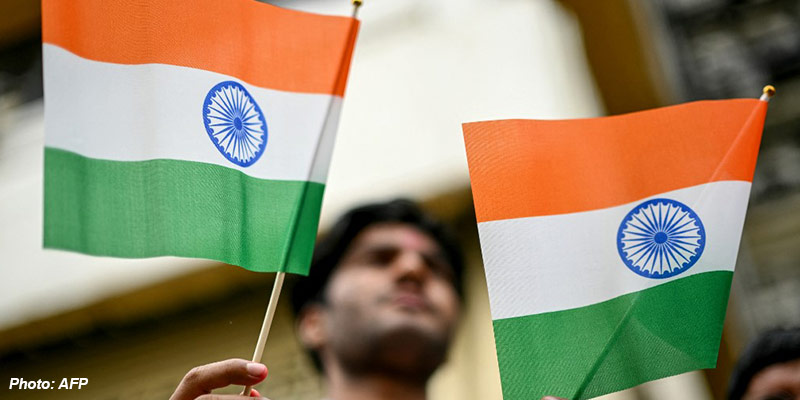
• The National Flag is a tricolour panel made up of three rectangular panels or sub-panels of equal width.
• The colour of the top panel is saffron (kesari) and that of the bottom panel is green.
• The middle panel is white, bearing at its centre the design of Ashoka Chakra in navy blue colour with 24 equally spaced spokes.
• The Ashoka Chakra shall be completely visible on both sides of the flag in the centre of the white panel.
• The ratio of the length to the height (width) of the flag shall be 3:2.
• The design of the National Flag was adopted by the Constituent Assembly of India on July 22, 1947.
• Apart from non-statutory instructions issued by the government from time to time, display of the National Flag is governed by the provisions of the Emblems and Names (Prevention of Improper Use) Act, 1950 and the Prevention of Insults to National Honour Act, 1971.
Evolution of the Indian National Flag
• In 1906, during the ‘Swadeshi’ movement, a flag was first hoisted in Calcutta. This flag, different from the one we know today, represented the burgeoning spirit of resistance against British rule.
• The following year, in 1907, Madam Bhikaji Cama raised a similar flag in Paris, carrying the message of India's struggle to the global stage.
• As the years passed, the flag evolved alongside the nation’s fight for independence.
• In 1917, during the Home Rule Movement led by Annie Besant and Bal Gangadhar Tilak, another flag was hoisted, signaling the demand for self-governance.
• In 1921, the flag took on a more familiar form, designed by Pingali Venkayya. His design, with its three stripes representing the various communities of India, was a call for unity in diversity. The spinning wheel at the centre symbolised India’s economic self-reliance.
• The final transformation came in 1931, when the flag’s colors were finalised.
• Saffron was for courage, white for peace, and green for fertility and growth.
• The Ashoka Chakra replaced the spinning wheel, symbolising the eternal wheel of law and progress.